Languages
Thursday, October 1, 2026



News and Views from the Global South
Development & Aid
Nicaragua: End of the Electoral Illusion
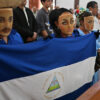
On 19 July, the 47th anniversary of the Sandinista revolution that first brought him to power, Nicaraguan President Daniel Ortega declared that his country would hold ‘no more elections’ so that the opposition could never again try to ‘seize power’. Just like that, he scrapped a presidential vote that had previously been pushed back to 2027, abandoning even the fiction of democratic legitimacy. The move changes little in practice, since no free vote had been possible for years. But it’s still revealing: a government that controls the army, the courts, the electoral machinery and the police, and will still not risk even a stage-managed ballot, is one that has lost confidence in its people.
UN Special Rapporteur Urges the Protection of Children’s Rights Amid Deepening Conflict and Digital Threats
On July 7, the United Nations (UN) Secretary-General Antonio Guterres presented a report from the Special Rapporteur on the sale, sexual exploitation, and sexual abuse of children, Ai Kihara-Hunt, to the General Assembly, underscoring her goals and priorities for the implementation of protection measures for children worldwide.
Malawi Bets on Battery Storage to Climate-Proof Its Fragile Power Grid
For years, Malawi's electricity supply has been at the mercy of droughts, floods and cyclones that have repeatedly exposed the vulnerability of a power system heavily dependent on hydropower.
Frankenstein in Charge: Netanyahu Rejects Trump’s Gaza Plan
Should anyone be surprised that Israel has rebuffed Donald Trump? The unconditional support of the US and its Western allies for Israel has emboldened the rogue state. Thus, Israel continues its genocide against the Palestinians in defiance of international humanitarian law and the Genocide Convention, and despite the so-called ceasefire agreement under the Trump plan. This is the pay-back for protecting Netanyahu from his arrest warrant by the International Criminal Court (ICC) for committing war crimes and crimes against humanity.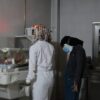
Obstetric Violence: Syrian Women Speak Out
The abuse 30-year-old Nour Al-Badawi experienced in an Aleppo public hospital while giving birth resulted in her having two major follow-up operations and left her with depression and anxiety.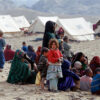
Resilience Is Not Enough: OCHA Sounds Alarm on Underfunded Humanitarian Crisis in Afghanistan
“Mainly, people tell me they're exhausted. They're exhausted from being poor, from being hungry, from repeated climate shocks, mounting debt, and the daily struggle to provide for their families,” Olga Cherevko, Spokesperson for the UN Office for the Coordination of Humanitarian Affairs (OCHA) in Afghanistan, told UN reporters on August 4.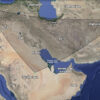
Saudi Arabia, Türkiye and Pakistan Forge Mutual Defence Pact, as Iran Pursues New Shipping Framework
In Makkah, the Kingdom of Saudi Arabia, the Republic Türkiye, and the Islamic Republic of Pakistan agreed to the framework for a joint defence agreement where an attack on any of the three states shall be regarded as an attack against them all.
The Earth Is Burning — And We Are Still Choosing to Let It
I have spent my life on an island. From the granite hills of Mahé, one can watch the sun rise over an ocean that has fed, protected and defined the Seychellois people for centuries.
Living Longer at Age 80
Upon reaching the age of 80, men and women are living longer than ever before. These gains in longevity among octogenarians represent a remarkable demographic achievement. The additional years of life provide new opportunities for older adults and their families while also presenting important social, economic, and healthcare challenges for societies.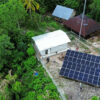
Asia’s Energy Progress Is Great, But Must Pick Up Pace
In much of the Asia-Pacific region, energy is a success story. Electricity access has greatly increased and the use of clean cooking fuels is now widespread. The region has kept pace with the rest of the world in adopting renewable energy. Many countries have made energy efficiency gains; the Republic of Korea is one of those in the lead worldwide. Progress has continued even in the face of recent energy crises sparked by the war in Ukraine and conflict over the Strait of Hormuz.
Where Some See Waste, Others See Opportunity: Young Sierra Leoneans Fight Against Electronic Waste, Plastic Pollution
Growing up, Peter George, a young innovator in Bo District in Southern Region, Sierra Leone, watched people dump electronic waste near the farmland where his grandmother cultivated crops.
INDIA: ‘The Cockroach Janta Party Brings Together Everyone Who Has Been Neglected for Years’
CIVICUS discusses India’s Cockroach Janta Party movement with Harshit Singh, a young activist, poet and storyteller who took part in protests in Delhi.
Palestinian Children Deserve Education, not Ethnic Cleansing
World News are more or less currently fully occupied with the U.S. – Iran debacle and to a lesser degree the Gaza genocide, the on-going war in Ukraine, and to an even lesser degree the one in Sudan.
Burkina Faso’s Cancelled Democracy
Burkina Faso’s charismatic young military leader, army captain Ibrahim Traoré, has stopped pretending. In April, he declared that people should ‘forget about the question of democracy’ because ‘democracy isn’t for us’. When Traoré seized power in September 2022, ousting a leader who’d staged a coup earlier that year, he promised elections by June 2024. The junta broke that pledge, pushing any transition back to 2029. Now Traoré has confirmed he has no intention of restoring democracy. Instead, Burkina Faso’s military junta is tightening its repression, while working with neighbouring states to internationalise its dangerously undemocratic model.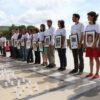
The World’s Aid Workers Must Be Protected
This summer, an ambush on a marked humanitarian convoy in Duk County, South Sudan, left 17 dead and five injured. While the UN called for an immediate investigation, history suggests the victims’ families will wait indefinitely for answers.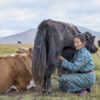
The Year of Pastoralists Must Be More Than Symbolic
This is supposed to be the year the world finally sees and recognizes pastoralists. The United Nations has designated 2026 as the International Year of Rangelands and Pastoralists, bringing long-overdue attention to communities who have sustained some of the world’s most fragile and important landscapes for generations.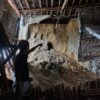
Rohingya Refugees Seeking Safe Haven in Bangladesh Hit by Fresh Disasters
Abdu Rozork awoke suddenly to the sound of children screaming. Heavy monsoon rains had sent a landslide barrelling into the section of their bamboo shelter where the women and children were sleeping.
CHINA: ‘The Ethnic Unity Law Means There Is One Acceptable Way to Be Chinese’
CIVICUS speaks about China’s recently implemented Ethnic Unity Law with Gulchehra Hoja, a correspondent for Reporters Without Borders and a Uyghur activist and journalist known for her reporting on human rights abuses against Uyghur people in China.
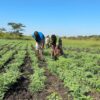
New Chickpea Variety to Drive Climate Resilience in Africa
New chickpea seed research and production have become the new frontier of climate resilience in southern Africa as farmers battle failing cereal production.
Green transition: Pay the Least, Benefit the Most
Inaction and maintaining the status quo of fossil fuel dependence carry significant costs. The recent closure of the Strait of Hormuz, for instance, caused enormous losses to the global economy, with many Asia-Pacific countries bearing disproportionately larger adverse impacts. Had these economies had a more diversified energy mix, they would have benefited from such resilience under current circumstances.
Climate Change Makes Sacred Ice Vanish in Kashmir, Locals Fear Loss of Livelihoods
Every summer, before dawn breaks over the Himalayas, Bashir Ahmad leads his horses onto the narrow mountain trail that winds toward the Amarnath cave shrine. For decades, the annual Hindu pilgrimage has been the most important season of the year for his family. The money earned over two months pays for food, school fees, winter supplies, and the upkeep of his animals through the long snowbound months.« Previous Page — Next Page »


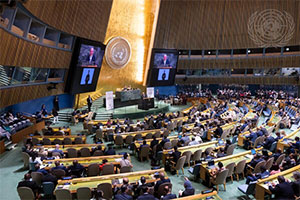 2026 High-level Political Forum on Sustainable Development. Credit: UN Photo/Eskinder Debebe
In 2015, the United Nations and its Member States adopted the Sustainable Development Goals (SDGs) in an effort to make the world a more sustainable and peaceful place for future generations. Progress on the 17 SDGs has been uneven, and inequality persists across the globe. 10 years after adoption, the 2025 UN SDGs Report revealed that only 35% of the SDG targets are on track, with more than half moving too slowly, and 18% moving backwards from the 2015 baseline. Poverty remains one of the world’s most pressing issues, with hunger, violence, and inequality impeding the opportunities for all people to achieve success. In September 2024, the United Nations Summit of the Future introduced a new goal: to eradicate global poverty by 2030, ensure universal rights to basic services, and increase the overall standard of living in terms of industrialization, economic well-being, citizen health, and literacy. Furthermore, recent shifts in United States foreign aid policy – notably, major budget cuts to USAID and the termination of thousands of development programmes– have severely threatened vital lifelines of financial aid to impoverished communities around the world. Additionally, the United States’ withdrawal from the Paris Climate Agreement has undercut international efforts at sustainable development. With the upcoming 2030 deadline, the UN Secretary-General has called for urgent multilateralism across six priority areas: food systems, energy, digital connectivity, education, jobs and social protection, and climate and biodiversity. IPS sheds light on marginalized communities that struggle on a daily basis to survive and have their stories heard and respected.
Updated by Yilan Batista and Shuli Wong August 2026

The Week with IPS

NEXT STOP - SDGs
Tracking global progress towards a sustainable world
Tracking global progress towards a sustainable world
