Languages
Sunday, November 8, 2026



News and Views from the Global South
Development & Aid
Once Scattered by Colonialism, Today United in Urgent Pursuit of Climate Justice
The Seychelles consider the ongoing public hearings at the International Court of Justice (ICJ) both timely and critical “for the people of the small island developing state in the middle of the Indian Ocean,” Flavien Joubert, Minister for Agriculture, Climate Change and Environment of the Seychelles, told the court today.
Nature Can Help Africa Make the Most of COP29 Outcomes
Despite mixed reactions to the outcomes of COP29, Africa has the opportunity to take the lead in harnessing nature to tackle the effects of climate change and secure a resilient future.
Redefine Business Success to Include Nature
Sustaining nature is not just an environmental goal—it is an essential component of sustainable business—and requires that we redefine business success to include the wise stewardship of nature.
Micro-Dams Spark a Wave of Water Sustainability in Brazil – VIDEO
 They look like attempts to copy the moon’s surface, in some cases, as craters multiply in the grasslands. But they are actually micro-dams, barraginhas in Portuguese, which have spread in Brazil as a successful way to store water and prevent soil erosion in rural areas.
FAO Renews Its Commitment to Right to Food Guidelines
The Food and Agriculture Organization (FAO) launched its newest report on the Right to Food Guidelines on December 10, which focuses on that focused on the urgency of food security as well as the measures that will be taken by the organization to eradicate hunger and malnutrition in the coming decade.
Water Shortages Hit Zimbabwe Towns as Country Struggles To Overcome Impact of El Niño
At a borehole not far from Mpopoma High School in Bulawayo, Zimbabwe’s second largest city, 48-year-old Sakhile Mulawuzi balances a white 25-liter bucket of water on her head as she holds another 10-liter blue bucket filled with water. She trudges these back home along a narrow pathway leading to her house in Mpopoma, one of the high-density areas here.
Africa’s Time – Delivering Transformation via Innovation
Africa, the world’s youngest continent is brimming with creativity, talent and innovation. With more than 60% of its population under the age of 25, Africa’s youth are fueling entrepreneurship and job creation across the region.
In Zimbabwe, Women Are Leading the Battle Against Climate Change
When Susan Chinyengetere started to focus on farming in her home village in south-eastern Zimbabwe, she wondered if she could earn a living and raise her children. With climate catastrophes ravaging the country, her hesitation on rain-fed agriculture worsened. But two years later, the 32-year-old mother of two from Mafaure village in Masvingo, about 295 km from the capital Harare, is now a champion in farming.
No State Is Truly Independent if It Suffers Significant Injury Without Consequence—Palau
After many decades of colonial rule, Palau was the last country to emerge from the UN Trusteeship. Palau celebrated 30 years of independence in October 2024 “and takes seriously the rights and responsibilities of independence. Independence should mean that Palau is free to build its own future and be responsible for the security, safety, and well-being of its own people,” said Gustav N. Aitaro, the Minister of State of the Republic of Palau at the International Court of Justice (ICJ).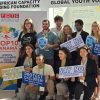
Protect the Rights and Future of Youth, Right Now, From Addiction and Harm
As the world commemorates UN Human Rights Day December 10, with the theme, “Our Rights, Our Future, Right Now,” it’s time to ask: Are we truly listening to what the youth envision for their present and future?
Pacific Community Calls Out Urgency of Climate Loss and Damage Finance for Frontline Island Nations
Advancing development of the new Climate Loss and Damage Fund was a key call by Pacific Island nations at the COP29 United Nations Climate Change Conference being held in Azerbaijan in November. For Pacific Island Countries and Territories, the fund represents a critical step towards addressing what they consider a gross climate injustice: despite contributing less than 0.03 percent of global greenhouse gas (GHG) emissions, they bear the brunt of climate change's devastating impacts.
‘For the Human Race, Ignoring the Climate Emergency Is No Longer an Option’
At the International Court of Justice (ICJ), no matter if the country had high Himalayas, was a small island nation or was experiencing armed conflict, they all agreed that the due diligence principle and the obligation of states to prevent harm caused by climate change, especially for high greenhouse gas emitters, were non-negotiable.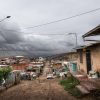
Latin America’s Poor Are More Urban and More Vulnerable
Poverty, while declining in Latin America and the Caribbean so far this century, shows a new face, that of the looming vulnerability of the poor as they become less rural and more urban, the United Nations Development Programme (UNDP) says in a new analysis.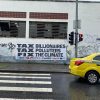
South Africa’s G20 Presidency: A Call for Transformative Leadership in a Fractured World
South Africa’s G20 Presidency begun in December, with only 12% of SDG targets on track and significant backsliding on more than 30%. As we write this today, there is an urgent need for a paradigm shift and practical solutions for a progressive, people-centred, and development-driven agenda in a fractured global landscape that needs collective healing.
Bold Donor Action Urgently Needed to Give Ethiopia’s Crisis-Impacted Children a Lifeline
Ethiopia’s education system is buckling under the weight of complex, competing challenges. The aftermath of a deadly war in the north, ongoing violence, climate-induced disasters, and widespread forced displacements have converged to push as many as 9 million children out of school. With close to 18 percent of schools in the country destroyed or damaged and persisting intercommunal conflicts in various regions, there are fears that many might never find their way back to school.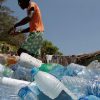
Plastics, Power, and Politics: The High-Stakes Fight for a Global Treaty
As the fifth round of negotiations of the Intergovernmental Negotiating Committee (INC) for a global plastics treaty concluded in Busan, South Korea (25 November-December 1 2024), the meeting underscored both the complexities and the promises of multilateralism. What we saw in Busan was indicative of other environmental treatymaking spaces, including ones on climate and biodiversity.
Zambia: Civil Society Fighting New Legislative Threats and Restrictive NGO Bills
Over the past few years, new “tools of control” affecting the work of civil society organisations have multiplied, often imposing forms of “bureaucratic criminalisation” and “administrative harassment”. In particular, more and more restrictive and demanding laws are hurting civil society organisations’s capacity to operate across the globe.
African Union, Nations Lay Bare Climate Vulnerabilities at UN’s Top Court
Kenya agrees with many UN member states testifying before the International Court of Justice (ICJ) that the law of international responsibility should hold countries legally responsible for major damage to the global climate system.
Another Tsunami Sweeps Sri Lanka
On 26 December 2004 a powerful Asian tsunami swept over many of Sri Lanka’s coastal provinces, killing thousands of people and wildlife, devastating habitats and even washing away a trainload of passengers far from the rail tracks.
UNCCD COP16 Raises Hopes for Ambitious Global Land Action
While many delegates at the 16th meeting of the Conference of the Parties to the UN Convention to Combat Desertification (UNCCD COP16) hope that this could be the convention’s own Paris moment—referring to the historic Paris agreement inked by UNFCCC signatories—however, this hedges heavily on the UN parties’ seriousness to combat drought, desertification and land degradation.
Climate Finance Not Charity, But Obligation, International Court of Justice hears
Developing nations should not bear the brunt of the climate crisis caused by the industrialized world's historical emissions. This was the resounding message as the Solomon Islands, India, and Iran, among others, presented their cases before the International Court of Justice (ICJ).« Previous Page — Next Page »





 2026 High-level Political Forum on Sustainable Development. Credit: UN Photo/Eskinder Debebe
In 2015, the United Nations and its Member States adopted the Sustainable Development Goals (SDGs) in an effort to make the world a more sustainable and peaceful place for future generations. Progress on the 17 SDGs has been uneven, and inequality persists across the globe. 10 years after adoption, the 2025 UN SDGs Report revealed that only 35% of the SDG targets are on track, with more than half moving too slowly, and 18% moving backwards from the 2015 baseline. Poverty remains one of the world’s most pressing issues, with hunger, violence, and inequality impeding the opportunities for all people to achieve success. In September 2024, the United Nations Summit of the Future introduced a new goal: to eradicate global poverty by 2030, ensure universal rights to basic services, and increase the overall standard of living in terms of industrialization, economic well-being, citizen health, and literacy. Furthermore, recent shifts in United States foreign aid policy – notably, major budget cuts to USAID and the termination of thousands of development programmes– have severely threatened vital lifelines of financial aid to impoverished communities around the world. Additionally, the United States’ withdrawal from the Paris Climate Agreement has undercut international efforts at sustainable development. With the upcoming 2030 deadline, the UN Secretary-General has called for urgent multilateralism across six priority areas: food systems, energy, digital connectivity, education, jobs and social protection, and climate and biodiversity. IPS sheds light on marginalized communities that struggle on a daily basis to survive and have their stories heard and respected.
Updated by Yilan Batista and Shuli Wong August 2026

The Week with IPS

NEXT STOP - SDGs
Tracking global progress towards a sustainable world
Tracking global progress towards a sustainable world
