Languages
Saturday, November 21, 2026



News and Views from the Global South
Poverty & SDGs
LATIN AMERICA: Movement for Basic Income for All
The global financial crisis could present an opportunity to move towards the creation of a universal basic income for all citizens, say advocates of the system in Latin America.RIGHTS-BRAZIL: Law Still Not Saving Women’s Lives
Rosemary Fracasso, a 37-year-old mother of two teenagers, was murdered by her ex husband with a machete. During the attack he cut off her fingers and arms and left her heart visible through a gaping chest wound.RIGHTS-MOROCCO: Renewed Efforts to End Violence Against Women
The campaign against violence towards women has been the focus of media attention in Morocco recently, in order to press for an end to gross abuses committed by men against women and make victims aware of the need to break the silence which allows it to continue.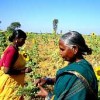
ENVIRONMENT-INDIA: Women Farmers Ready to Beat Climate Change
A collective of 5,000 women spread across 75 villages in this arid, interior part of southern India is now offering a chemical-free, non-irrigated, organic agriculture as one method of combating global warming.NICARAGUA: Cleaning Up ‘World’s Biggest Toilet’
After dumping its untreated wastewater into lake Managua for more than 80 years, the capital of Nicaragua has started to clean up the huge source of water in this country, where 80 percent of fresh water sources are polluted.ICELAND: Shake-Up At the Top Improves Gender Equality
Iceland’s new Prime Minister Johanna Sigurdardottir is determined to reverse the country’s disastrous economic slide and bring its banks on track after they crashed last year. She has appointed a woman, Anne Sibert, to the Central Bank of Iceland’s Monetary Policy Committee.CULTURE: Ethiopian Film Takes Top Honours at FESPACO
Filmmaker Haile Gerima’s Ethiopian movie "Teza" has won the Golden Stallion of Yennenga at the 21st Panafrican Festival of Cinema and Television (Fespaco) in Ouagadougou, Burkina Faso.
BRAZIL: Child Rape Case Revives Debate on Abortion
The case of a nine-year-old girl who was raped and impregnated by her stepfather has revived the debate in Brazil on sexual violence, the need to reform the abortion law, and the shortcomings of the health system when it comes to dealing with the few cases in which abortion is legal.MIDEAST: Women Migrant Workers With HIV Get Raw Deal
Thousands of Asian women flock to the affluent sheikhdoms of the Middle East annually, seeking jobs as domestic workers. For many this quest for a livelihood comes to a humiliating end when they test positive for HIV.ARGENTINA: Bold New Law on Violence Against Women
Argentina now has an ambitious new law to prevent, punish and eradicate physical, psychological and economic violence against women, in both the private and public spheres. But the big challenge, say experts, will be to put it into practice.CARIBBEAN: Culture of Sexual Coercion Exposes Women to HIV
The fight against widespread sexual violence in the Caribbean has been joined by a high-profile new women’s coalition that warns it could be a major reason for the spread of HIV among women and girls in the region.POPULATION: Unchecked Fertility Could Lead to 9 Billion by 2050
The world's population is estimated to top 9 billion people by 2050, and 7 billion by early 2012, with the biggest increase in developing countries of Asia and Africa, says the U.N. population report launched on Wednesday.DEVELOPMENT: World’s Poor Offer Lessons in Bank Study
To be successful, poverty-reducing programmes must be informed by the lives and experiences of the millions of poor people around the world and emphasise economic opportunity, says a study released Wednesday by the World Bank.
Q&A: Women Must Challenge the "Gatekeepers of Culture"
"In order to be a good Muslim, a good Hindu, a good Pakistani, a good woman, you need to act in certain ways," says Aisha Shaheed. "And all these parameters are defined by [male] self-proclaimed cultural leaders."
Q&A: Aid Effectiveness Undermined by EU and U.S. Trade Policy
Criticism against international development aid has been growing for several months, moving from down-right disapproval, shared by leftist and rightist commentators, experts and politicians in industrialised and poor countries, to partial reproaches for the fragmentation and lack of coherence in aid.
Q&A: Water Crisis Could Affect Billions
The United Nations has warned that about half the world's population - over three billion people by today's count - may suffer water shortages by the year 2025.DEVELOPMENT: Aid Fragmentation Worse Despite Paris Declaration
Civil society representatives agree with the recent finding of the Organisation for Economic Cooperation and Development (OECD) that fragmentation of international cooperation has increased instead of diminished, in direct contradiction to the so-called Paris Declaration where over 100 countries called for effective dispensing of aid.
RIGHTS-VIETNAM: Gender Equality Far Off Despite Political Will
"We’ve been busier than usual today,'' said Huong, giving only one name, as she scrubbed a customer’s scalp in her tiny salon, the front room of her home. "We’re doing the same treatments, only a lot more. Everyone wants to look beautiful today."MIDEAST: Israeli Settlers Terrorise Palestinian Villagers
"I couldn't run. My pregnancy was too far advanced and there was nowhere to hide," said Amna Salman Rabaye, 31, as she recalled the terrifying incident several months ago.ECONOMY: Poor Countries to Need Up to 700 Billion Dollars
In the latest in a series of increasingly dire predictions, the World Bank Sunday warned that developing countries may need up to 700 billion dollars in external financing this year due to the squeeze in global credit markets which has seen a dramatic plunge in private investment.
MIDEAST: Where Every Day Is a Woman's Day
We've been warned she's a "harsh case". Hesitantly she enters, a withdrawn smile hidden behind glasses and a canopy of thick black hair. Impassively, she tells her life story - as if it's about someone else entirely: She's 19. Since seven, she's been sexually assaulted by "an influential family relative."« Previous Page — Next Page »


 Romani people in Cairo, Egypt, forage through trash. Credit: UN Photo/Armineh Johannes
In 2015, the United Nations adopted the Sustainable Development Goals (SDGs) in an effort to promote “peace and prosperity for people and the planet.” To achieve that goal, it is essential to provide equal opportunities and access to basic services to all people. The 2025 UN SDG Report found that 35% of the 169 SDG targets are on track or making moderate progress, while 18% have reversed compared to the 2025 baseline. One in ten people still live in extreme poverty, one in eleven experience food insecurity, and over 1.1 billion people live in slums without access to clean water and sanitation. It is imperative to acknowledge the societal, technological, economic, and political issues that sustain poverty in countries around the world. Eradicating poverty will require significant frameworks in policy and governance on a national and international scale to ensure that all people will have equal access to basic services and economic opportunities by 2030. Furthermore, a dramatic reduction of United States foreign aid in 2025, including the termination of 83% of USAID programmes, threatens to erode years of fragile development gains.
Throughout the world, violent conflict and natural disasters also contribute to extreme poverty. The complete destruction of infrastructure and blockage of aid has significantly impoverished Palestine since October 7th. The destructive impact of Hurricane Maria in Puerto Rico left $91 billion in damage. An inadequate US government response also revealed significant and enduring questions within the issue of mitigating poverty: how do we rebuild infrastructure after its destruction? How do we restimulate economic development and bring in financial aid after disasters? Similar questions have been raised in the realm of regional cooperation, as devastating floods have wrecked hundreds of thousands of homes across multiple Southeast Asian nations in the past few years. Furthermore, the COVID-19 pandemic has greatly exacerbated the global poverty crisis, particularly in developing countries, setting back the United Nations goal of eradicating poverty by 2030.
IPS is committed to providing comprehensive features that focus on the persisting environmental, sociopolitical, and systemic issues that sustain poverty, and the steps taken worldwide towards poverty eradication.

The Week with IPS

NEXT STOP - SDGs
Tracking global progress towards a sustainable world
Tracking global progress towards a sustainable world

