Languages
Tuesday, October 27, 2026



News and Views from the Global South
Sustainable Development Goals

Despite Strong Commitment, SDGs Progress Alarmingly Off Track 10 Years On—New UN Report Finds
Finland now ranks first in global sustainable development goals progress. Barbados is ahead globally in its commitment to UN multilateralism or cooperation among multiple nations. Only 17 percent of sustainable development goals (SDG) targets are on track for 2030, according to the Sustainable Development Report 2025 (SDR) released today by the UN Sustainable Development Solutions Network (SDSN)
Afghanistan’s Children in Dire Need of an ‘Acceleration in Nutrition Action’
Afghanistan is burdened with one of the highest rates of child wasting globally, with 3.5 million children under five years suffering from a severe form of malnutrition, leaving them dangerously underweight and unable to grow or thrive.
Extreme Weather Will Place Toll on Asia’s Economies and Ecosystems, Says World Meteorological Organization
Asia is heading towards more extreme weather events with a possibility of heavy toll on the region’s economies, ecosystems, and societies, says the World Meteorological Organization (WMO).
Climate and Health: Urgent Need for Adaptation Strategies in Africa
In recent years, there has been growing evidence of how climate change is impacting human health in several ways.
Women Protestors Targeted, Insulted on Georgian Anti-Government Rallies
Having attended hundreds of anti-government protests in the Georgian capital, Tbilisi, Gvantsa Kalandadze is no stranger to police intimidation and violence.
Euro-visions: A Larger Global Role for the Euro?
In a recent speech, Christine Lagarde, president of the European Central Bank (ECB), articulated a clear desire for the euro to play a more significant role as an international currency.
The Cost of Conservation—How Tanzania Is Erasing the Maasai Identity
On the vast plains of Tanzania’s Ngorongoro Conservation Area (NCA), the sight of young Maasai men in bright shawls, wielding sticks as they herd cattle, has long symbolized peaceful coexistence with nature. These herders, moving in harmony with zebras and wildebeests, are inseparable from the landscape. But today, that very identity—nurtured for generations—is under siege.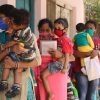
Time to Rethink Health Financing: It’s Not Just a Public Sector Concern
As G7 leaders of the world’s wealthiest nations wrapped up their summit in Kananaskis June 16, a critical issue was absent from the agenda: the future of global health financing.
Where the Thunder Dragon Breathes: Bhutan’s Bold Bet on Climate, Culture and Contentment
“I can’t get this anywhere else,” says Tshering Lhamo, a 29-year-old shopkeeper in Thimphu, as she gestures toward the clean Himalayan air outside her thangka shop. She once studied in Kuala Lumpur but came back to Bhutan for the peace—and the purity. Her friend, Kezan Jatsho, who has never left the country, adds, “I cherish the peace here,” even as many of their peers migrate abroad.
Regaining Progress on Birth Registration Is Critical to Child Protection
Registering the birth of a newborn, which is taken for granted in many countries, has profound lifelong repercussions for a child’s health, protection, and well-being. But after initially increasing this century, the global birth registration rate has declined in the past ten years, with some countries in the Pacific and Sub-Saharan Africa facing significant challenges. Embracing new registration technologies, increasing political will, and increasing parents’ understanding of its importance are paramount to reversing the trend.
Tanzania Champions Aquatic Foods at UN Ocean Conference in Nice
With less than six harvest seasons left to meet the Sustainable Development Goals (SDGs), the urgency to find transformative solutions to end hunger, protect the oceans, and build climate resilience dominated the ninth panel session at the 2025 United Nations Ocean Conference in Nice, France.
Ocean Protection is a Multi-Billion Dollar Opportunity
The services the ocean provides are the backbone of our collective health, wealth and food security, yet today just 2.7% of the ocean has been assessed and deemed to be effectively protected. In failing to establish adequate safeguards, not only are we condemning communities and ecosystems across the world to decline and collapse, we are also overlooking a significant economic opportunity.
Disaster Risk Reduction: The Insurance That Always Pays Off
Floods, earthquakes, and droughts are striking the wallets of the world harder than any other time in history. According to the Global Assessment Report on Disaster Risk Reduction, the cost of disasters is only growing, with annual expenditures exceeding 2.3$ trillion; accounting for over 2% of global GDP, and if represented as a nation, it would have the seventh largest GDP.
A Step Closer to Justice For Slain Journalist Daphne Caruana Galizia
“We didn’t want revenge. We want justice—justice for Daphne and for the [crimes exposed in] her stories.”
Private Sector Key to Unlocking the Future of Development
Geopolitical tensions – from deepening rivalries between major powers to regional conflicts – have placed acute pressure on the international development agenda. Development assistance from major funders has been on the decline. The world is becoming more unpredictable.
Make Use of all Urban Waste, a Utopia in Brazil?
In 2014, Santa Catarina became the first and only state free of open-air garbage dumps in Brazil. Now, 14 of its municipalities are seeking to also free themselves from landfills and make use of nearly all urban solid waste.
France Rallies World Leaders to Seal Ocean Protection Deal at UN Conference in Nice
With the future of the world’s oceans hanging in the balance, global leaders, scientists, and activists gathered in the French Riviera city of Nice this week for the historic UN Ocean Conference, where France declared a new era of high seas governance and marine protection.
UN Ocean Conference Closes with Historic Commitments, But Activists Demand Action Beyond Words
The third United Nations Ocean Conference (UNOC3) concluded today in Nice with an urgent call for governments to translate bold words into concrete action to protect the world’s oceans. Co-hosted by France and Costa Rica, the summit brought together more than 15,000 participants, including 50 heads of state and government, civil society leaders, scientists, youth, and Indigenous communities in an 11-day event hailed as both a milestone for ocean diplomacy and a test of global resolve.
Reviving Mangroves at the Edge of Mozambique Channel
Just before dawn, a flotilla of wooden canoes drifts silently through mangrove-tangled channels where roots sprout from the black mud of the lagoon. Here, at the edge between sea and forest, lies a story of restoration.
Biggest-Ever Aid Cut by G7 Members a Death Sentence for Millions of People
Aid cuts could cost millions of lives and leave girls, boys, women and men without access to enough food, water, education, health treatment. G7 countries are making deliberate and deadly choices by cutting life-saving aid, enabling atrocities, and reneging on their international commitments
Ocean Action Boosted in Africa as Biodiversity Leaders Call for Urgent Synergy, Funding Reform
As the curtains draw on the UN Ocean Conference, a flurry of voluntary commitments and political declarations has injected fresh impetus into global efforts to conserve marine biodiversity. With the world’s oceans facing unprecedented threats, high-level biodiversity officials and negotiators are sounding the alarm and calling for renewed momentum—and funding—to deliver on long-standing promises.« Previous Page — Next Page »





The Week with IPS

NEXT STOP - SDGs
Tracking global progress towards a sustainable world
Tracking global progress towards a sustainable world
