Languages
Sunday, July 26, 2026



News and Views from the Global South
Sustainable Development Goals
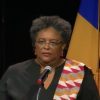
Food, Water, Crime, Climate Change: CARICOM Leaders Begin 48th Conference with Commitment to Joint Action on Critical, Common Concerns
Leaders of the Caribbean Community (CARICOM) are meeting in Bridgetown from Feb. 19-21, as the world grapples with multiple crises, including escalating geopolitical conflicts, climate change and rising food insecurity.
Shaping AI Rules Through Trade Agreements
The inclusion of AI provisions in preferential trade agreements (PTAs) has been steadily rising. Since 2019, when the China-Mauritius Free Trade Agreement first mentioned AI, PTAs have progressively evolved to include elements addressing the broader implications of emerging technologies.
Human Rights, Healthcare Disrupted in Eastern Europe With USAID Funding Freeze
As the full effects of the US decision to freeze foreign aid funding begin to be felt across the world, organizations in Eastern Europe and Central Asia (EECA) are warning years of work in everything from delivering life-saving healthcare to defending human rights and strengthening democracy could be undone.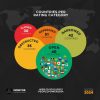
A Global Retreat from Solidarity
The world is witnessing a dangerous retreat from international solidarity by Global Minority countries. From Washington to Brussels, governments are slashing funds that sustain human rights, democracy, and humanitarian initiatives.
Why a Global Tech Fund for the Poorest Countries is a Smart Investment
The 4th International Conference on Financing for Development could catalyse coordinated action to close the financing gap and set the stage for a STI-driven transformation in the world’s poorest countries.
Afghan Refugees, Among Others, Feel the Impact of USAID Funding Freeze
“I was shocked when told by a security guard that the clinic has been closed down. I, along with my relatives, used to visit the clinic for free checkups,” Jamila Begum, 22, an Afghan woman, told IPS.
Development Effectiveness & the Quality of Financing: Towards a More Holistic Approach at Seville
When world leaders gather in Seville for the 4th International Conference on Financing for Development (FfD4) in June, they will be meeting at a pivotal moment: one defined by mounting systemic risks, a multiplication of crises, and proliferation and fragmentation of development co-operation actors and funds.
From Recovery to Resilience: Transforming Tourism for a Sustainable Future
Tourism is back – and stronger than ever. With 1.4 billion international tourist arrivals recorded globally in 2024, the sector has bounced back to pre-pandemic levels, signalling a recovery from its worst crisis.
Race Against Time as Hunger, Poverty Rise Amid Growing Global Uncertainties
Nearly one in 11 people in the world and one in five people in Africa go hungry every day, a crisis primarily driven by chronic inequality, climate change, conflict and economic instability. At the current pace, hunger and extreme poverty rates show little sign of drastically receding by 2030.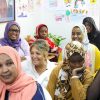
Gender Inequality in Science Limits Progress Towards Solving Complex Global Challenges
Today is the International Day of Women and Girls in Science and a time to take stock of progress, successes, and setbacks towards open and gender-inclusive science. Gender equality remains elusive in science, as only one in three scientists is a woman. Not only do these inequalities hold women back, but they also limit scientific progress.
Climatic Change Pushes Pakistan’s Promising Trout Fish Farming Towards Brink of Collapse
Pakistan’s once-thriving trout fish farming industry, a vital source of livelihood for communities in the country’s mountainous northern region, is now on the verge of collapse due to the devastating impacts of climate change.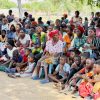
Namibia’s Drought Crisis: Building Resilience for Women and Girls
Communities in the Kavango West region of northern Namibia have firsthand experience of the severe impacts of climate change. The dry, cracked soil and emaciated livestock provide a constant reminder of the lack of access to water in this part of the country.
Belarus: Brutal Repression Continues Post Presidential Election, Say Human Rights Groups
In the months leading up to presidential elections at the end of January, Belarus’s authoritarian leader Alexander Lukashenko ordered the release of hundreds of political prisoners. Some observers saw this as a sign that the man who had led the former Soviet state for the last three decades could be planning a relaxation of his regime’s brutal repressions in return for a lessening of Western sanctions.
Decoding Africa’s Energy Journey: Three Key Numbers
At night, when the world lights up, large swathes of Africa remain cloaked in darkness—a stark reminder of the continent’s lack of reliable access to electricity.
WFP, FAO Warn of the Severity of the Climate Crisis and Food Insecurity
Over the past few years, climate shocks have become more frequent and have devastated economies and agriculture systems, exacerbating widespread malnutrition and hunger. It has become increasingly apparent that the utilization of sustainable agriculture practices and disaster risk management systems are crucial to fulfill growing needs as natural resources continue to dwindle.
Tanzanians with HIV Left in Crisis as USAID Funding Ends
At 9 a.m. on Monday, Mariam Msemwa clutched her clinic card tightly as she stood in line at Bagamoyo District Hospital’s HIV Clinic in Tanzania’s coastal region. The 19-year-old had been here many times before, picking up monthly doses of antiretroviral (ARV) drugs that kept her alive. But today was different.When she reached the counter, the nurse flatly told her. “There’s no more free medication, ” she said. “You’ll have to buy it yourself.”
Ending FGM Requires Strengthening Partnerships and Advocacy Efforts
February 6 is the International Day of Zero Tolerance for Female Genital Mutilation (FGM). A practice deemed a gross violation of human rights, tragically the practice persists across multiple countries in Africa, the Middle East, and Asia. Over 230 million women and girls alive today have been subjected to this gruesome practice, and experts warn that at least 27 million more could endure this by 2030.
Goma: What Have We Done to God to Deserve All This?
Zawadi Delphine is a soldier's wife and mother of three. She and her family live in Camp Katindo, east of the city of Goma, the provincial capital of North Kivu. Recalling what happened on the night of Sunday, January 26, 2025, she says that her husband had come from the front, north of the city of Goma, visibly angry and in a hurry. Without telling her what was really going on, he had told her that they would only meet again by "divine grace."
U.S. White House Executive Order Raises Concerns for Its Support to the UN
A new executive order from the United States White House calls for withdrawing support from major UN entities and a review of all international intergovernmental organizations which the United States is a member of. The U.S.’s orders against the UN Palestine Refugee Agency also do not bode well for ongoing ceasefire negotiations in Gaza.
Pakistan: Freedom of Expression at Stake With New Cybercrime Law
“I may not be able to continue hosting my show because the content I put up will most certainly land me in prison,” said senior correspondent Azaz Syed who works for a private TV channel, but who also has his own private online digital channel. He was referring to the recent amendment in the already existing cybercrime law, terming it a “wild” law which has been instituted to grapple with fake news among other online harms.
Benin: An African Pioneer
Benin faced a number of negative spillovers in 2022: a deteriorating regional security situation at its northern border, the lingering scars of COVID-19, and higher living costs amid the war in Ukraine.« Previous Page — Next Page »


The Week with IPS

NEXT STOP - SDGs
Tracking global progress towards a sustainable world
Tracking global progress towards a sustainable world
