Languages
Monday, November 9, 2026



News and Views from the Global South
Sustainable Development Goals
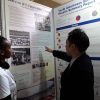
Lessons From Youth-Focused ‘Future Action Festival’ Ahead of UN Summit of the Future
The world has crossed the halfway point to the end of the Sustainable Development Goals (SDGs) era amid multiple, unprecedented, and significantly destructive global shocks. Two of the most pressing global challenges are the climate crisis and the threat of nuclear armament. Of serious concern is a severe lack of youth engagement on issues of critical global importance. Speaking to IPS during the 2024 UN Civil Society Conference, the outcome of which will inform high-level discussions when the UN hosts hundreds of world leaders, policymakers, experts, and advocates in September at the Summit of the Future in New York, Tadashi Nagai stressed the importance of coalition and movement building and youth engagement to escalate progress towards attainment of the SDGs.
International Community Urged to End Impunity for Violence Against Healthcare in Conflicts
Governments and international agencies must do more to end impunity for violence against healthcare, campaigners have urged, as a new report shows that attacks on healthcare during conflicts reached a new high last year.
Small Island Developing States can be Nature-Positive Leaders for the World
Small island developing states (SIDS) are scattered across the globe, dotting the Pacific Ocean, the Caribbean, the west and east coasts of Africa and the Indian Ocean.
Biodiversity Meet Suggests New Guidelines on Synthetic Biology Amid Persisting Questions
After a week-long discussion by delegates from 196 countries, the 26th meeting of the Subsidiary Body of Scientific, Technical, and Technological Advisors (SBSTTA) of UN Biodiversity has concluded with a set of recommendations on several issues, including living modified organisms (LMOs) and synthetic biology. All nations must consider the recommendations, discuss them, and possibly adopt them at the Biodiversity COP in October. However, many questions remain unanswered and unclear.
International Diplomat Erik Solheim on Politics, Climate Change, Much-Needed UN Reform and Trump
Erik Solheim, a senior internationally renowned politician and diplomat, has long been an advocate for combining development assistance with private investment and better taxation systems in recipient countries.
Rising Temperatures Drive Human-Wildlife Conflict in Zimbabwe
Rising temperatures are being blamed for an increase in human-wildlife conflicts in Zimbabwe as animals such as snakes leave their natural habitat earlier than usual.
More Diversified Trade Can Make Middle East & Central Asia More Resilient
Dislocations from the pandemic, geoeconomic fragmentation, and Russia’s war in Ukraine have shifted world trade dynamics. While this has created challenges, the redirection of trade has also generated new opportunities, particularly for the Caucasus and Central Asia.
Ocean Action on Global Agenda as Negotiations to Save Biodiversity Deepen
The oceans are as fascinating as they are mysterious. Home to the largest animals to ever live on Earth and billions of the tiniest, the top 100 meters of the open oceans host the majority of sea life, such as fish, turtles, and marine mammals. But there is another world far below the surface. In the belly of the ocean, there are seamounts—underwater mountains that rise 1,000 meters or more from the seafloor.
Educating the Mind Without Educating the Heart is No Education at All
The words above, by the ancient Greek philosopher Aristotle, serve as a reminder that we still have a long way to go to in educating ourselves. In doing so, we will naturally ensure that the young generation can access an inclusive quality education and use their knowledge to build a world of justice, equity, peace and security.
SBSTTA and SBI—Biodiversity Meetings Crucial for the Global South Begin
The 26th meeting of the Subsidiary Body of Scientific, Technical, and Technological Advisors (SBSTTA) of the United Nations Convention on Biological Diversity (UNCBD) started in Nairobi, Kenya, on Monday. Over 1,400 delegates, including 600 representing signatories or parties from over 150 countries, are present for the seven-day meeting at the headquarters of the United Nations Environment Programme (UNEP). A large number of members from Indigenous Peoples and other observer organizations, including women’s groups, are also attending the meetings.
Biodiversity Masterplan: Negotiations on Crucial Science, Technology for Implementation Underway
The triple planetary crises of climate change, biodiversity loss, pollution, and waste are escalating. At the current pace, the world is on track to lose one quarter of all plant and animal species by 2030, with one species already dying out every 10 minutes. One million species face extinction. Human activity has already altered three-quarters of the land on Earth and two-thirds of the ocean.
South Africa will be President of G20 in 2025: Two much-needed Reforms it Should Drive
South Africa will play an important international role in 2025 as president of the G20. The G20 is a group of 19 countries as well as the African Union and the European Union. Between them they represent 85% of global economy, 75% of world trade and 67% of global population. The G20 defines itself as the premier multilateral forum for international economic cooperation.
Inclusivity, Impact, and Innovation Needed to Meet SDGs, UN Civil Society Conference Hears
The world is neither on track to meet the Sustainable Development Goals (SDGs) nor is it leveraging emerging opportunities to effectively address global concerns such as extreme hunger, poverty, conflict, and climate change. Global concerns have outpaced existing structures for international cooperation and coping.
The Bleak déjà vu in Darfur
As dawn breaks over Darfur, my return after two decades feels heavy. Many millions are suffering once again. Twenty years ago, I was part of the humanitarian effort to make a difference. That was in the early 2000s, when celebrities and world-famous journalists would make the trek in a well-intentioned effort to focus attention on the atrocities across Darfur.
Dissenting Voices at Nairobi Soil Health Forum Over Increased Fertilizer Use
As the Africa Fertilizer and Soil Health Summit convened in Nairobi to review the progress made in terms of increasing fertilizer use in line with the 2006 Abuja Declaration, experts, practitioners, activists, and even government officials pointed out that accelerated fertilizer use may not be the magic bullet for increased food production in Africa.
Beyond the Fields: Unraveling Zambia’s Drought Crisis and the Urgent Call for Climate-Health Solutions
For most families in Zambia, April is traditionally a month of plenty—it is typically the beginning of a harvest season for various food and cash crops. Both fresh and dried maize, groundnuts, pumpkins, and a whole variety of both traditional and exotic food crops are usually in full supply and readily available for consumption, supporting household food security and nutrition.
Amid Record Displaced Persons, Migrant Remittances Spike—New IOM Report
While there have been a record number of displaced people worldwide, according to a new report by the International Organization for Migration (IOM), migrant remittances are promoting human development.
How do Taxes Drive the Sustainable Development Goals?
Tax revenue remains the most sustainable source of income for governments and plays a crucial role in financing the Sustainable Development Goals (SDGs). It diminishes the need for international assistance and contributes to the repayment of burdensome debt, ultimately strengthening a country’s ability to withstand external shocks.
1.8 Million More Palestinians Doomed to Poverty if Gaza War Persists
Nearly seven months into the Gaza war, the UN warns that to rebuild and restore the buildings lost in this period, it would take several decades, and to revitalize Palestine’s economy, it would be a great undertaking. Meanwhile, the great losses in housing and public services and the economic stall only threaten to push even more Palestinians into poverty.
LDCs Need Concessional Grants, Not Loans, Say Experts
Olaide Bankole was born and raised in Nigeria, and he observed how climate change was evident in the country with temperature rises and rainfall variability and how drought, desertification, and sea level rises have been affecting its people. He is also aware of how rising sea levels threaten southern Nigerian cities like Lagos and coastal areas, increasing their vulnerability to flooding and waterborne diseases.
Media Freedom Declining Across Europe, With Implications for Rule of Law
A new report has warned media freedom in the EU is close to “breaking point” in many states amid rising authoritarianism across the continent.« Previous Page — Next Page »





The Week with IPS

NEXT STOP - SDGs
Tracking global progress towards a sustainable world
Tracking global progress towards a sustainable world
