Languages
Saturday, September 26, 2026



News and Views from the Global South
Financial Crisis
30 Million Lost Jobs Drag Down Global Economic Recovery
The global economic recovery is being stymied by a hefty rise in unemployment in industrial economies, including the United States, Japan and Western Europe, according a new U.N. report released here.
Q&A: Universal Basic Income Would Combat Inequality in Latin America
Argentina, Chile, Costa Rica, Uruguay and even Brazil are close to being able to provide a universal basic income to all citizens, which is the way to make cash transfers an effective tool in fighting inequality, according to Martín Hopenhayn.
DEVELOPMENT-MOZAMBIQUE: Hunger Stalks 55 Percent of Adults
Baptista Macule is sitting on a sack of groundnuts in a dusty side-alley near the sprawling, makeshift Malanga market on the outskirts of Maputo. He squints into the sun as he tries to explain the extent of poverty in his country.U.S.: Federal Reserve Conjures – and Redefines – Money
The private central bank of the United States, the Federal Reserve, has begun purchasing $600 billion of long-term U.S. Treasury Bonds, essentially subsidising the federal deficit for the year.Migrant Population on Track to Hit 400 Million
The population of migrants worldwide could rise above 400 million by 2050 if present rates of growth continue, says a report by the International Organisation for Migration released Monday.
DEVELOPMENT: Economic Boom Worsened De-industrialisation of LDCs
Least developed countries (LDCs) in Africa did not use the commodity export boom of the mid-2000s to diversify their economies from commodity dependence to manufacturing value-added products. Significantly, the agricultural sector has also not benefited, with the result that LDC reliance on imported food has become even worse.Strong as China, Fragile as Porcelain
In times of inflationary pressures the price of patriotism too goes up. The news that an 18th century Chinese porcelain vase sold for a record-breaking 68 million dollars at a London auction to a mainland China buyer this month did not go down well either with Chinese government regulators fretting about asset bubbles or with a Chinese public angry about income inequality.Despite Setbacks, Africa Seen as Key Player in Future
As the international community commemorated Africa Industrialisation Day last week, United Nations officials expressed mixed emotions about a beleaguered continent plagued by a rash of political, economic and military crises.Lisbon Armed to the Teeth for NATO Summit
Helicopter gunships patrolling the skies, missile launcher ships in the Tagus estuary, police with heavy machineguns and armoured cars deployed on the main streets of the Portuguese capital have created a warlike ambience in the city hosting the North Atlantic Treaty Organisation (NATO) Summit.“Perfect Storm” Spurred 2007-08 Food Crisis, Study Says
Rising food prices have not yet reached crisis levels but they are expected to remain very volatile for about the next decade, researchers said Thursday.
EGYPT: Soaring Food Prices Squeeze Poor
Prices for most basic food commodities in Egypt have finally returned to earth - more or less - after soaring to unprecedented levels over the summer. But steadily rising food costs in recent years, along with the government's seeming disinclination to take effective steps to regulate the market, continue to be the source of mounting public anger.ECONOMY: East Timor Extends a Hand to Troubled Portugal
With the announcement that his country is ready to buy Portuguese debt, the president of East Timor, José Ramos-Horta, set a precedent in international economic relations that was universally praised in political and financial circles in this southern European country.G-20: Summit Shows Power Shift for Developing Economies
Currency and trade tensions may have grabbed the headlines from the two-day summit of the Group of 20 advanced and developed economies, but the bigger story is how the tables have turned and given developing countries a much stronger voice at the international negotiating table.
LABOUR-SWAZILAND: Jobs to be Cut to Secure International Loan
Thousands of public servants in Swaziland are due to lose their jobs in cutbacks as part of a government bid to gain approval from the International Monetary Fund for a loan. But some Swazis would rather see the budget slashed for the country’s autocratic royals.G20: Heading Towards the End of Globalisation?
A "grave recession" in the world economy may lie ahead, with a profusion of new barriers to trade and capital flows, if the Group of 20 major economies (G20) fail to come up with solutions to the present crisis.DEVELOPMENT: Currency Friction A Test of G-20 Mettle
South Korea’s leadership faces a serious test when it hosts a summit of the Group of 20 advanced and developing economies this month, amid a currency war that is straining relations among its members.
TRADE-SOUTHERN AFRICA: EPA Talks Will Miss Latest Deadline
While a trade deal between the European Union and Southern African countries is close it will not be concluded before the end of this year. In the meantime, South Africa remains in pursuit of an ambitious regional integration agenda.FINANCE: Ahead of G-20 Summit, Capital Controls Gain New Currency
South Korea’s closing of ranks with Asian countries that have recently embraced capital controls signifies that such measures will be up for discussion at next week’s summit of the world’s 20 major economies in Seoul.The G20 in Seoul – Summit or Abyss?
On Nov. 11, the Group of 20 (G20), representing the interests of countries who collectively produce over 85 percent of global wealth, will gather in Seoul, South Korea for its fifth summit.GREECE: Chinese Turn Up, At the Right Time
The clichés of the China man in Greece are quickly unraveling. The cheap clothing trader and the small Chinese restaurant owner are still there. Chinese masseuses are still trawling the beaches in search for customers. This familiar crowd, though, is increasingly overtaken by throngs of picture-snapping and cash-dolling Chinese tourists.
Republicans Sweep U.S. House
Opposition Republicans have scored major victories in the country's midterm elections by taking control over the House of Representatives from the Democrats and scoring impressive gains in the Senate, which delivered a stinging blow to Barack Obama's presidency.« Previous Page — Next Page »


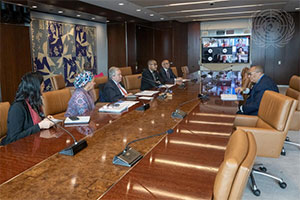 Secretary-General Meets with Members of Debt Expert Group. Credit: UN Photo/Eskinder Debeb
Financial crises are often defined by banking panics, recession, loss of market value, and deflation. Various financial crises at the turn of the 20th century, such as the Asian Crisis of 1997-1998 and the 2007-2008 Global Financial Crisis, have had immense impacts on the world economy. The COVID-19 pandemic also caused a financial crisis when mass lockdowns triggered staggering unemployment rates, a stagnation of economic growth, and led to the 2020 stock market crash. With the Russian invasion of Ukraine, the world has also witnessed a global energy crisis with shortages and increased prices in oil, gas, and electricity markets. According to UNCTAD’s World of Debt 2025, global public debt surpassed $100 trillion in 2024, with developing country debt growing twice as fast as developed economies since 2010. Burdens of debt servicing come with economic slowdowns and demands of austerity from lenders, with some economists arguing that this will lead to a new “lost decade” for the Global South. IPS brings you worldwide coverage of these financial developments and how we should manage these crises.

The Week with IPS

NEXT STOP - SDGs
Tracking global progress towards a sustainable world
Tracking global progress towards a sustainable world
