Languages
Saturday, September 26, 2026



News and Views from the Global South
Financial Crisis
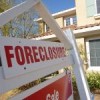
Foreclosure Mess Reveals Longstanding Problems
The discovery of apparent massive fraud in mortgage and foreclosure documents has called into question millions of pending foreclosures in the U.S. Several banks have enacted partial or complete moratoriums until the issues can be resolved.U.S. Slides on Corruption Index
Iraq and Afghanistan rank near rock-bottom in an index of corruption in 178 countries that found that nearly three- quarters of the countries surveyed showed serious corruption problems.Portugal’s Economy Headed Down a Dead-End Street?
"They are a heartache," admitted Portugal's Prime Minister José Sócrates about the draconian economic measures his government approved in a bid -- with dubious effectiveness -- to calm the financial markets and recover lost credibility.‘Food Empires Creating Agricultural Crisis’
Forget speculators, forget biofuel farmers. The real cause behind the permanent food and agricultural crisis is the imperial food regime, squeezing money out of agriculture, a Dutch professor says.U.N. to Focus on Poorest of the World’s Poor
The United Nations, which is planning to hold a major international conference on Least Developed Countries (LDCs) next year, has been put on notice: if the mounting social and economic problems of poorer nations are not resolved, "There will be no peace and stability in the world."China Offers a ‘Marshall Plan’ to Some of Europe
China's display of largesse towards debt-ridden European nations has divided observers, inviting comparisons on one side to a Chinese Marshall plan for Europe, and to a Chinese communist takeover of the continent on the other.
Compromise on Reforms Eludes IMF Fall Meetings
When the annual meetings of the World Bank and International Monetary Fund got under way this week, the agenda ranged from ongoing talks about "currency wars" between countries to how to maintain progress on poverty reduction in the face of economic crises, to reforming the mandates and governance of the Washington-based international financial institutions.Support Growing for Degrowth
In the face of a global recession that has not yet run its course, there is growing demand now for an economic model away from reliance on continued growth.EU Takes On Chinese Currency, Softly
The European Union is riding in the middle of an escalating currency spat between China and the United States, perceived by many in Beijing as a smokescreen for Washington's efforts to sap China's growth and contain its rise.G20 Summit Cracks Open Door to Five Non-Members
The G20, a group of powerful political and economic decision- makers criticised for its exclusivity, has invited five non- members to its next summit meeting in South Korea in November.
EUROPE: Where the Roma Begin to Prosper
The "gypsy market" in Brasov is bustling with activity on a Saturday morning. It's one of the few places left where pensioners and other low-income Romanians can buy decent clothes cheaply. And also here, the power dynamics between Roma and non-Roma is silently shifting.Greek Society Falling, Falling…
People walking casually past a sleeping or unconscious person has become a recurrent scene in downtown Athens these days. At Omonia square in the heart of the Greek capital one sees signs of social degeneration and segregation that were unknown only a decade ago.
SPAIN: Renewable Energy a Remedy for Economic Crisis
One of the causes of Spain's deep economic crisis is the country's limited ability to export goods with high added value. But the pioneering renewable energy sector has the potential to fill that gap.DEVELOPMENT: A Fat Cat Tax for Lean Times
As world leaders convened Monday for the first day of a summit dedicated to resuscitate efforts to achieve the Millennium Development Goals (MDGs), the question of how to finance countries' acceleration efforts looms large.
LATIN AMERICA: Crisis Not a Thing of the Past for NGOs
The countries of Latin America, with few exceptions, have weathered the global recession of the past two years relatively well, while they simultaneously continued the process of shedding neoliberal policies in their most fundamentalist form. But in financial terms, non-governmental organisations have not fared so well.
AFRICA: Liberalised Services Still Require Proper Regulations
With African countries' trade remaining inordinately dependent on natural resources exports, their economies could benefit from liberalisation of trade in services but only as long as proper domestic regulatory frameworks are put in place, some trade experts argue.U.S.: Money for Prisons, Not for Social Services
Many of those who have lost their jobs and homes in the United States due to the lingering economic recession are ending up in jail, according to a new study released by an independent think tank Thursday.One in Seven U.S. Citizens Sinks into Poverty
Poverty rates in the United States have climbed to their highest level since 1994, according to a report released Thursday by the U.S. Census Bureau.Hunger Drops Mere Half a Percent over Last Decade
Ten years after setting the goal of halving the proportion of people suffering from poverty and hunger by 2015, only mixed success can be found for the U.N.'s Millennium Development Goals (MDGs), and the degree of success is dependent not only on what country is examined but which evaluation is used.
ECONOMY-SOUTHERN AFRICA: Threat of States Collapsing Looms Large
The mooted restructuring of the revenue-sharing agreement of the world’s oldest customs union could lead to at least two of its Southern African members collapsing into "failed states" status as well as macroeconomic crises in two of their neighbours in the sub-region.
TRADE: It’s the End of the Export-Led Growth Model, Says UNCTAD
While the recovery from the financial and economic meltdown remains fragile in especially the developed world, the outlook for Africa inspires optimism, according to UNCTAD. The agency also believes the crisis might be the death- knell for the export-led economic growth model -- especially African countries should leave it behind.« Previous Page — Next Page »


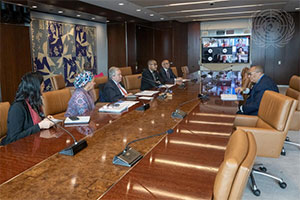 Secretary-General Meets with Members of Debt Expert Group. Credit: UN Photo/Eskinder Debeb
Financial crises are often defined by banking panics, recession, loss of market value, and deflation. Various financial crises at the turn of the 20th century, such as the Asian Crisis of 1997-1998 and the 2007-2008 Global Financial Crisis, have had immense impacts on the world economy. The COVID-19 pandemic also caused a financial crisis when mass lockdowns triggered staggering unemployment rates, a stagnation of economic growth, and led to the 2020 stock market crash. With the Russian invasion of Ukraine, the world has also witnessed a global energy crisis with shortages and increased prices in oil, gas, and electricity markets. According to UNCTAD’s World of Debt 2025, global public debt surpassed $100 trillion in 2024, with developing country debt growing twice as fast as developed economies since 2010. Burdens of debt servicing come with economic slowdowns and demands of austerity from lenders, with some economists arguing that this will lead to a new “lost decade” for the Global South. IPS brings you worldwide coverage of these financial developments and how we should manage these crises.

The Week with IPS

NEXT STOP - SDGs
Tracking global progress towards a sustainable world
Tracking global progress towards a sustainable world
