Languages
Monday, October 19, 2026



News and Views from the Global South
Green Economy

Biogas, a Circular Energy, Advances in Brazil Thanks to Local Arrangements
“I don't know of a more sustainable technology for the transformation of society than biogas,” said Professor Alex Enrich-Prast, an activist for this energy alternative with a highly diversified and decentralised expansion in Brazil.
Solar Panels Aim to Protect Mexican Family Farming
Verónica Molina, an indigenous Comcaac woman, first came into contact with solar energy in 2016, when she travelled to India for training on communal photovoltaic facilities. This later enabled her to take part in the installation of the first solar systems and family vegetable gardens in her community, Desemboque del Seri, in northern Mexico.
Net Zero by 2050 Delays Needed Urgent Climate Action
Net zero emissions by 2050 prioritise mitigation for climate stabilisation. Pledges to achieve this still distant target have grown but inadvertently delay urgently needed climate action in the near term.
Mexican chinampas survive surrounded by threats
Mexican Crescencio Hernández orders radishes, herbs and lettuce for shipment to an alternative market in west-central Mexico City.
Rural Survival: Guardians of Mother Earth Saving Mau, Revitalizing Native Lands
The Great Rift Valley is part of an intra-continental ridge system that runs through Kenya from north to south. A breathtaking, diverse mix of natural beauty that includes dramatic escarpments, highland mountains, cliffs and gorges, lakes and savannas. It is also home to one of Africa’s greatest wildlife reserves—the Maasai Mara National Reserve.
Climate Activists Target Culture Greenwashing
Civil society is working on all fronts to tackle the climate crisis. Activists are protesting in numbers to pressure governments and corporations to cut greenhouse gas emissions. They’re using non-violent direct action and high-profile stunts, paying a heavy price as numerous states criminalise climate protest.
Clean Energy Boosts Autonomy for Brazilian Women Farmers – VIDEO
 A community bakery, family production of fruit pulp, and the recovery of water springs are some of the initiatives of the Energy of Women of the Earth, organised since 2017 in the state of Goiás, in central-western Brazil.
Micro-Dams, a Solution to Water Shortages in Rural Brazil
Water shortage is over, springs have emerged or become perennial, small ponds with fish have formed and pastures have become greener and more permanent, all thanks to the ‘barraginhas’, the Portuguese name given in Brazil to micro-dams that retain rainwater and infiltrate it into the soil.
Hydrogen from Renewables or Fossil Fuels? The Panamanian Question
In 2021, the Panama Canal welcomed a French experimental ship on a world tour, the Energy Observer, the first electric vessel powered by a combination of renewable energies and a hydrogen production system based on seawater.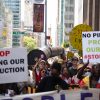
Sportwashing Allegations at Africa’s Top Football Tournament
Following the recent Africa Cup of Nations (AFCON) tournament in Ivory Coast, a continent-wide campaign has emerged on social media challenging the tournament's main sponsor, TotalEnergies, over its involvement in the East African Crude Oil Pipeline (EACOP).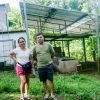
Rural Communities in El Salvador Get Their Water Supply from the Sun
Setting up a community water project with a solar-powered pumping system was an unlikely idea for the peasant families of a Salvadoran village who, despite their doubts, turned it into reality and now have drinking water in their homes.
Are Sustainable Cities a Pipe Dream?
Cities, once thought to be modern utopias that foster innovation, inclusivity, and commerce, actually ended up being hubs for environmental degradation. Although the concept of urban living is inextricable from humanity, there are proposed ways to make them less environmentally taxing. One such solution is the idea of a sustainable city, otherwise known as a metropolis that effectively consumes fossil fuels and disposes of emissions with regards to the longevity of the planet as well as the economic wellbeing of its citizens. Cities can also be considered sustainable so long as they curb the consequences of consumption through means such as recycling or using healthier energy sources. Although this sounds like a simple path forward in Earth’s journey of decarbonizing, we must take a plethora of issues into consideration, such as transportation, housing, manufacturing, trade, and comfort.
Mexico Struggles to Cut Emissions from its Ports
The port of Pichilingue, in northwestern Mexico, faces challenges in decarbonising its activities, as do other maritime infrastructures in the country, while its polluting emissions are increasing.
Fake Climate Solutions Spread Across Latin America
Government and private initiatives and programmes to address the climate crisis in Latin America and the Caribbean are in fact a vast array of fake solutions, according to a new regional map made by environmental organisations in several of its countries.
Solar Energy, Vetoed as a Source of Income for the Poor in Brazil
“I feel like a mother who lost her son to drugs, to vice, destroying himself,” says Lucineide da Silva, 56, mother of eight children and grandmother of 11.
Using Industrial Waste to Fight Pollution in Brazil
Biogas sounds like redemption, the conversion of the sinner. Its production involves extracting energy from filth, from the most disgusting environmental pollution, and at the same time avoiding the worsening of the global climate crisis.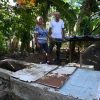
Cuban Family Harnesses Biogas and Promotes its Benefits
Just to obtain a good fertilizer it was worth building a biodigester, says Cuban farmer Alexis García, who proudly shows the vegetables in his family's garden, as well as the wide variety of fruit trees that have benefited from biol, the end product of biogas technology.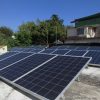
Better Incentives Needed to Expand Solar Energy in Cuba
With a bolder policy and flexible payment mechanisms, perhaps Alexis Rodríguez would have opted for solar panels for his home, instead of the portable generator that has made it possible for him to weather the frequent blackouts caused by Cuba's recurrent energy crises.
Conservation Efforts by Ethnic Communities in Bangladesh Bolster Water Security
Just a few years ago, Sudarshana Chakma (35), a resident of the remote Digholchari Debarmatha village under Bilaichari upazila in the Rangamati Hill District, had to traverse a long hilly path to fetch water for her household because there were no local water sources. "Unchecked deforestation and degradation of village common forests (VCFs) led to the drying up of all-natural water sources in our village. We struggled to collect drinking and household water," Chakma explained to IPS.
Brazil’s Biofuel Potential Set to Expand Thanks to Sustainable Aviation Fuel
Brazil is counting on biofuels to assert itself as an energy powerhouse in the near future, as a decisive supplier of low-carbon jet fuel, a requirement of the climate crisis. The electrification of automobiles has tended to curb the strong ethanol and biodiesel agribusiness developed in the country since the 1970s. But demand for sustainable aviation fuel (SAF) now offers the possibility of significant new expansion for many decades to come.
Salvadoran Poultry Farms Produce Biogas, Easing Socio-environmental Conflicts
In a win-win relationship, a segment of El Salvador's agribusiness industry is taking steps to ease the tension of the historic socio-environmental conflict caused by poultry and pig farms, whose waste has caused concern and anger in nearby communities.« Previous Page — Next Page »





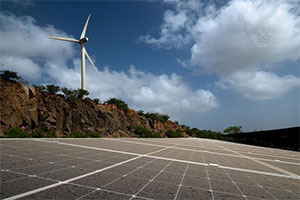 Renewable Energy in Cabo Verde. Credit: UN Photo/Mark Garten
A green economy is an economic model that aims to reduce environmental risks and build a sustainable future. Many of the UN SDGs seek to facilitate a green economy, such as ensuring access to affordable and reliable clean energy, building sustainable cities and communities, and implementing urgent action to combat climate change. Various key negotiations have strived to achieve a green economy, such as the Green New Deal and the Inflation Act of 2022. COP30, held in Belém, Brazil in 2025, agreed to mobilize $1.3 trillion annually for climate action and launched the Belém Mission to 1.5°C. However, the conference was not able to develop a fossil fuel reduction roadmap. Recent years have witnessed a sharp transformation in the geopolitical landscape of international sustainability cooperation. In March 2025, the United States stepped back from formal multilateral support for the SDGs, while China is on the rise as an international leader in renewable energy production. The actions of these global powers may shape shifting alliances on environmental governance. IPS is dedicated to sharing timely news on international developments in building a sustainable future.

The Week with IPS

NEXT STOP - SDGs
Tracking global progress towards a sustainable world
Tracking global progress towards a sustainable world
