Languages
Thursday, November 19, 2026



News and Views from the Global South
Natural Resources
ENVIRONMENT-GUATEMALA: Mines Bring No Benefits to Local People
The new draft law on mining before the Guatemalan parliament does not strictly regulate water use and environmental protection, does not provide for community consultation, and sets royalties payable to the state at too low a level, say environmental and social organisations.SUDAN: Ruling on Oil-Rich Border Area Fraught With Tension
The international community, in particular the U.S., has a responsibility to ensure that this week's upcoming legal decision on the boundary of Abyei, an oil-rich and contested region along the disputed north-south border within Sudan, is respected and that the residents of Abyei and the affected surrounding areas are protected from violence, said a strategy paper by the Enough Project released Monday.MIDEAST: Turkey Gets Boost from Pipeline Politics
The political geography of the modern Middle East has been affected for one hundred years by the appetite of westerners and other outsiders for the region's hydrocarbons.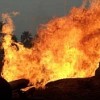
ENVIRONMENT-NIGERIA: Playing With Fire
Nigeria's gas flare-out date has once again been extended - this time to 2011. The decision follows 25 years of political procrastination by the federal government and illegal behaviour on the part of major oil multinationals engaged in flaring associated gas (AG), the byproduct of oil production in the Niger Delta.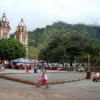
COLOMBIA: Gold vs Preservation in the Central Mountains
In a protected area of the Cordillera Central, Colombia's central mountain range, gold mining plans are clashing with the desire of farmers, activists and environmental officials to preserve forests and water resources.YEMEN: Problems Go Far Beyond Narrow U.S. Focus on Terror
Yemen's recent reappearance on the U.S. radar due to its reputation as a safe haven for al Qaeda has brought more attention to the country of 23 million and its persistent underlying problems – the least of which may be terrorism.SPAIN-EQUATORIAL GUINEA: More Trade, Little Pressure
Trade between Spain and Equatorial Guinea is flourishing, amidst calls by activists for the government of Spanish Prime Minister José Luis Rodríguez Zapatero to push for democracy in this tiny country on the Atlantic coast of Africa, still under the yoke of dictatorship.PERU: Three Days of Anti-Government Protests
Wednesday was the second day of a three-day strike declared by trade unions and social movements in Peru to protest the economic policies of President Alan García.EQUATORIAL GUINEA: Elites Hoarding Oil Revenues, Report Charges
The government of Equatorial Guinea has looted billions of dollars in oil revenue instead of improving the lives of its citizens, Human Rights Watch (HRW) said in a report released Thursday.IRAQ: Is Another Conflict Inevitable?
Relations between Iraq's various Kurdish, Arab and Turkoman ethnicities are going through a new round of complications since a provision in the draft constitution of the country's northern Kurdistan region declared a range of disputed areas part of the historical Kurdish homeland, infuriating non-Kurds in the country.TRANSPORT-BRAZIL: Recharge Your Batteries Here
Brazil has long been committed to developing alternatives to fossil fuels to power its vehicle fleet, to the extent that 90 percent of new cars sold in the country are flex-fuel, running on ethanol or gasoline in any proportion. Now the government is embarking on another technological field: electric vehicles.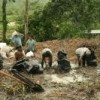
PERU: Petroleum Sullies the Amazon
"Now the fish are going to disappear," said Luis Umpunchi, an Awajún Indian, one of about 20 people gathered around a broken oil pipeline in the Jayais community, in the northern Peruvian province of Amazonas.US-ECUADOR: Chevron Fails in Effort to Lift Trade Benefits
In the latest in a string of setbacks that could cost the U.S. oil giant Chevron billions of dollars in damages, President Barack Obama decided this week to extend trade preferences for Ecuadorean exports for another six months under the 1991 Andean Trade Preferences Act (ATPA).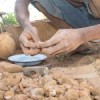
ZIMBABWE: 'Money Comes First, Health Second'
With half her body immersed in a muddy red pond, Esther Nyarambi closely inspects the contents of her wooden panning dish, locally known as zamba. Having spent the entire day pounding gold-bearing rock, she hopes her efforts will be rewarded with even the smallest nugget of gold.
TECHNOLOGY: Rare Metals Could Trigger Next Trade War
Used in electric car motors and wind turbines, neodymium, a "rare earth metal," is at the epicentre of the race between wealthy and emerging nations to create green technologies, while poorer countries appear to be relegated to spectator status.
ECONOMY-NIGERIA: Fears of Further Pain
With no formal education, Mama Ibeji may not be tracking the global economic crisis in the newspapers. But from her little roadside restaurant in Makoko, a Lagos suburb, she can tell that all is not well with the Nigerian economy.
ECONOMY-ZAMBIA: Hard Times on the Copperbelt
Nowhere in Zambia is the impact of the global financial crisis being felt harder than in the copper and cobalt-rich province of the Copperbelt.ANGOLA: Military Raids Target Restive Oil-Rich Enclave
A new report issued by Human Rights Watch (HRW) Monday calls for the Angolan government to end the arrest and torture of suspected rebels in the oil-rich enclave of Cabinda.PERU: Govt Partly Backs Down in Standoff with Native Groups
The Peruvian Congress repealed Thursday two of the most controversial decrees that sparked protests by indigenous groups which ended in bloodshed early this month.PERU: Congress Probes Massacre; Prime Minister to Quit
At the initiative of the opposition parties, the Peruvian parliament approved the creation of a committee to investigate the clash early this month between indigenous protesters and the police near the town of Bagua in the northern province of Amazonas, which according to official reports left a death toll of 34.
PERU: Families of Dead Native Protesters Tell Their Stories
Sobbing, an indigenous woman dressed in black cries out as she sees us arrive: "My son, my son, they have killed my son!" She is Andrea Rocca, the mother of Felipe Sabio, a young man who died in a clash between police and indigenous protesters in the northern Peruvian region of Amazonas.« Previous Page — Next Page »


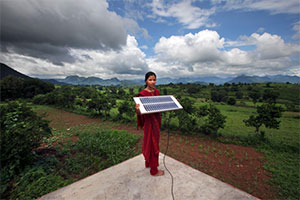 Bringing clean energy to rural India. Credit: Abbie Trayler-Smith / Panos Pictures / Department for International Development
Large reserves of oil, gas and minerals in developing countries generate opulent revenues. They could be used to stimulate economic growth and reduce poverty, but often result in environmental destruction and conflict, benefiting large companies and corrupt governments. Furthermore, competition over natural resources often manifests through geopolitical conflict. For example, before the US-Iraq war, Iraq’s domestic oil industry was nationalized. With US aggression came weakened Iraqi institutions and foreign intervention, thus eventually leading to the privatization of Iraqi oil, leaving the industry now largely dominated by Western companies. As another example, China’s rising investments within the lithium sector in South America are increasing the US-China rivalry across the Western Hemisphere. Notably, Bolivia has the largest reserves of lithium in the world, and the nation’s state-owned lithium extraction firm recently signed a contract with China’s CBC Consortium, while rejecting the entry of Western firms into the nation. In Bolivia’s case, rising Chinese investment in the nation’s lithium sector also raises concerns about environmental sustainability and the sociopolitical rights of Indigenous communities. More broadly, Sub-Saharan Africa holds nearly 30% of global reserves of critical minerals required for low-carbon technologies. Despite this, the region attracts less than 10% of global exploration investment, depicting a critical barrier to both the clean energy transitions and Sub-Saharan Africa’s economic development. Furthermore, resource wealth continues to fuel conflict like Sudan’s civil war, which has led to 9.1 million internally displaced people and is intensely connected to competition over gold, water, and agricultural land. IPS covers news about major oil, gas, and mining projects, their effects on the environment and local communities, and the ideas and actions of the interest groups involved.

The Week with IPS

NEXT STOP - SDGs
Tracking global progress towards a sustainable world
Tracking global progress towards a sustainable world
