Languages
Sunday, November 15, 2026



News and Views from the Global South
Economy & Trade

CORRECTED VERSION: Struggle for the Future of Food
Producers and consumers seem helpless as food all over the world comes under fast growing corporate control. Such changes have also been worsening environmental collapse, social dislocation and the human condition.
Latin America Bets Heavily on Hydrogen
Several Latin American countries are stepping up the pace to generate hydrogen for various uses in transportation and industry, but they must first resolve several questions.
The Illusion of Digital Inclusion in the Post-COVID World
We are living through a decisive moment. The COVID-19 pandemic’s devasting impact is reaching every corner of the world. As we look back at this period, we will see history divided into a pre-COVID and a post-COVID world.
Africa Goes Digital
In rebuilding after COVID-19, policymakers must invest in innovative technology to leapfrog obstacles to inclusive development. Africa has enjoyed strong economic growth for most of the 21st century, mainly because of robust global demand for primary commodities.
Coping with the USA-China Conflict – Strategic Procrastination
For several years, a fast growing and assertive China has been challenging the USA’s global dominance. China’s GDP, taking into account differences in purchasing power, is now greater than that of the USA; its military spending has been expanding rapidly and exceeds by wide margins that of other countries except the USA with which it is catching up; it is the manufacturing power house of the world; it is quickly moving up the technological ladder; and it is the key trading partner for an increasing number of countries. All this is creating tensions with the USA and its key allies.
The Garment Industry Needs More Women Leaders
If you enter a garment factory in India, or any part of the world for that matter, you will see that the workforce is starkly female. The Indian textile and garment industry employs 45 million people, out of which more than 60 percent are women. This makes it the biggest formal employer of women in a country where 80 percent of them are not engaged in paid work. While that might paint a rosy picture of women’s empowerment at the first glance, a closer look reveals something different.
UN Banks on Water as the ‘Game Changer’ in Food Production and Consumption
As the United Nations prepares for its solutions-based Global Food Systems Summit in September, officials say resolving issues around water scarcity, pollution and wastage is crucial transforming food production and consumption.
Why Experts are Saying It’s a ‘Make or Break’ Moment for Forests
A new global report on forests says that while the COVID-19 pandemic is the latest threat to achieving ambitious forest protection goals, it has brought the importance of forests to global well-being into sharp focus, and that this recognition must now be met with collection action.
The Complex Energy Transition of Chile’s “Sacrifice Zones”
Standing on Punta Ventanilla, Carlos Vegas, 65, looks across at the industrial park which has been there most of his life. He looks at the impact of the 15 industries spread around the bay that connects the towns of Quintero and Puchuncaví, in central Chile.
Transparency Offers Pathway to a More Sustainable Earth
Last week, the world marked Earth Day – an opportunity to put the spotlight on the pressing needs of our planet, in the face of ever-growing impacts by humanity, and galvanize action to change practices and behavior. Yet these issues were not, and cannot be, addressed in a single day. Resolve and action to protect the environment is a 365 days-a-year endeavor.
World Military Spending Rises to a Hefty $2.0 Trillion Despite UN Pleas for Cutbacks
The United Nations-- which is desperately seeking funds to help developing nations battling a staggering array of socio-economic problems, including extreme poverty, hunger, economic inequalities and environmental hazards-- has continued to be one of the strongest advocates of disarmament.
Disability in Goma. The Power of Staying Together Against Covid-19, War, and Stigma
 Sylvain Kakule Kadjibwami lost the use of his legs during one of those ambushes that bloodlessly bleed North Kivu. “When I was shot, I thought it was the end of my life, but when I shared it with other disabled people, I discovered that life is still possible,” he said. Now it is Covid-19 that risks destroying the dreams of Sylvain, a small trader from Goma, a city whose roads are volcanic rock-ridden screes where pick-ups trudge. Those who walk face the risk of falling at every step. However, for those who cannot, the same roads can become traps where it is not only war that kills but also a stigma fostering misery and disease.
This Earth Day, a People’s Perspective is What is Most Needed
Today marks Earth Day and all around the globe, advocates and activists, concerned citizens and the like will gather to raise awareness about the climate crisis.
Earth Day 2021: Passing On a Cleaner World
Preserving the beauty and wonder of our natural world for future generations should certainly be a goal everyone can get behind. While progress is often stymied by polarizing debates, clean air and water should be a priority for everyone.
GGGI appoints Kyung Hee University Professor, Mr. Kyung Nam Shin, as Assistant Director-General and Head of Investment and Policy Solutions
The Global Green Growth Institute (GGGI) has officially appointed Professor Kyung Nam Shin as Assistant Director-General and Head of Investment and Policy Solutions. He will assume his duties at the GGGI Seoul headquarters on May 1, 2021, to further the organization’s aim to catalyze green investments and policies for its Members.
Another False Start in Africa Sold with Green Revolution Myths
Since the Alliance for a Green Revolution in Africa (AGRA) was launched in 2006, yields have barely risen, while rural poverty remains endemic, and would have increased more if not for out-migration.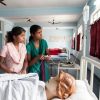
Challenges with Skill Development Programmes During the Pandemic
India’s evolving Technical and Vocational Education and Training ecosystem (TVET) faced many challenges during the COVID-19 pandemic. Because of the national lockdown, organisations had to remain shut for 7-8 months, until September 2020.
Global Austerity Alert: Looming Budget Cuts in 2021-25 and Alternatives
Last week Ministers of Finance met virtually at the Spring Meetings of the International Monetary Fund (IMF) and the World Bank to discuss policies to tackle the pandemic and socio-economic recovery.
Studying Marine Life’s Brief Break from Human Noise
Travel and economic slowdowns due to the COVID-19 pandemic have combined to brake shipping, seafloor exploration, and many other human activities in the ocean, creating a unique moment to begin a time-series study of the impacts of sound on marine life.
People’s Leader: A Dalit Woman Becomes The Voice of Farmers In India
On 12 January this year, somewhere in the outskirts of the capital, New Delhi, 24 year old Dalit activist Nodeep Kaur was arrested by the Haryana police for protesting outside a factory. During the lockdown in 2020, Nodeep joined a local workers’ rights organization called Mazdoor Adhikar Sangathan (MAS) in the Kundli Industrial Area in Haryana. In January Nodeep was accused of allegedly manhandling management and staff of an industrial area during a protest and also assaulting the police team.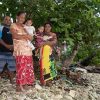
COVID-19 Teaches Us to Better Manage Global Systemic Risks
Millions of lives lost. Trillions of dollars in economic damage. Over 120 million more people pushed into extreme poverty. The human and economic toll of the COVID-19 pandemic is almost unimaginable – a once-in-a-century catastrophe.« Previous Page — Next Page »


 UN Commission on International Trade Law Holds Colloquium on Harmonizing Law in Age of Digital Trade and Finance. Credit: UN Photo/Manuel Elías
Trade has historically been a geopolitical tool that can both be used to propel development as well as entrench inequalities. In various nations in East Asia and Latin America, increased trade, as often seen in export booms, has allowed them to achieve influential standings within the global economy. On the other hand, many low-income countries in Sub-Saharan Africa, Asia, and Latin America struggle to maintain a robust trade performance, and oftentimes are subjugated to exploitative trade dynamics through intense extraction of their natural resources. In recent decades, international trade has reached a new era as emerging economies across the world are rising in economic preeminence. Stable international trade is crucial to world peace as global interconnectedness facilitates reliable diplomacy. Nevertheless, significant challenges are on the rise. Notably, a major wave of United States tariff escalations in January 2025 lifted US import taxes to their highest level since the 1930s, changing market dynamics and forcing renegotiations with global trading partners.These articles are aimed at informing readers about the complexities of trade and its varying effects on development, with a special focus on the consequences of the global economic crisis, the potential of fair trade and the gender implications of trade policies.
Updated by Yilan Batista and Shuli Wong August 2026

The Week with IPS

NEXT STOP - SDGs
Tracking global progress towards a sustainable world
Tracking global progress towards a sustainable world
