Languages
Wednesday, November 18, 2026



News and Views from the Global South
Economy & Trade

The Importance of the Upcoming FAO Election
With each passing day, the world gets just a little smaller as the internet and cell phones bring our communities together, reveal our shared challenges, and lay bare our failures. As global citizens, we are all concerned about the growing number of hungry people around the world and the threats to food security. The simple fact is that more than 800 million people go hungry every day, and if that number shocks you, know that experts predict the number to grow significantly over the next ten years.
Let’s Train Humans First … Before We Train Machines
We humans are at the absurd stage in our technological evolution when we seem to have abandoned our common sense. Billions are spent by governments, corporations and investors in training computer-based algorithms (i.e. computer programs) in today’s mindless rush to create so-called “artificial” intelligence, widely advertised as AI.
The Art of the Deal: What Trump May Teach Us
A friend of mine who became wealthy as an art dealer but eventually lost his fortune told me: "Money isn´t everything, but it helps." This made me think of Donald Trump, who likes to describe himself as an entrepreneur, i.e. ”owner of a business enterprise who, by risk and initiative, attempts to make profits."1 The keyword is profits. According to Trump, success is measured through wealth. Like chess and poker, entrepreneurship is about winning and losing. Trump characterizes people he dislikes as losers, while he considers himself to be a winner.
Air Pollution Ranked as Biggest Environmental Threat to Human Health
In a world that is becoming more and more industrial by the day, air pollution appears to be on the rise. While there have been efforts in major cities to combat the grave effects that pollution can have on the overall health of its citizens, there is still more progress to be made.
South Africa’s First Carbon Farm
Land restoration could attract large private investments in the fight against climate change over the coming decades, if Governments and the United Nations put the right incentives and conditions in place.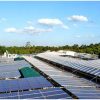
Developing Technologies for Zero-Carbon Economies
Never before has half a degree (0.5C) meant so much for humanity. We are behaving as if we have time to deal with climate change. We don’t. The main problem is that we believe we must sacrifice growth and prosperity for the sake of decarbonisation. We don’t.
Driving Financialization
The emergence and growth of financialization from the 1980s has been driven by several factors operating at various levels – national and international, ideological and political, and of course, technological. The 1971 collapse of the Bretton Woods (BW) international monetary system arguably paved the way for financial globalization.
Wealth and Power: Andrej Babiš and Donald J. Trump
When I recently visited the Czech Republic I noticed an increasing Czech opposition against their wealthy Prime Minister. Andrej Babiš has been endowed with the nickname Babisconi since he, like the former Italian Prime Minister Silvio Berlusconi, is accused of purchasing and using various means of communication for his own propaganda purposes. Apparently, this endeavour has so far been quite successful, since according to my Czech friends Babiš is still popular among a majority of their compatriots.
Restoring Our Degraded Planet
On the 1st of March 2019, we saw one of the rare moments in history when the entire world comes together and agrees on a joint way forward. The United Nations General Assembly recognized the urgent need to tackle the compounded crisis of climate change and biodiversity loss, and passed a resolution to proclaim 2021-2030 as the UN Decade on Ecosystem Restoration. With the aim to restore at least 350 million hectares of degraded landscapes by 2030 – an area the size of India – the UN Decade is a loud and clear call to action for all of us. And it is a great opportunity for the UN-REDD Programme and its partner countries to build on 10 years worth of relevant experience with safeguards, impactful policies and measures, and attracting private and public investments.
Empower Ocean Women
Our oceans play a major role in everyday life, but they are in grave danger. To protect the ocean, we must look to a crucial, largely overlooked component: gender.
Transforming Society, Financialization Destroys Social Solidarity
Finance has not stopped at dominating the real economy. The tentacles of finance have reached into significant, if not most parts of society. Gerald Davis characterises modern society, where finance is dominant, as a ‘portfolio society’, in which aspects of social life have been securitized and transformed into a kind of capital or investment to be managed.
The World Has Lost Its Compass
The terrible feeling I had on waking up and seeing the Italian voting results at the recent European elections was that my country was suddenly full of strangers. How could the majority of Italians reconfirm a government which has been the most inefficient in history, quarrelling on everything every single day and looking with total indifference to the looming problem of how to establish the next budget without clashing with the European Union or squeezing Italian citizens? Its irresponsible debate on the Italian finances has now led to a spread (difference of value) of 290 points with the Germans.
Watch Out: Your Money Is Being Used to Destroy the World!
Perhaps the most direct way to introduce this tough issue is what the United Nations Secretary-General, António Guterres, stated just one week ahead of the 5 June World Environment Day, which focuses this year on air pollution, caused chiefly by the use of fossil fuels both in transport, industry and even household cooking, heating, etc.
Lost in Globalisation
Do not panic! This is not about telling you how bank accounts and pension funds have been used to finance the production of nuclear bombs (they call it ‘investment’).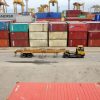
These Aliens Are Here to Stay (And They Are Dangerous)
No, no, no. Nothing to do with what US and Europe’s far-right fanatics now use to vociferate, saying once and again that “migrants come here to destroy our democracy, our civilisation, and our life-style”.
Asia-Pacific Region Viewed as Engine of the World Economy
Since this Commission first met in 1947, our countries have travelled a long journey. Our economies are expected to become larger than the rest of the world combined, measured by purchasing power parity. It is often said the Asia-Pacific region is the engine of the world economy.
Finance’s New Avatar
Over recent decades, the scope, size, concentration, power and even the purpose and role of finance have changed so significantly that a new term, financialization, was coined to name this phenomenon. Financialization refers to a process that has not only transformed finance itself, but also, the real economy and society. The transformation goes beyond the quantitative to involve qualitative change as finance becomes dominant, instead of serving the needs of the real economy.
Zimbabwe’s Resettled Farmers Hawking Cigarettes to Survive
For subsistence farmer Rogers Hove—who proudly brandishes a worn out letter for his five hectare piece of land he obtained from government following the chaotic land seizures from white commercial farmers over two decades ago—what matters most to him, “is to see my piece of land in my possession”.
Within a Parallel Universe – Monsters of the Dark Web
Human existence includes dreams, thoughts, ideas, music, stories, religion, and other immaterial ”things”. They constitute an important part of our habitat, i.e. the dwelling place of any living organism, consisting of both organic and inorganic surroundings. I learned this when I many years ago found myself among the undulating heights of Cordillera Central, which rise diagonally across the island of Hispaniola, shared by Haiti and the Dominican Republic.
Report Reveals Mounting Pressure on Zambia’s Environmental Resources
There is a strong link between provision of basic social services and the use of natural resources in a country. Thus, with increased population comes additional pressure on natural resources. This is a key finding in the latest Zambia Environment Outlook (ZEO) Report 4, published by the Zambia Environmental Management Agency (ZEMA).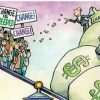
Poverty, policy and economic ruin? The true folly of neoliberalism
No matter which approach is used, every method of measurement shows inequality has risen in Bangladesh (at least) over the last 10 years. If we take the latest Household Income and Expenditure Survey of the Bangladesh Bureau of Statistics, we see that the country’s Gini coefficient—a measure of inequality—went up (indicating disparity has grown) from 0.458 in 2010 to 0.482 in 2016. From a different angle, a report released by Oxfam towards the close of last year ranked Bangladesh 148th in the world—out of 157 countries—for reducing inequality.« Previous Page — Next Page »


 UN Commission on International Trade Law Holds Colloquium on Harmonizing Law in Age of Digital Trade and Finance. Credit: UN Photo/Manuel Elías
Trade has historically been a geopolitical tool that can both be used to propel development as well as entrench inequalities. In various nations in East Asia and Latin America, increased trade, as often seen in export booms, has allowed them to achieve influential standings within the global economy. On the other hand, many low-income countries in Sub-Saharan Africa, Asia, and Latin America struggle to maintain a robust trade performance, and oftentimes are subjugated to exploitative trade dynamics through intense extraction of their natural resources. In recent decades, international trade has reached a new era as emerging economies across the world are rising in economic preeminence. Stable international trade is crucial to world peace as global interconnectedness facilitates reliable diplomacy. Nevertheless, significant challenges are on the rise. Notably, a major wave of United States tariff escalations in January 2025 lifted US import taxes to their highest level since the 1930s, changing market dynamics and forcing renegotiations with global trading partners.These articles are aimed at informing readers about the complexities of trade and its varying effects on development, with a special focus on the consequences of the global economic crisis, the potential of fair trade and the gender implications of trade policies.
Updated by Yilan Batista and Shuli Wong August 2026

The Week with IPS

NEXT STOP - SDGs
Tracking global progress towards a sustainable world
Tracking global progress towards a sustainable world
