Languages
Friday, November 20, 2026



News and Views from the Global South
Economy & Trade

Are We Entering Into a Long Term Stagnation?
Larry Summers, Clinton’s minister of treasury, has made few friends in life. At that time, he was instrumental in eliminating the Glass Stegall Banking Law, which since 1933 separated the bank’s customer deposits from the financial activities of the Stock Exchange, releasing a flood of money which created the present monster financial system.
Clean Water, Sanitation & Hygiene For All by 2030
Last year we watched with cautious optimism as UN chief Ban Ki-moon welcomed the new Sustainable Development Goals, and called upon the world to meet them.Who Guards the Guardhouse?
In a surreal digital theft that befits a high octane movie thriller, we were recently informed of the daring heist at Bangladesh Bank in which nearly a billion dollars were siphoned off last month. As if this was not enough, the theft took place over several days early February through a series of about three dozen electronic fund transfers from the Bank to New York Federal Reserve for a total amount anywhere between eight hundred fifty to eight hundred seventy million dollars. All of the looted amount made through dozens of transfers would have been cashed had it not been due to the now famous spelling error in a twenty million check made to a Sri Lankan NGO. The error prompted the routing bank, Deutsche Bank, to seek clarification from the Bangladesh central bank, which stopped the transaction. But the mystery hackers still managed to swipe $80 million, one of the largest recorded bank thefts in history.
Outsourcing Jobs, Insourcing Labour & Increasing Profits
For decades “outsourcing” jobs from wealthy developed countries to low-wage developing countries has been a major strategy of many corporations, industries and businesses to increase profits by reducing labor costs and operating expenses.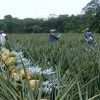
Post COP21: Costa Rica’s Innovation Must Become the Global Norm
The Paris agreement means countries and corporations will be compelled to act much more quickly on making agricultural commodity production more sustainable. Companies must look beyond their supply chains. Farmers need support to overcome barriers such as: struggle with ineffective farming practices, lack of investment and fluctuating commodity prices.
Can Europe Survive – Back to a Better Yesterday?
The last formal act of European disintegration was the last negotiation between 28 European leaders and the Prime Minister of Turkey. The deal, against all international treaties, is a total capitulation to European values. Europe will give Turkey 6 billion dollars, and in exchange Turkey will keep refugees from coming to Europe. Or better, will screen everybody, and send to Europe only the Syrians who are eligible for political asylum.
Clean Clothes – Fashion Free of Slave Labour in Argentina
In Argentina, there are now 20 brand names that guarantee that their garments are produced by workers in decent working conditions, thanks to the Clean Clothes network, aimed at eradicating slave labour in the garment industry, which illegally employs some 30,000 people in sweatshops around the country.
Increasing Women’s Access to Skills and Jobs
"My daughter and I were a burden on my parents,” says 20-year-old Moushumi Akter Mou from Mirpur. Married off at the age of 14, Mou could not complete her schooling. After her daughter was born, her husband remarried, leaving her feeling vulnerable and hopeless. “I felt that if I had a job, my life might be worthwhile.”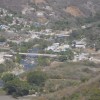
Rural Community Fights a Second Dam and a New Expropriation of Land
In 1976, the construction of a hydroelectric dam destroyed farmland in the rural municipality of Chicoasén in southern Mexico. Forty years later, part of the local population is fighting a second dam, which would deprive them of more land.
African Staple Plantains at Risk of Same Diseases as Bananas
Anna Gamusi, has been growing ‘matooke’ - plantains - for over 20 years. She originally learnt how to grow them in her home village of Busolwe in Eastern Uganda, but says that they are no longer grown there.
Panama’s Expanded Canal Faces a Challenging Scenario
When the new locks of the expanded Panama Canal begin operations, they will do so amidst numerous challenges, because of the storm clouds hanging over the global economy, especially China. But local authorities and experts are not worried about the possible impact on the expanded canal.
Anti-Mining Protests in Turkey Book Temporary Victory
Over the past weeks, thousands of people across Turkey have protested against the planned construction of a gold mine in Cerattepe, close to the town of Artvin in the northeast of the country. Protesters fear that the mine will cause irreparable damage to the unique natural environment of the region.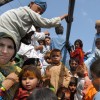
Border Restrictions Violate 1951 Refugee Convention
When the United Nations commemorated “Zero Discrimination Day” on March 1, there was an implicit commitment by the 193 member states to abhor all forms of discrimination – including against women, minorities, indigenous people, gays and lesbians and those suffering from AIDS.Big Question for the UK on the European Union
The British have a problem. A referendum on continuing membership of the European Union scheduled for June may lead to Brexit- Britain heading for the exit. Anybody with any knowledge of Europe’s war-like history knows this would be totally self-defeating.
Central America Makes Uneven Progress in Clean Energy
Over the last decade, Central America has managed to reduce its dependence on fossil fuels for the production of electric power, while expanding coverage. But the progress made by each country varies widely.
Asian Scientists Grapple with How to Foster Crop Pollination
Pollinators, whose role is essential in a third of what the world eats, are at center stage after a landmark new United Nations report warned that many of the 20,000 species are threatened by human behaviour.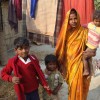
World’s Rural Poor Need Social Protection, Says UN
The success of the UN’s post-2015 development agenda is predicated on one underlying theme: no one should be left behind – and certainly not the world’s rural poor --in the fight to eradicate hunger and poverty by 2030.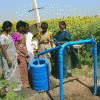
Groundwater Governance in Andhra Pradesh
India is the largest user of ground water in the world. But reliance of this overexploited resource has reached its limits in many parts of the country. Nowhere is this more evident than in the drought-prone districts of Rayalseema, uplands of Prakasam, Krishna, East-West Godavari, parts of Nellore, Vizianagaram and Srikakulam in the state of Andhra Pradesh (AP). Forty per cent of the state’s irrigation needs are met through groundwater. In the drought-prone Rayalseema region – which comprises Chittoor, Anantapur, Kurnool, Prakasam and Kadapa districts -- dependence on groundwater for irrigation is particularly high. The water crisis is also most severe in this region.
Mexico’s Chinampas – Wetlands Turned into Gardens – Fight Extinction
David Jiménez grows two kinds of lettuce and other fresh produce on his “chinampa” or artificial island just under one hectare in size in San Gregorio Atlapulco, on the south side of Mexico City.
Europe: The Schengen Agreement In Danger
Exclusion of Greece from the European free travel zone established by the Schengen Agreement is pending. The European Commission has ruled that the Athens government has “seriously neglected its obligations to control its own borders,” and if the deficiencies are not corrected within three months, the other member states of the Schengen area may exclude it from the agreement. In 2015, some 850,000 people seeking asylum and work in northern European countries passed through Greece, and the influx is continuing.
A Question of Honour for a Nigerian Migrant
“In 2005 I left my home town in Eastern Nigeria by boat, landing in Athens, Greece along with my fellow companions - members of a football team. I decided to push my luck and moved to Italy in search of what I believed to be better opportunities to start a new life and get a decent job. Unfortunately, this may have just been an illusion.”« Previous Page — Next Page »


 UN Commission on International Trade Law Holds Colloquium on Harmonizing Law in Age of Digital Trade and Finance. Credit: UN Photo/Manuel Elías
Trade has historically been a geopolitical tool that can both be used to propel development as well as entrench inequalities. In various nations in East Asia and Latin America, increased trade, as often seen in export booms, has allowed them to achieve influential standings within the global economy. On the other hand, many low-income countries in Sub-Saharan Africa, Asia, and Latin America struggle to maintain a robust trade performance, and oftentimes are subjugated to exploitative trade dynamics through intense extraction of their natural resources. In recent decades, international trade has reached a new era as emerging economies across the world are rising in economic preeminence. Stable international trade is crucial to world peace as global interconnectedness facilitates reliable diplomacy. Nevertheless, significant challenges are on the rise. Notably, a major wave of United States tariff escalations in January 2025 lifted US import taxes to their highest level since the 1930s, changing market dynamics and forcing renegotiations with global trading partners.These articles are aimed at informing readers about the complexities of trade and its varying effects on development, with a special focus on the consequences of the global economic crisis, the potential of fair trade and the gender implications of trade policies.
Updated by Yilan Batista and Shuli Wong August 2026

The Week with IPS

NEXT STOP - SDGs
Tracking global progress towards a sustainable world
Tracking global progress towards a sustainable world
