Languages
Thursday, October 8, 2026



News and Views from the Global South
Economy & Trade

How to Put the ‘Sexy’ Back into Agriculture – Thoughts From CGIAR Science Week
This week presented a beacon of hope for young people so that the “girl from the South and the boy, of course” could stay in the developing world, Dr Ismahane Elouafi, Executive Managing Director of CGIAR, said during a press conference on the final day of the CGIAR Science Week.
Insight to Impact: CGIAR Inaugural Flagship Report for Decision Makers Navigating Food System Science
"To have impact, it was crucial to understand what impact was wanted," CGIAR's Executive Managing Director Dr. Ismahane Elouafi said at the launch of the organization's flagship report, Insight to Impact: A decision-maker’s guide to navigating food system science.
Rohingya Refugees Are Not Safe in Bangladesh or Myanmar
On April 4, it was confirmed by Myanmar authorities that there were approximately 180,000 Rohingya refugees residing in Bangladesh that are eligible to return. Following numerous cuts in funding as a result of President Donald Trump’s reduction of USAID, as well as the increasingly volatile humanitarian crisis in Myanmar, it is uncertain if repatriation will best serve Rohingya refugee communities.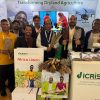
‘Act Before It Gets Worse’ – Experts Warn as Agrifood Problems in Global South Intensify
As agrifood systems in the Global South buckle under the weight of climate change, biodiversity, and even pollution, experts such as Dr. Himanshu Pathak call for urgent innovative solutions, as, at the current pace, the problems of the Global South are going to intensify with escalating climate change.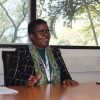
‘With Science, We Can Feed the World of 9.7 Billion by 2050′
Animal scientist Lindiwe Majele Sibanda became what her grandmother earnestly prayed for when she was growing up on a farm in southern Zimbabwe.
South Korea’s Rapid Aging Doesn’t Have to Be Economic Destiny
Strong economic fundamentals and sound macroeconomic policies have helped the Korean economy through multiple shocks in recent years. However, potential growth has slowed more quickly than in other major advanced economies, and the economic expansion is likely to moderate this year.
CGIAR Gender Impact Platform Needs a ‘Bold Approach’ in Agriculture Research
Women farmers face structural issues that prevent them from realizing their full potential, from societal perceptions that dictate their limitations to poor land. However, CGIAR's Gender Impact Platform Director, Nicoline de Haan, argues that leaning into a "victim" narrative does not serve them, especially when women are demonstrably more involved in agriculture.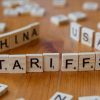
A Pressure on Silicon Valley: Is the U.S. Ready for a Shift in Tech Dominance?
While the U.S. argues over tariffs, China, Japan, and South Korea are quietly reshaping their tech markets, shifting towards regional dominance – signaling a potential turning point in global tech leadership.
Lessons from the Global South on Transforming AgriFood Systems
The state of food and nutrition security in the Global South masks the great strides and investments made to increase agricultural yields to feed a rapidly growing population. As discussions deepen at the ongoing CGIAR Science Week, plenary discussions on Wednesday (April 9) explored transformative strategies and innovations driving agricultural resilience across Africa, the Caribbean, and Latin America.
Farmers Need Science Solutions in Their Hands Sooner Than Later
Climate change is outpacing science and farmers are paying the price. Agricultural research innovations need to reach farmers before it is too late.
Science-Backed Solutions Buoying Water Security in East Africa
In East Africa, climate change has made water a lifeline and threat. In a region highly dependent on rainfall for growing crops, climate change is threatening water security but science-backed solutions are helping turn the tide.
The Current Plight of Haitians: Interview with a Mason in the Dominican Republic
On March 18, the first plane with deportees from the US landed in Cap-Haïtien. Of the 46 passengers, 25 were convicted felons. Taking effect on April 24 the US Department of Homeland Security will revoke the temporary legal status of more than 210,000 Haitians. They had by the Biden administration been granted a safe haven, but all these Haitians are now expected to be deported back to a country immersed in a humanitarian crisis.
Growing Legacy: Raising Ambition in Agriculture Scientific Research as CGIAR Unveil New Portfolio
Global food and nutrition insecurity levels are hurtling towards a catastrophe. To counter these problems, leading world experts say science is the 'silver bullet.' That science will build climate-resilient agri-food systems, improve livelihoods across the value chain, and ensure more affordable, nutritious food while safeguarding the environment.
Behind the Feeding of the 5,000 (or Should That Be 10,000) at CGIAR Science Week
Good Food for All is the motto of The Chef's Manifesto, a project that brings together more than 1,500 chefs from around the world to explore how to ensure the food they prepare is planet-friendly and sustainable.
A Long and Winding Path to Revitalize Passenger Trains in Mexico
Retired blacksmith and mechanic José Hernández nostalgically recalls the passenger trains that once passed through his hometown of Huamantla in the state of Tlaxcala, southeastern Mexico.
Welcoming Science: CGIAR Week-Long Focus on Innovation for Food, Climate-Secure Future
The world’s leading scientists and decision-makers in agriculture, climate, and health are meeting in Nairobi this week to promote innovation and partnerships towards a food, nutrition, and climate-secure future. As current agrifood systems buckle under multiple challenges, nearly one in 11 people globally and one in five people in Africa go hungry every day.
In Central America’s Dry Corridor, Farmers Find Ways to Harvest Water and Food – VIDEO
 In Central America’s Dry Corridor, climatic conditions hinder water and food production because rainfall in this ecoregion—from May to December—is less predictable than in the rest of the isthmus.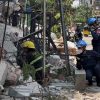
We Can Solve Global Challenges Through Global Public Investment
Watching on our screens the devastation wrought by the earthquake which struck South-East Asia last week has brought a stark reminder of our shared vulnerability in this interconnected world. It has exposed again, too, the weak beams of traditional funding models that struggle to ensure a timely response to disasters.
CGIAR Science Week Seeks Solutions for a Food-Secure, Climate Resilient Future
CGIAR and the Kenyan Agricultural and Livestock Research Organization (KALRO) are bringing together the world’s leading scientists and decision-makers in agriculture, climate, and health for the first CGIAR Science Week. This gathering will be a key moment to advance research and innovation, inspire action, and establish critical partnerships that can secure investment in sustainable food systems for people and the planet.
World Autism Awareness Day 2025: Sustainable Development Must Include Neurodivergent Perspectives
In 2007, the United Nations (UN) General Assembly designated April 2 as World Autism Awareness Day (WAAD), in an effort to promote inclusion and human rights for autistic individuals. Much work has been done and pushed forward by autistic advocates to bring lived experiences to global discussions.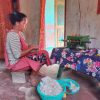
Solar-Powered Spinning Machines Help Indian Women Save Time and Earn More
As light enters through the small window of a modestly constructed tin-roofed house, Philim Makri sits on a chair deftly spinning cocoons of eri silk with the help of a solar-powered spinning machine in Warmawsaw village in Ri Bhoi district of Meghalaya in northeast India.« Previous Page — Next Page »





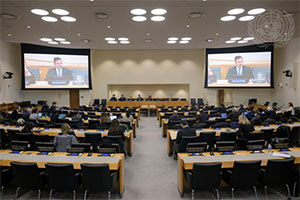 UN Commission on International Trade Law Holds Colloquium on Harmonizing Law in Age of Digital Trade and Finance. Credit: UN Photo/Manuel Elías
Trade has historically been a geopolitical tool that can both be used to propel development as well as entrench inequalities. In various nations in East Asia and Latin America, increased trade, as often seen in export booms, has allowed them to achieve influential standings within the global economy. On the other hand, many low-income countries in Sub-Saharan Africa, Asia, and Latin America struggle to maintain a robust trade performance, and oftentimes are subjugated to exploitative trade dynamics through intense extraction of their natural resources. In recent decades, international trade has reached a new era as emerging economies across the world are rising in economic preeminence. Stable international trade is crucial to world peace as global interconnectedness facilitates reliable diplomacy. Nevertheless, significant challenges are on the rise. Notably, a major wave of United States tariff escalations in January 2025 lifted US import taxes to their highest level since the 1930s, changing market dynamics and forcing renegotiations with global trading partners.These articles are aimed at informing readers about the complexities of trade and its varying effects on development, with a special focus on the consequences of the global economic crisis, the potential of fair trade and the gender implications of trade policies.
Updated by Yilan Batista and Shuli Wong August 2026

The Week with IPS

NEXT STOP - SDGs
Tracking global progress towards a sustainable world
Tracking global progress towards a sustainable world
