Languages
Friday, October 9, 2026



News and Views from the Global South
Economy & Trade
We Can Solve Global Challenges Through Global Public Investment
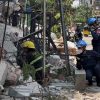
Watching on our screens the devastation wrought by the earthquake which struck South-East Asia last week has brought a stark reminder of our shared vulnerability in this interconnected world. It has exposed again, too, the weak beams of traditional funding models that struggle to ensure a timely response to disasters.
CGIAR Science Week Seeks Solutions for a Food-Secure, Climate Resilient Future
CGIAR and the Kenyan Agricultural and Livestock Research Organization (KALRO) are bringing together the world’s leading scientists and decision-makers in agriculture, climate, and health for the first CGIAR Science Week. This gathering will be a key moment to advance research and innovation, inspire action, and establish critical partnerships that can secure investment in sustainable food systems for people and the planet.
World Autism Awareness Day 2025: Sustainable Development Must Include Neurodivergent Perspectives
In 2007, the United Nations (UN) General Assembly designated April 2 as World Autism Awareness Day (WAAD), in an effort to promote inclusion and human rights for autistic individuals. Much work has been done and pushed forward by autistic advocates to bring lived experiences to global discussions.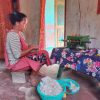
Solar-Powered Spinning Machines Help Indian Women Save Time and Earn More
As light enters through the small window of a modestly constructed tin-roofed house, Philim Makri sits on a chair deftly spinning cocoons of eri silk with the help of a solar-powered spinning machine in Warmawsaw village in Ri Bhoi district of Meghalaya in northeast India.
Make America Great Again? Not by This Administration
For most voters, to make America great again, as the 47th president has repeatedly pledged, meant to make the United States markedly superior globally. However, the administration’s actions, policies and program cuts will not improve but only worsen the US’s mediocre standing among advanced countries.
Bangladesh Chief Advisor’s China Tour Cements Dhaka-Beijing Relations
Bangladesh's Chief Adviser, Professor Muhammad Yunus's state visit to China, where he met Chinese President Xi Jinping, was seen as an opportunity to reaffirm old diplomatic and economic ties between the two countries.
Forest Guards Risking Their Lives To Keep Malawi’s Forests Standing
In Malawi, being a forest guard isn’t a glamorous, sought-after job. And it has often been quiet, enjoying almost no publicity – until recently amid the worsening crashing down of the country’s forests, which is making the occupation increasingly perilous. In 2024 alone, a total of eight forest rangers got killed in separate incidents while in the line of duty, according to the Ministry of Natural Resources, which is responsible for the management of 88 forest reserves and 11 plantations across the country.
Southeast Asia’s Economies Can Gain Most by Packaging Ambitious Reforms
Southeast Asia’s major economies have made major strides over the last couple of decades. The largest have seen income per capita grow at least three-fold over the past 20 years amid global integration and prudent policymaking.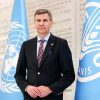
Water and Food Security in Europe and Central Asia: A Shared Challenge for a Sustainable and Just Future
Degrading soil, air pollution, vanishing biodiversity, emerging plant and animal health issues and more are coming together in the current situation of multiple crisis. Ensuring water security is just one, among the many challenges individuals, countries, and the world faces. Yet, we shouldn’t forget that water makes up the largest percentage of our bodies and the same applies to animals, plants and the planet’s surface. The threat of water insecurity is, as we all see, not a petty problem, but one of the greatest challenges of our century.
The Giant Plastic Tap: How art fights plastic pollution
"The size of the faucet highlights the magnitude of the problem. It makes the problem impossible to ignore. We're used to throwing things 'away'—but when we're confronted with what happens when 'away' is not an option, I think it creates an emotional wake-up call," says Benjamin Von Wong.
Organic Fertilizers Prove Effective on Tea as Farmers Abandon Synthetic Inputs
On the outskirts of Kericho town within Kenya’s Rift Valley region, Kaptepeswet tea farm, an organic tea estate sprawling on a 50-acre piece of land, is a testament that organic fertilizers can be used on mature tea bushes and still produce the desired quantity and quality of premium leaves.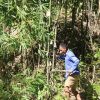
Bangladesh’s Ethnic People Safeguarding Forests and Wildlife
Kishore Kumar Chakma, a young man from an ethnic community in Rangamati district, voluntarily guards a village common forest (VCF) so that none can hunt wild animals and fell trees from it.
Malnutrition Not Due to Cash Poverty Alone
The World Bank set its US ‘dollar-a-day’ poverty line using its 1990 data. Despite many doubts and criticisms, its poverty numbers fell until the COVID-19 pandemic began in 2020.
Royalties, a New Indigenous Right for Hydroelectric Damages in Brazil
Indigenous peoples in Brazil have won a new right: a share in the profits of hydroelectric plants that cause them harm when built on or near their lands.
Strengthening Indigenous Peoples and Local Communities’ Knowledge and Access Opens up Opportunities for Climate, Biodiversity and Desertification Action
The central role Indigenous Peoples and local communities in addressing climate change, biodiversity loss and desertification has gained widespread recognition over the past decade. Indigenous Peoples’ close dependence on resources and ecosystems, exceptional tradition, and ancestral knowledge are invaluable assets for the sustainable management of our planet’s natural resources.
The Profound Rise of the Elderly
The 20th century ushered in the profound rise of the elderly. During the 21st century, the elderly as a result of their rising numbers and growing proportions of country populations will be increasingly impacting government policies, programs and expenditures.
A Test of Humanity: Migrants’ Rights in a World Turning Inward
The United Nations Refugee Agency faces devastating cuts that may eliminate 5,000 to 6,000 jobs, with potentially catastrophic consequences for millions of people fleeing war, repression, hunger and climate disasters. This 75-year-old institution, established to help Europeans displaced by the Second World War, now confronts an unprecedented financial crisis, primarily due to the US foreign aid freeze – and the timing couldn’t be worse.
Seeds of Survival, Amid Conflict Sudan Is Saving Its Agricultural Future
Sudan’s diverse crops and agricultural heritage are at risk of being lost. The ongoing conflict in Sudan is claiming lives and threatening livelihoods and food security. In the chaos of conflict, scientists like Ali Babiker are fighting to protect Sudan’s future food security—not with weapons, but with seeds.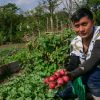
Food Security and Water, a Priority for Border Towns in Central America
The hope of Salvadoran Cristian Castillo to harvest tomatoes in a municipality of the Central American Dry Corridor hung by a thread when his well, which he used to irrigate his crops, dried up. However, his enthusiasm returned when a regional project taught him how to harvest rainwater for when the rains begin in May.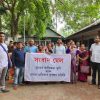
How Rare Rhino, Tiger Conservation Has Locked Out Indigenous Communities
While a local community prides itself on caring for a sensitive biodiverse region, and despite centuries-long stewardship of the Kaziranga, a UNESCO World Heritage Site, the authorities rebuff—sometimes aggressively—their attempts to remain involved.
Award Winning Women Goat Herders in Chile Confront Climate Change
Women goat herders in the municipality of Ovalle, in northern Chile, are confronting climate change by defending their heritage through improvements in the quality and variety of their products, which has led some to win international awards for their cheeses.« Previous Page — Next Page »





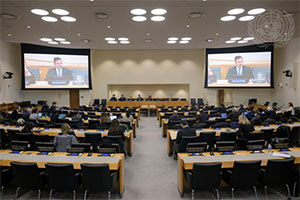 UN Commission on International Trade Law Holds Colloquium on Harmonizing Law in Age of Digital Trade and Finance. Credit: UN Photo/Manuel Elías
Trade has historically been a geopolitical tool that can both be used to propel development as well as entrench inequalities. In various nations in East Asia and Latin America, increased trade, as often seen in export booms, has allowed them to achieve influential standings within the global economy. On the other hand, many low-income countries in Sub-Saharan Africa, Asia, and Latin America struggle to maintain a robust trade performance, and oftentimes are subjugated to exploitative trade dynamics through intense extraction of their natural resources. In recent decades, international trade has reached a new era as emerging economies across the world are rising in economic preeminence. Stable international trade is crucial to world peace as global interconnectedness facilitates reliable diplomacy. Nevertheless, significant challenges are on the rise. Notably, a major wave of United States tariff escalations in January 2025 lifted US import taxes to their highest level since the 1930s, changing market dynamics and forcing renegotiations with global trading partners.These articles are aimed at informing readers about the complexities of trade and its varying effects on development, with a special focus on the consequences of the global economic crisis, the potential of fair trade and the gender implications of trade policies.
Updated by Yilan Batista and Shuli Wong August 2026

The Week with IPS

NEXT STOP - SDGs
Tracking global progress towards a sustainable world
Tracking global progress towards a sustainable world
