Languages
Tuesday, October 20, 2026



News and Views from the Global South
Economy & Trade

The Davos Disconnect
"It was the best of times; it was the worst of times." Charles Dickens is more relevant today than ever. The wealthy and powerful are meeting again this year in glamorous Davos, at an invitation-only event. They arrive in chartered aircraft and private jets to speak about our warming climate, among other global concerns.
African Countries Urged to Plug Wealth Loss, Stop Illicit Financial Flows
Africa loses billions of dollars annually through illicit financial flows, resulting in the continent failing to improve the lives of millions of people despite vast mineral wealth, according to experts. Agencies say more needs to be done to turn the continent's natural resources into prosperity at a time governments are struggling to address challenging economic conditions that have spawned high poverty levels.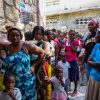
2024 Marked An Escalation in Brutality for Haiti’s Gang War
2024 was a transitional period in Haiti’s history, marked by rampant political instability, brutal gang violence, and widespread civilian displacement. Since the eruption of hostilities in March 2024, the Caribbean nation has been in a state of emergency. In response, the United Nations (UN) Security Council approved The Multinational Security Support (MSS) Mission in Haiti to assist the Haitian government in deposing gang activity and restoring order. However, the support mission has been largely ineffective as gangs continue to seize more areas in Haiti.
Nature Goes to Court
Nature is taking the stand as courtrooms worldwide become battlegrounds for Earth’s rights. The rise in climate litigation shows how the environment can take centre stage as a plaintiff, demanding justice and accountability, benefiting us all.
Unlocking SDG Success: How Better Data Can Develop Africa
That one in three Africans will not be counted as countries failing to meet census deadlines is a huge setback for development planning.
Geopolitical Uncertainties Cloud World Economic Prospects, UN Report Says
In the past few years, the world economy has made significant strides in mitigating inflation, unemployment, and poverty. Despite this, global growth has yet to regain its pace from before the pandemic.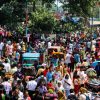
The Challenges Facing the World’s Fifth Largest Economy
India has surged forward as the world's fifth-largest economy and has now surpassed China to claim the title of the most populous nation. However, this rapid ascent is not without its challenges; rising unemployment and inflation loom large, threatening demographic dividend and its ambitious goal of sustaining a 7 to 8% GDP growth.
Developing Countries are Being Choked by Debt: This Could be the Year of Breaking Free
The debt disaster is back. Indeed, the aid agency Cafod reports that developing countries today face “the most acute debt crisis in history”.
Erratic Sales and Government Apathy Hurt Telangana Weavers
The southern Indian state of Telangana has always been home to exquisite cotton and silk weaves. But in recent years, lack of market access, expensive inputs, and government apathy have taken their toll on the weaving community. As a result, the younger generation is refraining from pursuing this traditional occupation and opting for more lucrative pursuits.
Our Health is at Stake: The Solutions SIDS Need to Fight Climate Change
Climate change is one of the most serious global threats to the future of the world’s population. Its impact extends far and wide, from the economy to governance to the very health and well-being of society.
Financing for Development Priorities Today
The forthcoming fourth United Nations Financing for Development conference must address developing countries’ major financial challenges. Recent setbacks to sustainable development and climate action make FfD4 all the more critical.
A Renewed Vision for Prosperity for Landlocked Developing Countries
Over 570 million people live in the world’s 32 Landlocked Developing Countries (LLDCs), spanning across Africa, Asia, Europe, and Latin America. These nations face unique and complex development challenges. Their lack of direct access to the sea, geographical isolation, limited infrastructure, and difficulty integrating into global trade and value chains hinder sustainable development and progress.
This Year’s Three UN Summits Set the Stage for COP30 to Transform Food Systems
This year has been a landmark one for climate and environment policy. Starting with the UN’s COP16 biodiversity talks in October, followed by the COP29 climate talks in November, and closing with the desertification COP16 in December, few years have offered such critical moments back-to-back.
Civil Society Trends for 2025: Nine Global Challenges, One Reason for Hope
It's been a tumultuous year, and a tough one for struggles for human rights. Civil society’s work to seek social justice and hold the powerful to account has been tested at every turn. Civil society has kept holding the line, resisting power grabs and regressive legislation, calling out injustice and claiming some victories, often at great cost. And things aren’t about to get any easier, as key challenges identified in 2024 are likely to intensify in 2025.
Innovative Financing to Unlock Africa’s Blue Economy
Securing new financing for global good has become more challenging than ever. Negotiations at the recently-concluded COP16 on Nature and Biodiversity failed to reach an agreement on establishing a fund to support the implementation of the Framework for Nature agreed in 2022 under the Montreal-Kunming agreement.
‘It’s Very Tough’: Turning Youth Employment Dreams Into Reality
It’s a bright winter day in Skopje, the capital of North Macedonia in the southern Balkans. By lunchtime, the cafes are full. The atmosphere is busy and social, and it is not difficult to see why the city, home to one-third of the country’s population of 2 million, is the focus of hope for young jobseekers. But, for many, it is not an easy road.
U.S. Wins Controversial Ruling in GM Corn Dispute with Mexico
A tribunal of trade arbitrators has ruled in favor of the United States in its complaint that Mexico’s restrictions on genetically modified corn violate the terms of the U.S.-Mexico-Canada trade agreement (USMCA). The long-awaited ruling in the 16-month trade dispute is unlikely to settle the questions raised by Mexico about the safety of consuming GM corn and its associated herbicide.
Maya Train: Still Waiting to Become Promised Engine of Development – VIDEO
 When he promoted the Maya Train (TM) in 2019, then-President Andrés Manuel López Obrador, who ruled Mexico between 2018 and October this year, stated that the railway line would be an engine of development for the southeastern Yucatan peninsula.
Targeting Transformative Disaster Risk Reduction in Asia-Pacific Subregions
In December 2024, Vanuatu experienced yet another harrowing reminder of its vulnerability to disasters—a powerful 7.4 magnitude earthquake struck the Pacific nation’s capital, Port Vila, leaving 14 dead, over 200 injured, and thousands more affected.
South Korea’s Democracy Defended
Democracy is alive and well in South Korea. When President Yoon Suk Yeol tried to impose martial law, the public and parliamentarians united to defend it. Now Yoon must face justice for his power grab.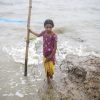
2024 Is The Hottest Year Ever Recorded
The World Meteorological Organization (WMO) warns that 2024 is on track to be the hottest year in recorded history, surpassing 2023. This can be attributed to heightened reliance on fossil fuels and the reluctance of industries worldwide to pivot to green energy practices. The rapid acceleration of global temperatures has alarmed scientists, with many expressing concern over the environmental, economic, and social implications of the worsening climate crisis.« Previous Page — Next Page »





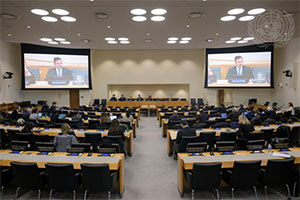 UN Commission on International Trade Law Holds Colloquium on Harmonizing Law in Age of Digital Trade and Finance. Credit: UN Photo/Manuel Elías
Trade has historically been a geopolitical tool that can both be used to propel development as well as entrench inequalities. In various nations in East Asia and Latin America, increased trade, as often seen in export booms, has allowed them to achieve influential standings within the global economy. On the other hand, many low-income countries in Sub-Saharan Africa, Asia, and Latin America struggle to maintain a robust trade performance, and oftentimes are subjugated to exploitative trade dynamics through intense extraction of their natural resources. In recent decades, international trade has reached a new era as emerging economies across the world are rising in economic preeminence. Stable international trade is crucial to world peace as global interconnectedness facilitates reliable diplomacy. Nevertheless, significant challenges are on the rise. Notably, a major wave of United States tariff escalations in January 2025 lifted US import taxes to their highest level since the 1930s, changing market dynamics and forcing renegotiations with global trading partners.These articles are aimed at informing readers about the complexities of trade and its varying effects on development, with a special focus on the consequences of the global economic crisis, the potential of fair trade and the gender implications of trade policies.
Updated by Yilan Batista and Shuli Wong August 2026

The Week with IPS

NEXT STOP - SDGs
Tracking global progress towards a sustainable world
Tracking global progress towards a sustainable world
