Languages
Friday, October 23, 2026



News and Views from the Global South
Economy & Trade

Between Harris and Trump, More Doubts Than Certainties for Latin America
Migration, trade, the defence of democracy, the confrontation with China and the collapse of multilateralism are issues that shed more doubts than certainties on Latin America's expectations of the imminent presidential elections in the United States.
With God on Our Side: Netanyahu, Trump, and Putin
Bronisław Malinowski (1884 – 1942) did for several years conduct socio-anthropological research in the Trobriand Islands. Returning to England after World War I, he wrote several ground breaking books, among them Magic, Science, and Religion in which he assumed that people's feelings and motives are crucial for understanding the way their society functions. Malinowski considered society to be intimately interlinked with individuality – i.e. an individual’s ideas and behaviour are created and formulated within the social circles s/he lives and vice versa. Consequently, an individual’s personality might influence an entire society, depending on the leading role s/he is granted.
The IMF Just Made the Case for its Own Irrelevance
This month, the International Monetary Fund (IMF) had an opportunity to end one of its most reviled policies and lift billions of dollars of debt off the backs of crisis-stricken developing countries. It chose not to.
Another Nobel for Anglocentric Neoliberal Institutional Economics
New institutional economics (NIE) has received another so-called Nobel prize, ostensibly for again claiming that good institutions and democratic governance ensure growth, development, equity and democracy.
Capacity Building Is Key to Africa’s Digital Sequencing Success Story
Christian Tiambo has always wished to uplift local farmers’ communities through cutting-edge science. As climate change wreaked havoc on local agriculture, Tiambo, a livestock scientist at the Centre for Tropical Livestock Genetics and Health (CTLGH) and at the International Livestock Research Institute (ILRI), focused on conserving and developing livestock that could withstand environmental stress.
The Future of Food Security Lies Beyond COP29’s Negotiation Tables
Climate change has thrown our food systems into chaos. Extreme weather events and dramatic climate variations are hammering food production and supply chains across the world. As global leaders gear up for COP29, there’s plenty of buzz about climate action. But can we really expect these slow-moving, bureaucratic negotiations to deliver tangible and swift results to decarbonize and insulate our agri-food systems? Most likely not. But do not despair. While the COP29 talks unfold, crucial climate solutions for transforming food systems are already taking root on the ground.
Honduras: Environmental Defenders Still under Siege
Juan López was gunned down on 14 September. An environmental activist, community leader and member of the Municipal Committee in Defence of the Commons and Public Goods of Tocoa, he was the latest victim of extractive greed in Honduras. Communities protecting the rivers that flow through the Bajo Aguán region have seen several of their leaders assassinated.
Sustainable Food Production is Imperative for a Healthy Planet
Food waste has been a pressing concern for environmentalists and humanitarians for decades. The Food and Agriculture Organization (FAO) estimates that approximately one third of all global food products end up in landfills, equating to roughly 1.3 billion metric tons. Conversely, according to the Asia-Pacific Economic Cooperation (APEC), about 3 billion people lack access to nutritious or sufficient amounts of food that will sustain a healthy diet. Additionally, food waste has been a leading factor in environmental degradation since the start of the industrial revolution, with food in landfills releasing millions of metric tons of carbon emissions into the atmosphere yearly.
International Day for the Eradication of Poverty 2024

Our world has witnessed unprecedented levels of economic development. The advance of our technological capabilities continues unabated. Our financial resources continue to grow.

Civil Society Fights Against Budget Cuts Amid Calls for “Aid” Reform
Multiple conflicts, the climate emergency and other crises are destabilising many parts of the world and intensifying the strain on the resources needed to finance the global sustainable development agenda. Amid these challenges, data from 2023, shows that Official Development Assistance (ODA) reached a record-breaking US$223.7 billion, up from US$211 billion the previous year, according to Eurodad.
Climate Justice Needs Recognition of Common, but Differentiated Responsibilities
Climate justice recognizes differential impacts of climate crisis between rich and poor, women and men, and older and younger generations. The UN Secretary-General António Guterres emphasized, “as is always the case, the poor and vulnerable are the first to suffer and the worst hit.” However, all people should have the agency to live life with dignity. Thus, climate justice looks at the climate crisis through a human rights lens.
‘We Continue Working to Make Sure Afghan Girls and Women Are Heard and Not Forgotten’
CIVICUS discusses Afghanistan’s system of gender apartheid with Shaharzad Akbar, Executive Director of Rawadari, a human rights organisation founded by Afghans in exile.

UN Goal to End World-Wide Hunger by 2030 is Destined to Miss the Target
A landmark report released last July by five UN agencies— the World Health Organization (WHO), the Food and Agriculture Organization (FAO), the International Fund for Agricultural Development (IFAD), the World Food Programme (WFP) and the UN children’s agency UNICEF—outlined the setbacks in fighting global hunger and warned that the world has fallen behind by more than 15 years in its relentless battle against food scarcities, with levels of undernourishment comparable to those in 2008-2009.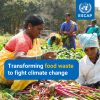
Building Resilience Against Climate Risks: The Transformative Role of Social Protection
While the impact of COVID-19 and the war in Ukraine on food system disruptions was widely covered, underlying food system vulnerabilities across Asia and the Pacific had been steadily growing long before these crises unfolded.
When Will World Food Day be a Day to Actually Celebrate?
World Food Day seems like it should be a time to celebrate. A day to eat delicious meals and enjoy the rich traditions and cultures of food around the globe.
Building Water Security for the Next Generation in the Pacific Territories
The Pacific Islands region is both the frontline of the wrath that climate change is lashing on the environment and human life and the drive for innovation and solutions to stem the destruction and strengthen island environments for the future. The survival of life, even nations, in the Pacific depends on it.
IPBES Calls for Holistic Solutions, Transformative Change in Tackling Biodiversity Loss
A holistic approach and transformative change of systems are needed to tackle biodiversity loss and to put the world on a sustainable path, an assessment by the Intergovernmental Science-Policy Platform on Biodiversity and Ecosystem Services (IPBES) has recommended. The world is facing an interconnected crisis of unprecedented biodiversity loss, food insecurity, and environmental degradation that can no longer be tackled through fragmented and piecemeal solutions, a forthcoming assessment by IPBES will show, calling for holistic approaches instead.
It’s High Time to Turn the “Right to Foods” for a Healthy, Nutritious & Affordable Diet into Reality
This year the theme for World Food Day is “Right to Foods for a Better Life and a Better Future.” It’s a timely reminder that all people have the right to adequate foods. But how do we get from a right to a reality? And why is it so important to think about not just having sufficient food, but also the diversity of diets?
With Climate Change, Government Apathy, Who Should Kerala’s Fishworkers Turn To?
Every morning before dawn, fishworkers along the shores of Kochi, Kerala, head out to sea, casting their nets in the shadow of the iconic Cheenavala—the Chinese fishing nets that have become a symbol of their community. I witnessed this time-honored tradition, once a reliable means of survival, now a daily gamble, a fight against unpredictable seas and shrinking fish populations.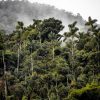
Amazonian Bioeconomy: An Essential Path for Sustainable Development
The Amazon is at a critical juncture. Despite its abundant biodiversity, cultural richness, and immeasurable environmental value, it faces serious threats that endanger its future and the communities that depend on it.
IPEF: Much Ado about Nothing
After 2.5 years, US President Joe Biden’s Indo-Pacific Framework for Prosperity (IPEF) is increasingly irrelevant due to its own limitations and broader US foreign policy shifts.« Previous Page — Next Page »





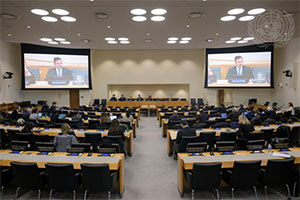 UN Commission on International Trade Law Holds Colloquium on Harmonizing Law in Age of Digital Trade and Finance. Credit: UN Photo/Manuel Elías
Trade has historically been a geopolitical tool that can both be used to propel development as well as entrench inequalities. In various nations in East Asia and Latin America, increased trade, as often seen in export booms, has allowed them to achieve influential standings within the global economy. On the other hand, many low-income countries in Sub-Saharan Africa, Asia, and Latin America struggle to maintain a robust trade performance, and oftentimes are subjugated to exploitative trade dynamics through intense extraction of their natural resources. In recent decades, international trade has reached a new era as emerging economies across the world are rising in economic preeminence. Stable international trade is crucial to world peace as global interconnectedness facilitates reliable diplomacy. Nevertheless, significant challenges are on the rise. Notably, a major wave of United States tariff escalations in January 2025 lifted US import taxes to their highest level since the 1930s, changing market dynamics and forcing renegotiations with global trading partners.These articles are aimed at informing readers about the complexities of trade and its varying effects on development, with a special focus on the consequences of the global economic crisis, the potential of fair trade and the gender implications of trade policies.
Updated by Yilan Batista and Shuli Wong August 2026

The Week with IPS

NEXT STOP - SDGs
Tracking global progress towards a sustainable world
Tracking global progress towards a sustainable world
