Languages
Friday, October 23, 2026



News and Views from the Global South
Economy & Trade
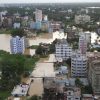
Cities Will Be Hit Hardest By Climate Change, UN Report Warns
Cities are in a unique position, simultaneously the biggest emitters of greenhouse gasses and the most affected areas of the greenhouse effect. As a new UN report shows that rapid urbanization and industrialization have adverse effects on the environment, causing a rise in sea levels, prolonged rainfalls and flooding, and an increase in overall temperature. The coastal areas that cities most often inhabit face the brunt of these effects, with marginalized populations being the most vulnerable.
Hustle Culture Emerges in Benin in Face of High Graduate Unemployment
At just 11 years old, with a heavy heart, Louis peered up at his parents and said goodbye. He was leaving his small village in northern Benin to live with his uncle in Parakou, where the schools were better. Ever since, Louis has continued to make sacrifices to pursue a strong education and a better life.
Sic Transit Gloria Mundi: Preserving the Cultural Heritage
pyramids is the monument I have made,
a shape that angry wind or hungry rain
cannot demolish, nor the innumerable ranks
of the years that march in centuries.
I shall not wholly die:
some part of me will cheat the goddess of death.

World Inequality Still Rising Despite Some Convergence
Despite earlier income convergence among nations, many low-income countries (LICs) and people are falling further behind. Worse, the number of poor and hungry has been increasing again after declining for decades.
Brazil Promotes a Freer Global Biofuels Market
Holding this year's presidency of the Group of 20 (G20) large industrial and emerging economies is allowing Brazil to push forward the dream of creating a global biofuels market without the current trade barriers.
Mexican Cooperative Promotes Energy Transition on Indigenous Lands
What began as a search for fair prices for indigenous handicrafts in 1985 has evolved into a women's organisation in Mexico that promotes climate justice while advocating for land and environmental rights.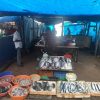
Voices from the Margins: Small-Scale Fishers Demand Rights, Recognition at COP16
Small-scale fishers play a fundamental role in feeding people—they use sustainable methods of catching and processing fish products and are a significant force in the employment and livelihoods of millions of people internationally—yet, until now, they have been excluded from climate and biodiversity conferences.
Diverse Diets Are Essential for Nourishing a Healthy Planet as Well as Healthy People
It’s often said that we are what we eat. However, our diets are also a reflection on the health of our food systems, the environment and agricultural biodiversity.
Is India Phasing Out Fossil Fuels Fast Enough To Achieve Its Emission Targets?
While India continues to rely heavily on coal, the south Asian economic giant is also aggressively pushing renewable energy production, especially after the costs of renewable energy production have fallen drastically in recent years around the world.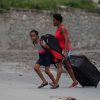
Conditions Deteriorate from Persisting Gang Violence in Haiti
Due to worsening political instability, escalating gang violence, and a lack of basic services, Haiti is in the midst of one of the most severe humanitarian crises in the world. According to a 2024 ACAPS report, gangs have seized 85 percent of the nation’s capital, Port-Au-Prince, resulting in over 700,000 displaced persons.
Solar Energy Saves Dairy Cooperative in Brazil’s Semi-Arid Region
“Ixe! If it wasn't for solar energy, we would have closed down, you can be sure. We had to stop due to the pandemic on 15 March 2020, but the energy costs were fixed,” said Erika Cazuza, administrative and financial manager of the Brazilian Cooperative of Rural Producers of Monteiro (Capribom).
Transforming Africa with the Power of Education
Africa has the youngest population in the world today. Around 40% of the population is 15 or younger. They have a non-negotiable right to an inclusive and continued quality education, just like young people everywhere across the globe.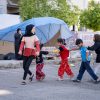
Death Toll in Lebanon Rising From Israeli Bombardment
The eastern region of Baalbek, Lebanon was believed to be a “safe zone” for residents, and refugees who had been displaced by the increased hostilities across the country. That changed on October 29, when an Israeli airstrike on the region resulted in over sixty casualties, including two children.
Defending Biodiversity in Armed Conflict: Can COP16 Meet the Expectations?
José Aruna, a forest defender from Sud Kivu province in the Democratic Republic of the Congo (DRC), remembers the night in September 2019 when a group of heavily armed men barged into his house in the middle of the night. Aruna and his wife—6 months pregnant at the time—were in bed when he heard sounds of boots on the front yard and quickly knew something was about to happen.
Hurricane Oscar Threatens Humanitarian Crisis in Cuba
Although classified as a compact tropical cyclone and considered one of the smallest in the North Atlantic, Hurricane Oscar has caused considerable damage in eastern Cuba since it made landfall on October 20, 2024. Cuban authorities have confirmed that the death toll has risen to seven, in additional to the damage in infrastructure. Communications and relief efforts were greatly impeded by a nationwide power grid blackout, which continues on in much of Cuba at the time of publication.
Small Farmers Reap Growing Benefits From Solar Energy in Chile
The production of solar energy by means of panels installed on small farmers' properties or on the roofs of community organisations is starting to directly benefit more and more farmers in Chile.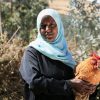
Chickens as Well as Cheetahs: Biodiversity Conservation Must Also Include Livestock
As the UN’s COP16 biodiversity conference continues, the temptation is to focus on the wild flora and fauna under threat. But there is another, less obvious yet just as critical biodiversity crisis unfolding around the world that also deserves attention.
Sudanese Civil War Exacerbates Economies in Neighbouring Countries
Critical levels of nationwide hunger in Sudan has only increased to critical levels since the start of the Sudanese civil war in April 2023. Escalated hostilities between the Sudanese Armed Forces (SAF) and the Rapid Support Forces (RSF) have led to limited mobility and repeated blockages of humanitarian aid. This, coupled with the volatile floods and droughts, have decimated crop fields which has only exacerbated famine levels greatly. All of these factors have left nearly 25 million people in Sudan in need of humanitarian assistance in 2024.
IMF isn’t doing enough to support Africa: billions could be made available through special drawing rights
At the 2021 UN Climate Summit, Barbados prime minister Mia Mottley called for more and better use of special drawing rights (SDRs), the International Monetary Fund’s reserve asset.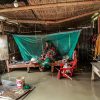
The Impact of Global Megatrends on Poverty in Asia & the Pacific
In the coming decades, the Asia-Pacific region faces a series of challenges that threaten to exacerbate poverty. Among these, climate change, demographic shifts, particularly population ageing and the rise of digital technologies stand out as three interconnected global megatrends.
UNEP’s 2024 Emissions Gap Report Warns: ‘No More Hot Air, Please’
The United Nations Environment Programme’s (UNEP) Emissions Gap Report 2024 delivered a stark reminder that the world is still far from meeting its climate commitments.« Previous Page — Next Page »





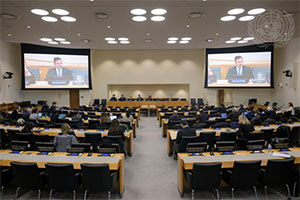 UN Commission on International Trade Law Holds Colloquium on Harmonizing Law in Age of Digital Trade and Finance. Credit: UN Photo/Manuel Elías
Trade has historically been a geopolitical tool that can both be used to propel development as well as entrench inequalities. In various nations in East Asia and Latin America, increased trade, as often seen in export booms, has allowed them to achieve influential standings within the global economy. On the other hand, many low-income countries in Sub-Saharan Africa, Asia, and Latin America struggle to maintain a robust trade performance, and oftentimes are subjugated to exploitative trade dynamics through intense extraction of their natural resources. In recent decades, international trade has reached a new era as emerging economies across the world are rising in economic preeminence. Stable international trade is crucial to world peace as global interconnectedness facilitates reliable diplomacy. Nevertheless, significant challenges are on the rise. Notably, a major wave of United States tariff escalations in January 2025 lifted US import taxes to their highest level since the 1930s, changing market dynamics and forcing renegotiations with global trading partners.These articles are aimed at informing readers about the complexities of trade and its varying effects on development, with a special focus on the consequences of the global economic crisis, the potential of fair trade and the gender implications of trade policies.
Updated by Yilan Batista and Shuli Wong August 2026

The Week with IPS

NEXT STOP - SDGs
Tracking global progress towards a sustainable world
Tracking global progress towards a sustainable world
