Languages
Friday, October 23, 2026



News and Views from the Global South
Economy & Trade

Agroecology: The Game-Changing Solution to Global Food, Climate and Conflict Crises
Edward Mukiibi, President of Slow Food, champions agroecology as a transformative answer to the world's most pressing crises: food insecurity, climate change, and violent conflicts. In a world where these challenges intersect, Mukiibi called for an urgent rethink of our approach to food systems.
Biogas, a Circular Energy, Advances in Brazil Thanks to Local Arrangements
“I don't know of a more sustainable technology for the transformation of society than biogas,” said Professor Alex Enrich-Prast, an activist for this energy alternative with a highly diversified and decentralised expansion in Brazil.
Empowering Change & Resilience: Social Protection in the Age of Megatrends
Social protection systems are essential to achieving the 2030 Agenda for Sustainable Development. However, social protection is insufficient across Asia and the Pacific, and the region is at risk from megatrends: climate change, demographic shifts and digitalization. Tens of millions of people have been pushed into extreme poverty since COVID-19, reversing past gains, and many millions more live precariously just above the poverty line.
To Put a Stop to Siphoning off Money, Start with Data
The commonly used Bangla phrase for siphoning off money out of the country – “taka pachar” – is rather misleading. Because taka, the Bangladeshi currency, is never taken out of Bangladesh. It’s not useful anywhere else. What goes out is its equivalence in foreign currencies, especially, US dollars. The technical term for such criminal act is Illicit Financial Flows (IFFs). Mistakenly, sometimes IFFs are referred to as money laundering – a processing of criminal proceeds to disguise their illegal origin.
Why Africa Should Embrace Territorial Markets to Withstand Climate Shocks and Crises
African policymakers, local leaders and the private sector have been asked to create an enabling environment that will help African traders and farmer folks build reliable systems for food security and resilience through territorial markets. During a week-long 2024 Africa Agroecological Entrepreneurship and Seed Festival in Harare, Zimbabwe, experts observed that persistent crises have shown the importance of resilient close-to-home ‘territorial’ markets that feed billions of people every day—from public markets and street vendors to cooperatives, from urban agriculture to online direct sales, and from food hubs to community kitchens.
Will Ukraine Benefit if IMF Ends its Punitive Fees on Debt Burdened Countries?
Over the coming month, the United States has a window of opportunity to lift a multi-billion-dollar burden from Ukraine, and other countries in financial distress, without costing the US taxpayer a dime.
Nepal’s Deadly Flash Floods: What Went Wrong?
Nepal is trying to recover from recent flash floods and landslides caused by heavy rainfall over the last weekend of September, which claimed at least 226 lives. The mid- and eastern parts of the country, including the capital, Kathmandu, experienced the heaviest monsoon rains in two decades from September 26-28, leaving many parts of Kathmandu underwater. Experts say this is one of the deadliest and worst flash floods that impacted thousands of people in decades.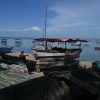
Cuba’s Coastal Dwellers Mitigate the Effects of Climate Change
Every time a hurricane clouds the skies over the city of Manzanillo, in the eastern Cuban province of Granma, the sea pounds the Litoral neighbourhood, forcing many of the 200 families who live there to evacuate inland because of flooding. When the weather is calm, the sea penetrates subtly and constantly, salinizing the water table and eroding the coast, affecting the foundations of houses and artesian wells.
Rejuvenating Tradition To Help Save Ancient Engineering Marvel—Dhamapur Lake
Dhamapur is a small village in Malvan taluka of west Sindhudurg district, housing the famous Dhamapur Lake. The Vijayanagar kings constructed an earthfill dam in 1530 A.D., creating a man-made lake surrounded by hills on three sides. Canals connect it to the Karli river, irrigating lush paddies and farms that grow the red Sorti and Walay rice varieties typical to the region.
Easing Africa’s Debt Burdens: a Fresh Approach, Based on an Old Idea
The statistics are stark: 54 governments, of which 25 are African, are spending at least 10% of their revenues on servicing their debts; 48 countries, home to 3.3 billion people, are spending more on debt service than on health or education.
Solar Panels Aim to Protect Mexican Family Farming
Verónica Molina, an indigenous Comcaac woman, first came into contact with solar energy in 2016, when she travelled to India for training on communal photovoltaic facilities. This later enabled her to take part in the installation of the first solar systems and family vegetable gardens in her community, Desemboque del Seri, in northern Mexico.
Tripling Renewables Powered by State-Owned Power Companies and Utilities
The climate community, meeting this week once again on the margins of the UN General Assembly, is continuing to explore ways to triple the world’s installed renewable generation capacity by 2030, a target agreed at last year’s COP 28 international climate negotiations. Much of this discussion has been about mobilizing finance and otherwise getting the private sector, with its massive resources and competence, to step up to the challenge … and what government policies and incentives are needed to spur more investment.
Tanzania’s Maasai Women Adopt Climate-Smart Solutions To Tame Drought
In the scorching sun of Mikese village in Tanzania’s eastern Mvomero district, 31-year-old Maria Naeku tirelessly tends to her small vegetable patch. Each time she pulls a weed, the red soil stains her hands as she guides the trickle of water from a maze of pipes through an elevated bed to nurture her plants. In a drought-stricken area, Naeku's small garden is a lifeline for her family, giving them food and income.
Violence, Displacement, and Hunger Plagues Somalia
Somalia is currently in the midst of a dire humanitarian crisis that threatens to destabilize the nation’s security. This crisis is a result of the Somali Civil War, which began in 1991. Altercations between clan-based operations have caused a host of issues over the years, including over 596 civilian casualties, according to the United Nations Assistance Mission in Somalia (UNSOM). Tensions have greatly intensified in 2024, with levels of internal displacement and food insecurity increasing rapidly.
Net Zero by 2050 Delays Needed Urgent Climate Action
Net zero emissions by 2050 prioritise mitigation for climate stabilisation. Pledges to achieve this still distant target have grown but inadvertently delay urgently needed climate action in the near term.
What does Russia Trade with Africa?
After two symbolic African leaders' summits, Russia's trading is steadily increasing but significantly in exports of military weapons and equipment. According to Kremlin reports, Russian President Vladimir Putin said the trade turnover between Russia and African countries had increased by almost 35% in the first half of 2023 despite international sanctions.
Typhoon Yagi Devastates Southeast Asia
In early September, Typhoon Yagi, a deadly tropical cyclone, hit Southeast Asia and Southern China, causing widespread destruction. According to the United Nations (UN), wind speeds, reaching 213 kilometers per hour, as well as heavy flooding and severe landslides, have devastated affected areas. Yagi is the strongest natural disaster to hit the South China Sea in three decades, leaving over 500 people killed, 38 missing, and 1,900 injured.
UN’s Summit of the Future to Forge a New Path for Humanity
A major event at UN Headquarters – Summit of the Future scheduled for September 22-23-- is being billed as a once in a generation opportunity for the international community to grapple with important questions, and forge a new path, for the benefit of all.
Mexican chinampas survive surrounded by threats
Mexican Crescencio Hernández orders radishes, herbs and lettuce for shipment to an alternative market in west-central Mexico City.
Where Has Poverty Gone?
Political polarization, the climate emergency, organized crime, migration, and low economic growth currently dominate the public debate in Latin America and the Caribbean (LAC), and rightly so. However, there is a significant structural challenge to human development and democracy itself that, along with inequalities, lies at the root of these crises: poverty.
Odious Debts: What Can Bangladesh Learn from Ecuador?
Bangladesh’s White Paper committee will review foreign loan deals signed by the fallen kleptocratic regime. We recommend that it identifies and declares the loans or portions of loans that did not benefit the nation as unpayable, because they were siphoned off the country by corrupt politically powerful elites, or worse used to buy deadly weapons and surveillance equipment to oppress people. Such loans are “odious” – they stink and are detestable.« Previous Page — Next Page »





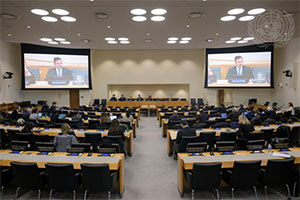 UN Commission on International Trade Law Holds Colloquium on Harmonizing Law in Age of Digital Trade and Finance. Credit: UN Photo/Manuel Elías
Trade has historically been a geopolitical tool that can both be used to propel development as well as entrench inequalities. In various nations in East Asia and Latin America, increased trade, as often seen in export booms, has allowed them to achieve influential standings within the global economy. On the other hand, many low-income countries in Sub-Saharan Africa, Asia, and Latin America struggle to maintain a robust trade performance, and oftentimes are subjugated to exploitative trade dynamics through intense extraction of their natural resources. In recent decades, international trade has reached a new era as emerging economies across the world are rising in economic preeminence. Stable international trade is crucial to world peace as global interconnectedness facilitates reliable diplomacy. Nevertheless, significant challenges are on the rise. Notably, a major wave of United States tariff escalations in January 2025 lifted US import taxes to their highest level since the 1930s, changing market dynamics and forcing renegotiations with global trading partners.These articles are aimed at informing readers about the complexities of trade and its varying effects on development, with a special focus on the consequences of the global economic crisis, the potential of fair trade and the gender implications of trade policies.
Updated by Yilan Batista and Shuli Wong August 2026

The Week with IPS

NEXT STOP - SDGs
Tracking global progress towards a sustainable world
Tracking global progress towards a sustainable world
