Languages
Monday, October 26, 2026



News and Views from the Global South
Economy & Trade

Mexican chinampas survive surrounded by threats
Mexican Crescencio Hernández orders radishes, herbs and lettuce for shipment to an alternative market in west-central Mexico City.
Where Has Poverty Gone?
Political polarization, the climate emergency, organized crime, migration, and low economic growth currently dominate the public debate in Latin America and the Caribbean (LAC), and rightly so. However, there is a significant structural challenge to human development and democracy itself that, along with inequalities, lies at the root of these crises: poverty.
Odious Debts: What Can Bangladesh Learn from Ecuador?
Bangladesh’s White Paper committee will review foreign loan deals signed by the fallen kleptocratic regime. We recommend that it identifies and declares the loans or portions of loans that did not benefit the nation as unpayable, because they were siphoned off the country by corrupt politically powerful elites, or worse used to buy deadly weapons and surveillance equipment to oppress people. Such loans are “odious” – they stink and are detestable.
Severe Floods in Nigeria Magnify The Dire Humanitarian Crisis
On Monday, the Alau dam in Maiduguri, Borno State, collapsed, causing flash floods to ravage neighbouring regions in Nigeria. This comes after weeks of torrential rain, which caused severe structural damage to the dam. The floods have changed the lives of thousands and caused high levels of damage to infrastructures. The impacts of the recent floods compound with Nigeria’s pre-existing humanitarian crisis, which includes armed conflict, widespread malnutrition, and a failing economy.
A UN 2.0 Needs Robust People’s Civil Society Participation
A cascade of crises endangers our world. Wars conducted without rules, governance devoid of democratic principles, surge in discrimination against women and excluded groups, accelerating climate change, greed-induced environmental degradation and unconscionable economic deprivation in an age of excess are threatening to roll back decades of human progress made by the international community.
A Better Tomorrow with South-South Cooperation
The annual United Nations Day for South-South Cooperation, commemorated annually on September 12, serves as a powerful reminder of the spirit of solidarity and cooperation that transcends geographic borders — a spirit that is crucial for securing a better and thriving future for all. In a world facing cross-cutting challenges, the importance of this South-South solidarity cannot be overstated.
The Global South in the New Cold War
Marginalised and dominated economically by the Global North, developing countries must urgently cooperate to better strive for their shared interests in achieving world peace and sustainable development.
Mixed Fortunes for Africa’s Rapid Urbanization—Report
A new report says African cities will record rapid urbanization in the next decade, creating a mixed bag of socio-economic opportunities and challenges for the continent. This development is projected to result in wealthier consumer markets, better connected and more sophisticated commercial hubs, and larger bases for industrial production.
Small Glacial Lakes’ Mass Destruction in the Himalayan Community
Small glacial lakes can cause destruction, which may impact the livelihoods of entire communities. Now this is the harsh reality that the community of Thame village in the Mt. Everest region of Nepal now faces as they rebuild after the August 16 disaster.
A Cuban Town Improves Water Quality Through Desalination
Overnight, hundreds of people in the rural community of Las Mangas, located in Granma province in eastern Cuba, realised something they had already suspected: that the water they had been drinking for decades was not exactly crystal clear, but rather “salty”, as they say.
Nigeria: Protecting the Vulnerable on the Path to Progress
Returning to Nigeria after five years, I was struck by the changes - both the challenges and the opportunities. To better understand these dynamics, I have been undertaking visits to states across Nigeria.
Rural Survival: Guardians of Mother Earth Saving Mau, Revitalizing Native Lands
The Great Rift Valley is part of an intra-continental ridge system that runs through Kenya from north to south. A breathtaking, diverse mix of natural beauty that includes dramatic escarpments, highland mountains, cliffs and gorges, lakes and savannas. It is also home to one of Africa’s greatest wildlife reserves—the Maasai Mara National Reserve.
Climate Action Greatest Economic Opportunity of this Century, Says UN Climate Chief
With fewer than 100 days to go to COP29, the highest decision-making body on climate issues under the United Nations Framework Convention on Climate Change (UNFCCC), the need for creative and innovative solutions to protect lives and livelihoods is now extremely urgent.
Recovering stolen assets: No weakening of resolve
The White Paper on the state of Bangladesh’s economy will include a review of “smuggled money”, according to the head of the committee, Debapriya Bhattacharya, entrusted to prepare the White Paper.
New Zealand: Māori Rights in the Firing Line
A New Zealand bill that would roll back Indigenous rights is unlikely to pass – but it’s emblematic of a growing climate of hostility from governing politicians. A recent survey shows that almost half of New Zealanders believe racial tensions have worsened under the right-wing government in power since December 2023.
A Sustainable Future within Reach: The Promise of Digital Transformation
The development paradigm has shifted to ‘digital by default’ as a norm, reshaping societies and economies. As a hub for digitally driven innovations, Asia and the Pacific is well positioned to leverage the transformative potential of digital technologies to accelerate progress towards the Sustainable Development Goals.
Humanitarian Crisis As Floods, Prolonged Heavy Rains Impact Chad
Since June of this year, Chad has been facing an extended period of heavy rainfall. Major flooding has triggered the onset of a significant humanitarian crisis, as all aspects of Chadian life, including health, food production, and community, have been negatively impacted. Additionally, response plans are severely compromised due to high levels of hostility taking place in neighboring nations.
VIETNAM: ‘Human Rights Conditions Will Likely Worsen as the Country Descends into a Police State’
CIVICUS discusses recent leadership changes in Vietnam with David Tran, coordinator of the Alliance for Vietnam’s Democracy, a civil society platform that promotes democracy in Vietnam and the region through international cooperation and the strengthening of local civil society.
Struggling at Sea: The Plight of Indian Fishworkers Amid Climate Change and Government Policies
Climate change forces millions of India’s fishworkers to venture beyond the country's exclusive economic zone into the perilous high seas.
Global Poverty Grows as Super-Rich Get Richer Faster
Oxfam expects the world’s first trillionaire within a decade and poverty to end in 229 years! The wealth of the world’s five richest men has more than doubled from 2020, as 4.8 billion people became poorer.
Recovering Bangladesh’s Stolen Wealth
Bangladesh bleeds as over US$3 billion drains from Bangladesh annually through offshore accounts. According to a recent report, close to US$150 billion was siphoned off the country during 15 years of kleptocratic Hasina regime’s mis-rule. Nearly US$50 billion went out of the country in the first six years (2009-2015) of the Hasina regime.« Previous Page — Next Page »





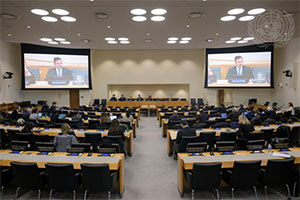 UN Commission on International Trade Law Holds Colloquium on Harmonizing Law in Age of Digital Trade and Finance. Credit: UN Photo/Manuel Elías
Trade has historically been a geopolitical tool that can both be used to propel development as well as entrench inequalities. In various nations in East Asia and Latin America, increased trade, as often seen in export booms, has allowed them to achieve influential standings within the global economy. On the other hand, many low-income countries in Sub-Saharan Africa, Asia, and Latin America struggle to maintain a robust trade performance, and oftentimes are subjugated to exploitative trade dynamics through intense extraction of their natural resources. In recent decades, international trade has reached a new era as emerging economies across the world are rising in economic preeminence. Stable international trade is crucial to world peace as global interconnectedness facilitates reliable diplomacy. Nevertheless, significant challenges are on the rise. Notably, a major wave of United States tariff escalations in January 2025 lifted US import taxes to their highest level since the 1930s, changing market dynamics and forcing renegotiations with global trading partners.These articles are aimed at informing readers about the complexities of trade and its varying effects on development, with a special focus on the consequences of the global economic crisis, the potential of fair trade and the gender implications of trade policies.
Updated by Yilan Batista and Shuli Wong August 2026

The Week with IPS

NEXT STOP - SDGs
Tracking global progress towards a sustainable world
Tracking global progress towards a sustainable world
