Languages
Wednesday, November 11, 2026



News and Views from the Global South
Economy & Trade

Rural Entrepreneurs Thriving Against All Odds in Zimbabwe
With heavy sweat drenching his face and his shirt soaked in the sweat, 39-year-old Proud Ndukulani wrestled with a homemade knife, which he dipped in some used oil, before turning the glistening knife upon a rather tough and dusty tyre obtained from what he said was a forklift. His assistant stood by his side as he (Ndukulani) cut some tough rubber from the giant tyre lying outside an open shade roofed with aging asbestos sheets at Juru Growth Point, located 52 km east of Harare in Zimbabwe’s Goromonzi district in the country’s Mashonaland East province.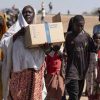
Conflict’s Long Shadow Has a Name: It’s Hunger
Scarce food and drinking water. Limited and inconsistent healthcare. Rapidly deteriorating mental health. With conflict on the rise globally, this is the grim reality for millions around the world.
Leaders Need to Break the Chokehold of Debt and Austerity. Our Health Depends on it
As leaders gather for the Spring Meetings of the IMF and World Bank amid the cherry blossom trees of Washington, DC, there is some good news to celebrate.
Pioneering Digital Initiative Empowers Pacific Islands to Tackle Climate Disasters
Winning a battle for survival requires understanding the opponent. And, for the peoples of 22 island nations and territories scattered across more than 155 million square kilometres of Pacific Ocean, the volatility and wrath of the climate are their greatest threats.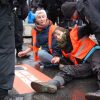
The Climate Alarm Is Ringing – It’s Time to Stop Silencing It
The heat records keep tumbling – 2023 was the hottest year in recorded history. Extreme weather events keep mounting up. And yet the voices most strongly calling for action to prevent climate catastrophe are increasingly being silenced.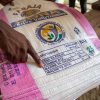
Food Security and Food Safety in Africa Must Go Hand in Hand
Russia’s invasion of Ukraine has restricted international exports and sent food costs soaring – particularly for vulnerable populations still experiencing shocks from the pandemic and who can least afford to pay more to feed their families. Two years on, global food supply chains are still just as susceptible to serious disruptions caused by war, disease, and climate change. Those inevitable disruptions are leaving those on the African continent particularly vulnerable.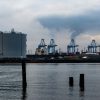
The US Must Address More Than LNG To Mitigate Climate Change
Earlier this year, the Biden administration paused action on pending approvals for U.S. liquefied natural gas exports to countries without a U.S. free-trade agreement, with President Biden citing ”the urgency of the climate crisis.” The decision was hailed by climate activists and criticized by oil and gas industry representatives.
Carbon Markets Biased, Distorted, Undermined
Carbon dioxide emission taxes, prices and markets have been touted as key to stopping global heating. However, carbon markets have failed mainly because they favour the rich and powerful.
Senegal’s Democracy Passes Crucial Test
The fact that Senegal’s election took place on 24 March was in itself a triumph for civil society. That an opposition candidate, campaigning on an anti-establishment and anti-corruption agenda, emerged from jail to become the continent’s youngest leader offered fresh hope for democracy.
Can Preserving Goa’s Khazans Address Climate Threats?
Growing up in a khazan ecosystem, the traditional agricultural practice followed in the south-western Indian state of Goa, Elsa Fernandes would love sitting in a koddo, a woven bamboo structure for storing paddy. Her family members would pour paddy around her and with the growing pile, she would rise to the top and then jump down with joy.
‘The World Is Bigger than 5’
The title of this piece is not mine. It’s from the President of Turkiye calling for a reform of the United Nations Security Council. It has since become a motto in the UN reform campaign encapsulating the shared resentment at a global system that gives the five Permanent members – The P5 of the UN Security Council – the United States, France, Britain, China and Russia – unfair and often destructive veto powers that undermines the very ideals for which the UN was established.
Tensions with China Drive Investors Towards Vietnam
In recent months, several European representatives embarked on trade missions to Vietnam. German President Steinmeier visited Hanoi in January. The Netherlands sent Prime Minister Mark Rutte, with the Dutch royal couple, King Willem-Alexander and Queen Máxima, soon to follow suit. Notably, the Netherlands stands as the most significant European investor in Vietnam.
Food Security Issues in Asia
Asia has about 60% of the World’s population but only about a third of the world’s arable land. This region additionally has some of the most economically active countries with increasing urbanisation and a growing middle class. Asia is also home to some of the most affected countries by climate change. For these and other reasons, food security in Asia affects global food security through many inter-links. A new book, “Food Security Issues in Asia”, edited by Paul Teng and with multiple authors, explicates many of the key issues continuing to cause food insecurity in Asia as well as discourses on exciting developments. Through its twenty-seven chapters, the book, published by World Scientific Publishers Singapore was launched on 27 March 2024 in Singapore by Ambassador Ong Keng Yong, former ASEAN Secretary General.
Breaking the Silence: Gender-Based Challenges in the Lesotho Highlands Water Project ll
In the journey towards gender equality and justice, recent decades have seen strides made, yet the road ahead remains treacherous. In the race to achieve the Sustainable Development Goals (SDGs) by 2030, attention is turning to the role that over five hundred public development banks worldwide could play.
Developing Countries’ Government Debt Crises Loom Larger
Developing countries are being blamed for having borrowed and spent irresponsibly. But they have only been doing what foreign powers and financial interests have urged them to do.
Made in Africa: Africa’s Fashion Redefining Narratives About the Continent
It is a new dawn as Africa’s high fashion industry enters an era defined and driven by young African fashion designers. As they take to the global stage, the young creatives are showcasing the continent in all its majesty through unique weaving techniques and patterns that combine their rich African heritage with contemporary styles.
Why Farmers in India and Pakistan Are Shifting to Natural or Regenerative Farming
Nine years ago, farmer Sultan Ahmed Bhatti gave up tilling the soil and using most fertilizers and pesticides on his farm in Doober Bhattian, Pakistan. His brothers at first derided him. But soon, his first experiment with growing wheat on raised beds was a runaway success. “We produced more wheat than what we grew on ploughed, flat land,” he said.
Revival of Hope: How a Remote Indian Village Overcame Water Scarcity
The people of Patqapara Village, a hamlet in India's West Bengal State, were until recently reeling under absolute distress due to water scarcity. The lack of irrigation facilities in this far-flung and inaccessible hamlet had resulted in a steady decline in agricultural activities. With a population of around 7,000, as per government estimates, the village primarily depends on agriculture for its livelihood. However, in recent years, drastic changes in weather patterns, including unseasonal rainfall, delayed monsoons, and soaring temperatures above normal levels, led to the drying up of irrigation canals and wells in the village. This left the local population in chaos, as their cultivable fields were bereft of any irrigation facilities.
Global Governance: Time for Reform
At last the UN Security Council has passed a resolution calling for an immediate ceasefire in Gaza. While stopping short of demanding a permanent end to the violence, it goes further than the world’s peak peace and security body had so far managed since the start of the current brutal phase of conflict in October. But the time it’s taken to get to this point signals an ongoing failure of global institutions to uphold human rights.
Abandoned Children Growing Problem in Northern Syria
Wael Al-Hassan was returning from work in the Syrian city of Harim when he heard the sound of a baby crying. He was returning from work on December 10, 2023. He stopped momentarily, turned on his mobile phone flashlight to investigate, and spotted a baby girl, around one month old, wrapped in a white blanket, lying by the roadside.
IMF Urges Non-alignment in Second Cold War
The IMF no. 2 recommends non-alignment as the best option for developing countries in the second Cold War as geopolitics threatens already dismal prospects for the world economy and wellbeing.« Previous Page — Next Page »





 UN Commission on International Trade Law Holds Colloquium on Harmonizing Law in Age of Digital Trade and Finance. Credit: UN Photo/Manuel Elías
Trade has historically been a geopolitical tool that can both be used to propel development as well as entrench inequalities. In various nations in East Asia and Latin America, increased trade, as often seen in export booms, has allowed them to achieve influential standings within the global economy. On the other hand, many low-income countries in Sub-Saharan Africa, Asia, and Latin America struggle to maintain a robust trade performance, and oftentimes are subjugated to exploitative trade dynamics through intense extraction of their natural resources. In recent decades, international trade has reached a new era as emerging economies across the world are rising in economic preeminence. Stable international trade is crucial to world peace as global interconnectedness facilitates reliable diplomacy. Nevertheless, significant challenges are on the rise. Notably, a major wave of United States tariff escalations in January 2025 lifted US import taxes to their highest level since the 1930s, changing market dynamics and forcing renegotiations with global trading partners.These articles are aimed at informing readers about the complexities of trade and its varying effects on development, with a special focus on the consequences of the global economic crisis, the potential of fair trade and the gender implications of trade policies.
Updated by Yilan Batista and Shuli Wong August 2026

The Week with IPS

NEXT STOP - SDGs
Tracking global progress towards a sustainable world
Tracking global progress towards a sustainable world
