Languages
Thursday, October 1, 2026



News and Views from the Global South
Economy & Trade

World Bank Enables Foreign Aid Theft
World Bank aid encourages governments to enable illicit financial outflows to offshore tax havens by reducing capital controls, thus draining precious foreign exchange and government resources.
New Era: Unlocking Africa’s Agriculture Potential Through CGIAR TAAT Model
As hunger and food insecurity deepen, Africa is confronting an unprecedented food crisis. Estimates show that nearly 282 million people on the continent, or 20 percent of the population, are undernourished. Numerous challenges across the African continent threaten the race to achieve food security; research and innovative strategies are urgently needed to transform current systems as they are inadequate to address the food crisis.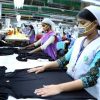
Here’s How We Can Improve Women’s Participation in International Trade For Economic Prosperity
The World Economic Forum is hosting world leaders in Davos from January 15-19 2024. One of the key themes for the forum this year is “Creating Growth and Jobs for a New Era” with a focus on creating economic gender parity.
Bangladesh: Election with a Foregone Conclusion
Bangladesh just held an election. But it was far from an exercise in democracy. Sheikh Hasina won her fourth consecutive term, and fifth overall, as prime minister in the general election held on 7 January. The result was never in doubt, with the main opposition party, the Bangladesh National Party (BNP), boycotting the vote over the ruling Awami League’s refusal to let a caretaker government oversee the election. This practice, abolished by the Awami League government in 2011, was, the BNP asserted, the only way to ensure a free and fair vote.
Assessing Public Debt Sustainability with a Long-Term View
When students from poor families in developing countries are offered places at prestigious universities, they are often faced with a tough choice. One option is to accept the offer and create more debt, likely through borrowing from a loan shark, to pay for tuition fees. Another option is to forgo this opportunity, which could be the first in family generations, and start working as low-wage workers.
Europe’s Shift to the Far Right and its Impact on Immigration
The recent elections in the Netherlands signals the increasing power of the far right in Europe. The populist party of Geert Wilders, the Party for Freedom, won a decisive, albeit unexpected, victory taking 37 seats out the 150 seat in parliament. Wilders will likely be the head of the next Government. His policies include stopping all immigration into the Netherlands, holding a referendum on leaving the EU, and banning mosques and the Quran.
Amidst a Horrendous 2023, Civil Society is Fighting Back Society
The year 2023 has brought so much tragedy, with incomprehensible loss of lives, whether from wars or devastating ‘natural’ disasters, while our planet has seen yet more records broken as our climate catastrophe worsens. And so as the clock ticks towards the (mostly western) New Year, readers are traditionally subjected by media outlets like ours to the 'yearender'—usually a roundup of main events over the previous 12 months, one horror often overshadowed by the next.
The Opaque Chain of Electric Cars Assembled in Mexico
The city of Austin, Texas, on the U.S.-Mexico border, had 945,000 residents in 2021 and on average each household owned two cars, hundreds of them electric. Among the manufacturers of these electric vehicles are companies such as the US Tesla, Ford and General Motors (GM).
Latin America Can Boost Economic Growth by Reducing Crime
Crime and violence have long been a top-of-mind concern for households across Latin America and the Caribbean. The region accounts for nearly half of the world's intentional homicide victims, despite representing just over 8 percent of the global population, United Nations data show.
World Bank Enables Private Capture of Profits, Public Resources
The World Bank insists commercial finance is necessary for achieving economic recovery and the Sustainable Development Goals (SDGs), but does little to ensure profit-hungry commercial finance serves the public interest. By failing to address pressing challenges within their purview, the second-ever Bretton Woods institutions’ (BWIs) annual meetings on the African continent, in Marrakech in October 2023, set the developing world even further back.
Construction of New Megaport in Peru Ignores Complaints from Local Residents
"We have always lived a very quiet life here, but everything has changed since the construction of the multi-purpose port began a few years ago," said Miriam Arce, a neighborhood leader in this municipality 80 kilometers north of the Peruvian capital, where the new port is projected to become the epicenter of trade between China and South American countries.
Myanmar Refugees Build Schools, Cafes and Hope in Mae Sot
The typical image of a refugee is a poor person with their hands out asking for aid. The Burmese refugees in Mae Sot on the Thai-Myanmar border defy that stereotype. Many are middle-class, educated urbanites with skills and plenty of initiative. After standing up to the Burmese military and suffering for it, they left everything and fled for their lives to Mae Sot where they continued their struggle. Despite intimidation, exploitation by some Thai authorities, and living in fear without documentation, they have achieved a lot in under two years. Their purpose is to support their community and the revolution in a variety of ways through their resilience, commitment, ability and innovation. Some refugees have set up businesses such as cafes, restaurants, bars, shops, hairdressers, a farm and cross-border trade. While they are for-profit, they also provide employment for other refugees and donate to the most vulnerable. One café owner said, “If I am lucky, I break even but the café gives refugees employment, keeps them occupied and is a place where Burmese can meet and relax.” [caption id="attachment_183577" align="alignleft" width="630"]Paul Greening is an ex-UN senior staff officer with over 20 years of experience in six Asian countries working for six UN agencies and four INGOs. He worked in Sittwe, Rakhine State for the International Organization for Migration (IOM) from 2017 to 2020 and has been living in Mae Sot for two years. First published by Myanmar news outlet Irrawady

UN and Humanitarian Partners Seek USD 46 Billion for Humanitarian Assistance
Funding humanitarian programs will continue into the new year, but the funding cuts of the previous year may impact the prioritization of the most immediate and most life-threatening needs. The Office for the Coordination of Humanitarian Affairs (OCHA) released the Global Humanitarian Overview (GHO) for 2024. This annual assessment of the global humanitarian sector provides insight into the humanitarian action undertaken by the UN and its partners and reviews current and future trends in this sector.
EBRD Provides Footing for Youth-led Businesses in Central Asia
The European Bank for Reconstruction and Development (EBRD) is addressing the issue of youth entrepreneurship and employment in Central Asia by launching a seven-year €200 million (US$ 218 million) Youth in Business (YiB) programme.
Rich Nations, IMF Deepen World Stagnation
With the US Fed raising interest rates, the world economy is slowing as debt distress spreads across the global South, increasing poverty worldwide to pre-pandemic levels, with the poorest countries faring worst.
The Solutions to Child Poverty Must Reach the Most Vulnerable Communities
Child poverty persists even in some of the world’s richest countries, new findings from a UNICEF report reveal.
Charting Out a Sustainable Path for Island, Coastal Communities Facing Climate Crisis
There is an irreparable connection between culture and the seas: loss of land due to rising sea levels and loss of livelihood due to changing fish migration patterns are having a massive impact on coastal communities.
Fair taxation for All
Champagne corks popped in New York after the majority voted in favour of a UN tax convention. The clear result paved the way for a stronger role of the United Nations in shaping more inclusive and effective international tax cooperation. This fulfils a decades-long demand by the G77 group and the international civil society.
U.S. Misuses Trade Agreements to Undermine Food Sovereignty
The dispute mounted by the U.S. government over Mexico's policies to restrict the use of genetically modified corn is the latest example of the misuse of a trade agreement to impede social programs in Mexico and other countries. The U.S. government has been doing this for years.
Fashion Forward: Protect Africa from ‘Fagia’ Amid Alarming Global Stocktake
Thousands of bales of cheap, poor-quality secondhand clothing arrive on boats and ships docking on Africa’s extensive 26,000-kilometer-long coastline, dotted with at least 100 ports and harbors. From Nigeria, Zimbabwe, Madagascar, Uganda, and Kenya, Africa’s ecosystems are chocking with cheap, air-polluting, and emissions-producing low-quality clothing as they often contain plastic-based fibers.
COP28: Sowing Seeds of Change in Fertile Hearts and Minds
In the heart of Earth Child Institute's mission to nurture the future stewards of our planet, the story of Eric Hansel unfolds as a testament to the transformative power of educating children on environmental responsibility. Hailing from Pennsylvania, USA, Hansel's journey took a poignant turn when his career as a respiratory therapist plunged him into the harsh realities of a trauma unit, witnessing families losing their children to various diseases. It was during these challenging moments that Hansel resolved to be part of a movement that aimed to instill eco-consciousness in the hearts of the young.« Previous Page — Next Page »


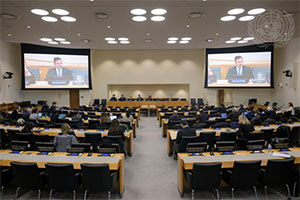 UN Commission on International Trade Law Holds Colloquium on Harmonizing Law in Age of Digital Trade and Finance. Credit: UN Photo/Manuel Elías
Trade has historically been a geopolitical tool that can both be used to propel development as well as entrench inequalities. In various nations in East Asia and Latin America, increased trade, as often seen in export booms, has allowed them to achieve influential standings within the global economy. On the other hand, many low-income countries in Sub-Saharan Africa, Asia, and Latin America struggle to maintain a robust trade performance, and oftentimes are subjugated to exploitative trade dynamics through intense extraction of their natural resources. In recent decades, international trade has reached a new era as emerging economies across the world are rising in economic preeminence. Stable international trade is crucial to world peace as global interconnectedness facilitates reliable diplomacy. Nevertheless, significant challenges are on the rise. Notably, a major wave of United States tariff escalations in January 2025 lifted US import taxes to their highest level since the 1930s, changing market dynamics and forcing renegotiations with global trading partners.These articles are aimed at informing readers about the complexities of trade and its varying effects on development, with a special focus on the consequences of the global economic crisis, the potential of fair trade and the gender implications of trade policies.
Updated by Yilan Batista and Shuli Wong August 2026

The Week with IPS

NEXT STOP - SDGs
Tracking global progress towards a sustainable world
Tracking global progress towards a sustainable world
