Languages
Thursday, October 1, 2026



News and Views from the Global South
Economy & Trade

COP28: Sowing Seeds of Change in Fertile Hearts and Minds
In the heart of Earth Child Institute's mission to nurture the future stewards of our planet, the story of Eric Hansel unfolds as a testament to the transformative power of educating children on environmental responsibility. Hailing from Pennsylvania, USA, Hansel's journey took a poignant turn when his career as a respiratory therapist plunged him into the harsh realities of a trauma unit, witnessing families losing their children to various diseases. It was during these challenging moments that Hansel resolved to be part of a movement that aimed to instill eco-consciousness in the hearts of the young.
COP28: Climate Migrants’ Rights, Risk-based Labor Polices Under the Spotlight
With COP28 underway, researchers and activists are pointing at the plight of climate migrants. On November 30, a few hours before the COP28 was officially inaugurated, long, serpentine queues could be seen outside Expo 2020, the venue of the COP28. Standing under the blazing sun, besides delegates and media personnel, were hundreds of migrant workers, a majority of whom were from Nepal and the Philippines.
Global Civil Society Launches Manifesto for Ethical AI
We, a global coalition of over 50 civil society and human rights organizations from over 30 countries have co-developed the "Civil Society Manifesto for Ethical AI", a groundbreaking initiative aiming to steer AI policies towards safeguarding rights and deconolonising AI discourse. We question, and we are not the only ones: whose voices, ideas and values matter in AI ?
Beware Carbon Myopia at COP28: Why Climate and Nature Action Must Now Come Together in the Race for a Liveable Planet
As COP28 delegates focus on the first Global Stocktake, there is no doubt that the race to net-zero greenhouse gas emissions is vital. But while electric vehicles and solar power uptake have seen visible and welcome progress in particular, the transition to a thriving future on a healthy planet requires much more than decarbonization alone.
Art and Climate Change
A dark cloud is hovering above human existence. It is a fairly illusory cloud haunting our minds and wellbeing, but also an actual, menacing, mostly invisible cloud that covers the Earth’s entire atmosphere. Saturated by greenhouse gases, this global threat increases with every year, threatening all life on Earth, causing increased flooding, extreme heat, draught, wild fires, rising sea levels, food and water scarcity, as well as diseases and mounting economic loss. This misery, caused by human greed, thoughtlessness, and self-aggrandizement, trigger human migration and armed conflicts.
Big Cons: How Consultancy Firms Undermine Governments
Greater government reliance on consulting companies has greatly enriched them while also undermining state capacities, capabilities, national economies, progress, governance and legitimacy.
Why the UN COP28 Climate Talks Must Serve Farmers to Achieve a “Just Transition”
Food and agriculture is a top agenda item at UNFCCC COP28, as the world considers how to tackle the climate impacts of what we eat and how we produce it. The stage has been set for COP28 to be a “food COP”, but for commitments to translate to action, it must also be a “farmers’ COP”.
From ‘Peak Oil’ to ‘Peak Energy’? … and Why It Matters
The International Energy Agency now projects oil, gas, and coal use will all peak this decade. This constitutes a dramatic shift from the last 150 years when the thirst for fossil fuels persistently rose. But now this growth is nearing its end sooner than many expected, driven in part by a surge in renewables.
Netherlands Latest Country to Tilt to the Right
The Netherlands is the latest country to lurch to the right amid the global cost of living crisis. Its November election saw maverick far-right populist Geert Wilders and his Party for Freedom (PVV) come first. A hardline Islamophobe who’s called for the Quran to be banned could be the next prime minister.
Harnessing Data to Advocate for Safer Roads – UN Support for Sustainable Financing
Even as the world recovers from the COVID-19 pandemic it will still face an epidemic on its roads, claiming over one million lives and injuring up to 50 million people annually. Against this head-spinning backdrop, making decisions that allow us to achieve the Sustainable Development Goal target of a 50% reduction in road deaths can feel like walking blindfolded.
Rich Distort Climate Problems, Offer Self-Serving Solutions
Many in the wealthy West have misrepresented the causes of global warming, offering false solutions while claiming the high moral ground. This distracts attention from how they became wealthy while emitting greenhouse gases.
Suicide, Another Face of the Crisis in Venezuela
In the wee hours of one morning in early November, Ernesto, 50, swallowed several glasses of a cocktail of drugs and alcohol in the apartment where he lived alone in the Venezuelan capital, ending a life tormented by declining health and lack of resources to cope as he would have liked.
Argentina Plunges into the Unknown
For many of Argentina’s voters the choice on 19 November was between the lesser of two evils: Sergio Massa, the minister overseeing an economy with the world’s third-highest inflation rate, or Javier Milei, an erratic far-right libertarian outsider promising to shut down the Central Bank, adopt the US dollar as the currency, cut taxes and privatise public services.
Dear World Leaders, Are You Listening Now?
Another year and another UN climate change conference. As our ‘world leaders’ prepare for two air-conditioned weeks of wrangling at COP28 in Dubai later this month, forgive us for sounding underwhelmed, despairing, and even cynical about these annual jamborees where actions rarely match promises.
Middle-Income Country Trap?
In recent decades, failure to sustain economic progress has been blamed on a supposed middle-income country (MIC) trap. Such blaming obscures as much as it supposedly explains.
Pacific Games Channels Youth Aspirations in the Solomon Islands
The Pacific Games, the most prestigious sporting event in the Pacific Islands region, will open in the Solomon Islands in the southwest Pacific on 19 November. And it is set to shine a spotlight on the energy, hopes and aspirations of youths who comprise the majority of the country’s population.
Argentines Get Used to the Fact that Inflation Can Always Get Worse
People in Argentina have become accustomed to the fact that nothing costs the same today as it did the week before and they take price hikes in stride with resignation, says Mariano Cohen. "Almost nobody gets angry or complains anymore. They just don't buy something if they can't afford it," he explains in his disposable goods store in Villa Crespo, one of Buenos Aires' most commercial neighborhoods.
Good for Girls and Good for the Planet: Eco-Friendly Sanitary Towels
’Going Green’ seems to Dr Jacquline Kisato's favorite catchphrase as she passionately explains her eco-friendly sanitary towel, a product she expects will help empower women and young girls while also putting money into farmers’ pockets.
IPEF: New Cold War Weapon Backfires
US President Joe Biden’s Indo-Pacific Framework for Prosperity (IPEF) is the economic arm of his administration’s Indo-Pacific Strategy, aimed at countering China’s influence in the region.
Forced Labor: Exposing Dark Web of Fisheries Labor Abuses
It is a terrifying life experience, cut off from the world and trapped in forced labour aboard fishing vessels, often in high seas or seas beyond the territorial waters of any state. The fishers are isolated under hazardous and horrific working conditions under limited regulatory oversight. More than 128,000 fishers were trapped in forced labour aboard fishing vessels in 2021 alone.
PPPs Fiscal Hoax Is a Blank Financial Silver Bullet
Public-private partnerships (PPPs) for infrastructure and service provision are both costly and risky. Worse, PPPs typically fail to ensure universal, let alone fair access to public amenities.« Previous Page — Next Page »


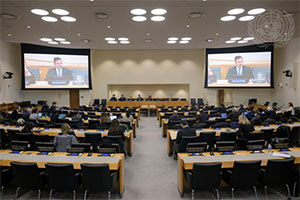 UN Commission on International Trade Law Holds Colloquium on Harmonizing Law in Age of Digital Trade and Finance. Credit: UN Photo/Manuel Elías
Trade has historically been a geopolitical tool that can both be used to propel development as well as entrench inequalities. In various nations in East Asia and Latin America, increased trade, as often seen in export booms, has allowed them to achieve influential standings within the global economy. On the other hand, many low-income countries in Sub-Saharan Africa, Asia, and Latin America struggle to maintain a robust trade performance, and oftentimes are subjugated to exploitative trade dynamics through intense extraction of their natural resources. In recent decades, international trade has reached a new era as emerging economies across the world are rising in economic preeminence. Stable international trade is crucial to world peace as global interconnectedness facilitates reliable diplomacy. Nevertheless, significant challenges are on the rise. Notably, a major wave of United States tariff escalations in January 2025 lifted US import taxes to their highest level since the 1930s, changing market dynamics and forcing renegotiations with global trading partners.These articles are aimed at informing readers about the complexities of trade and its varying effects on development, with a special focus on the consequences of the global economic crisis, the potential of fair trade and the gender implications of trade policies.
Updated by Yilan Batista and Shuli Wong August 2026

The Week with IPS

NEXT STOP - SDGs
Tracking global progress towards a sustainable world
Tracking global progress towards a sustainable world
