Languages
Sunday, November 8, 2026



News and Views from the Global South
Editors' Choice

International Cooperation Required to Solve World’s Severest Problems
In an interview with Dan Smith, Director of the renowned Stockholm International Peace Research Institute (SIPRI) and Professor of Peace and Conflict at the University of Manchester. The native Londoner, he has been researching conflicts and peace for decades and served in the UN Peacebuilding Fund Advisory Group, which he chaired for two years.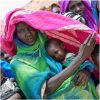
As Climate Crisis Worsens & Poverty Rises, UN Appears Off-Track on Development Agenda
The two key goals in the UN’s development agenda are the eradication of extreme poverty and hunger by 2030. But most of the world’s developing nations, currently fighting a losing battle against rising poverty and hunger –and suffering from the devastating impact of climate change-- are likely to miss the deadline for most of the 17 Sustainable Development Goals (SDGs), according to the latest report by Secretary-General Antonio Guterres.
When the Search for Jobs Ends in Slavery
In 2017, Zubedah Nakitende’s electronics shop was robbed with thieves taking her entire stock. But she had heard from a colleague about lucrative jobs in Jordan and decided to take on work as a domestic helper, earning an income of 740 dollars a month.
How a Bangladesh Non Profit for Leprosy Made its Members Completely Self-Sufficient
 The 20th International Leprosy Congress just wrapped up in Manila, Philippines last week. Alongside policy makers, diplomats, medical researchers, doctors, donors and academics, several Hansen's disease-affected people’s organisations also participated in the 3-day congress that was co-sponsored by The Nippon Foundation (TNF) and Sasakawa Health Foundation (SHF).

Petition and Critics of Khashoggi Killing Heap Pressure on U.N.-Saudi Event
The United Nations faces growing public opposition to an event it is co-hosting with a Saudi Arabian charity only days before the anniversary of the murder of journalist Jamal Khashoggi.
African Development Bank Plans for a Self-sufficient, Integrated and Industrialised Continent
Arama Sire Camara, a fruit and vegetable seller in the province of Kindia, some 135 km from the Guinean capital of Conakry, feels safer trading well into the night thanks to the Rural Electrification Project, financed by 21-million-dollar investment by the African Development Bank. “With lighting on the road at night and illuminating our goods, it means we are safer, especially with all the cars on the road. You can work for longer after nightfall, and so we can make more of our products,” she says.
Big Power Conflicts are Increasingly Taking Place in Outer Space
Nearly every article on ‘space security’ begins with the acknowledgement that satellites and space-based services are critical for modern societies. And with good reason.
‘Conference Emphasises Need for Partnerships to Create a World Without Leprosy’
Forty years ago, Yohei Sasakawa saw his father moved to tears after meeting and witnessing the suffering of people affected by leprosy – also known as Hansen’s disease. Not only did the patients have a physical illness, but they also suffered from social exclusion and discrimination. It made the young Sasakawa vow to work for the elimination of leprosy from the world – just as his father had been doing.
‘Join Me on this Journey’ to Eliminate Leprosy – WHO Ambassador
 Octogenarian Yohei Sasakawa has travelled to more than 90 countries across the globe; from areas of conflict, to the jungles of Brazil, shaking hands, hugging and washing the feet of Hansen’s disease-affected people. His message is simple: Stop stigmatisation and eliminate the disease.
Why Prosecuting Human Traffickers in Nigeria is Nothing More than a Mirage
Hope Oyiza, a Nigerian human trafficking survivor has said the Nigerian authority in charge of preventing the trafficking of persons, as well as punishing offenders, is lagging behind in her duties because many of the officials collect bribes from arrested human traffickers. Then, release them. 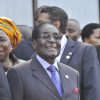
Zimbabwe’s ex-President Robert Mugabe Leaves a Mixed Legacy
Former Zimbabwe strongman Robert Mugabe, who died this week, aged 95, leaves a mixed and divisive legacy.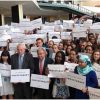
Are 9-to-5 Jobs Fast Becoming History – Even at the UN?
With the rapid leap in digital technology – including increased access to conference calls, e-translations, skype, text messaging and emails—more and more offices in the United States are providing employees with an option to “work from home”.
A Global Forum to Encourage Dialogue and Share Solutions
Professor Takahiro Nanri is the executive director of the Sasakawa Health Foundation, co-organiser of the Global Forum of People’s Organisations on Hansen’s Disease, which will take place from Sept. 7 to 10 in the Philippines.
Exclusive: Winnie Byanyima Speaks about Inequality in Africa and Next Steps at UNAIDS
While the 28th World Economic Forum (WEF) on Africa is being held in Cape Town, South Africa this week, the international aid and development charity Oxfam released its latest report: A tale of two continents: fighting inequality in Africa. 
Achieving Global Consensus on How to Slow Down Loss of Land
Expectations are high, perhaps too high, as the 14th Conference of the Parties (CoP 14) of the United Nations Convention to Combat Desertification (UNCCD), now into the third day of its two-week session, is being held outside the smog-filled Indian capital of New Delhi.
U.N. Criticised for Link-up with Saudi Prince MBS
The United Nations is under growing pressure to scrap an event it is co-hosting with the private foundation of Saudi Arabia’s crown prince Mohammad bin Salman, who has been linked to the killing of journalist Jamal Khashoggi.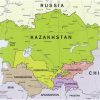
Central Asia Has Always Been Important for Europe
The EU has presented a new strategy for Central Asia. The first one has been adopted in 2007 and revised in 2015. Where do you see improvements?
Eastern Caribbean Embarks on Strategy Towards a Blue-Green Economy
Micro, small and medium enterprises as well as niche markets and experiences such as bee tourism may well hold the key for the Organisation of Eastern Caribbean States as countries of that sub-region, known as the OECS, ramp up efforts to build economies that are resilient to the impacts of climate change. 
Reimagining ‘Crazy Rich Asians’ as Social Commentary on Inequalities in Asia-Pacific
It’s 1962, and in a modest Hong Kong neighborhood, a poetic love story unfolds. Filmed almost twenty years ago, Wong Kar-wai’s seminal movie In the Mood for Love captured the world’s imagination about lifestyle in the region.
How the African Development Bank Plans to Mobilise Funds for Climate Adaptation
IPS Correspondent Isaiah Esipisu reports from the Climate Change and Development in Africa Conference taking place at the African Union headquarters in Addis Ababa, Ethiopia. 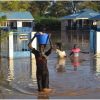
Let’s Walk the Talk to Defeat Climate Change – African Leaders Told
African leaders have been asked to walk the talk, and lead from the front, in order to build resilience and adaptation to the adverse impacts of climate change on the continent.« Previous Page — Next Page »





The Week with IPS

NEXT STOP - SDGs
Tracking global progress towards a sustainable world
Tracking global progress towards a sustainable world
