

Korchi a village of 3,256 people, most of whom are small and marginal farmers belonging to Gondi and Kawar indigenous communities, lies about 750 kilometres east of Mumbai, India. Here, women like Jam Bai, a 53-year-old indigenous farmer, have been leading a ground movement for years to own land.
Languages
Sunday, November 8, 2026


News and Views from the Global South
Editors' Choice

Hong Kong Protests: A Peaceful and Violent Weekend
 As protests in Hong Kong continue over the weekend, thousands of people joined hands to form a human chain that stretched across the city on Friday. It was yet another demonstration – this one entirely peaceful – in a series of protests that have rocked the former British colony for the past 12 weeks.

Amazon Fires Heat Up Political Crisis in Brazil
August is the month of major political crises in Brazil, but no one suspected that an environmental issue would be the trigger for the storms threatening the government of President Jair Bolsonaro, just eight months into his term.
G7 Leaders Urged to Promote Gender Empowerment
As leaders of the seven major industrialised nations (G7) meet in the coastal seatown of Biarritz in the south west of France, one of the world’s leading women’s organisations is calling for the protection and advancement of women worldwide.
How Tibet has Successfully Reduced Poverty
 According to the Tibet's Social Science Academy’s Institute of Rural Economic Studies, the number of Tibetans still living in poverty has been brought down from 850,000 a few years ago to 150,000.
Tibetan officials say the government is committed to reducing that number to zero by the end of this year.

How to Bring the Indus Delta Back to Life – Give it Water
Gulab Shah, 45, is having sleepless nights. He and his family are worried about their imminent migration from their village in Jhaloo to a major city in Pakistan, thanks to the continued ingress of sea water inland.
A ‘Cure’ for Ebola but Will it Stop the Outbreak if People Won’t Get Treatment?
While people in the Democratic Republic of Congo (DRC) are slowly being made aware that scientists have discovered two drugs that are effective in treating Ebola, letting go of the fear and anxiety that has prevailed across the country this year will require more work.
Addressing Gender & Protection Issues During Humanitarian Emergencies
Vanuatu is among the world’s ‘most at-risk’ countries to natural disasters. In the last 12 months alone, the country has faced multiple volcanic eruptions, earthquakes, cyclone and tsunami.
The Role of Women’s Organisations in Crisis-Settings
To mark World Humanitarian Day, we celebrate the overlooked women leaders who are first responders, unwavering advocates, and powerful change-makers in humanitarian emergencies.
How Tibet Doubled its Life Expectancy
Tibet's complicated typography means that the terrain is not easy for its people. Whilst the country is breathtaking, one incredible story about Tibet is that of the dramatic socio-economic changes the region has undergone. 
Producing Energy from Pig and Poultry Waste in Brazil
Romário Schaefer is fattening up 3,300 pigs that he receives when they weigh around 22 kg and returns when they reach 130 to 160 kg - a huge increase in meat and profits for their owner, a local meat-processing plant in this city in Brazil.
Mexican Women Use Sunlight Instead of Firewood or Gas to Cook Meals
Reyna Díaz cooks beans, chicken, pork and desserts in her solar cooker, which she sets up in the open courtyard of her home in a poor neighborhood on the outskirts of this town in southwestern Mexico.
Five Million Palestinians Deserve Better!
An old adage passed on by veteran U.N. staff to younger recruits is, “Do nothing whenever possible. It’s safer.” For a junior officer that might indeed be career-enhancing.
Is India on Track to Beat the Perfect Storm?
“The Perfect Storm” was a dire prediction that by 2030 food shortages, scarce water and insufficient energy resources together with climate change would threaten to unleash public unrest, cross-border conflicts and mass migration from worst-affected regions.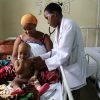
To Uplift a Woman is to Uplift a Village
Khadija Zuberi, 23, from Ruaha Mbuyuni village in Tanzania’s central highlands, is a single mother to her four-year-old son, Hashim.
How India’s Indigenous Female Forest Dwellers Feel about Owning Their Own Land
Kumaribai Jamkatan, 51, has been fighting for women’s land rights since 1987.
Though the constitution of India grants equal rights to men and women, women first started to stake their claim for formal ownership of land only after 2005–the year the government accorded legal rights to daughters to be co-owners of family-owned land. 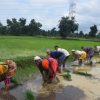
In the Midst of Conflict, India’s Indigenous Female Forest Dwellers Own their Land
Jam Bai, an Indigenous farmer from Korchi village in western India, is a woman in hurry. After two months of waiting, the rains have finally come and the rice saplings for her paddy fields must be sown this week while the land is still soft.
Burning Forests for Rain, and Other Climate Catastrophes
The villagers living on the foothills of Mount Kenya have a belief: If they burn the forest, the rains will come.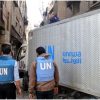
Will Palestinian Refugees Pay a Heavy Price for UNRWA Bungling?
A crisis that has threatened to undermine the future of the UN Relief and Works Agency (UNRWA) is expected to have a devastating impact—not only on the credibility of the United Nations-- but also on the lives of over five million Palestinian refugees whose very survival depends on the humanitarian services provided by the beleaguered UN agency based in Amman and Gaza.
Extreme Floods, the Key to Climate Change Adaptation in Africa’s Drylands
Extreme rainfall and heavy flooding, often amplified by climate change, causes devastation among communities. But new research published on Aug. 7 in the scientific journal Nature reveals that these dangerous events are extremely significant in recharging groundwater aquifers in drylands across sub-Saharan Africa, making them important for climate change adaptation.
To Silence a Poet, and a Nation: What Stella Nyanzi’s Conviction Means for Uganda
The conviction of Ugandan feminist and activist Dr. Stella Nyanzi for publishing a metaphorical poem about President Yoweri Museveni could have a chilling effect of freedom of expression, according to Dr. Peter Mwesige, co-founder of the Kampala-based African Centre For Media Excellence.« Previous Page — Next Page »





The Week with IPS

NEXT STOP - SDGs
Tracking global progress towards a sustainable world
Tracking global progress towards a sustainable world
