Languages
Thursday, October 15, 2026



News and Views from the Global South
Editors' Choice
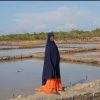
Pemba’s Woman Salt Farmers Forge Livelihoods Amid Climate Woes
As the cool morning breeze sweeps across the Indian Ocean beach in Tanzania’s Pemba archipelago, Salma Mahmoud Ali begins her day. With her brightly coloured Kikoi cinched tightly around her waist and a dark blue scarf framing her face, she walks barefoot toward her salt ponds. The humid air hangs, but Ali wades through ankle-deep water with courage.
Armed Drone Attacks on Humanitarian Aid Efforts Put Future at Risk
Humanitarian aid operations in some places may become impossible in the future, experts have warned, as a new report shows a dramatic rise in the use of armed drones in conflict zones.
Laureates Call For Moonshot Innovation Effort to Avert Hunger Catastrophe
Neglected indigenous crops, rich in nutrition and resilient to climate change, are key to tackling global hunger only if governments invest in research and development (R&D) to tap the potential of such innovations. More than 150 Nobel and World Food Prize Laureates are calling for investment in moonshot technologies to realize the potential of innovative solutions such as these hardy crops, warning that without swift action, there is a "food insecure, unstable world.”
Violence Flows in Parts into Mexico from the United States
The case of a man arrested in Texas, in the south of the United States, for shipping arms parts to Mexico immediately caught the attention of authorities in both countries. But it was only one thread in a web that continues to become more and more tangled.
Malala: ‘Honest Conversations on Girls’ Education Start by Exposing the Worst Violations’
“She was at her brilliant best, speaking fearlessly and boldly about the treatment of women by the Afghan Taliban, robbing an entire generation of girls their future, and how they want to erase them from society,” said educationist and one of the speakers, Baela Raza Jamil, referring to the speech by Nobel Laureate and education activist Malala Yousafzai.
Erratic Sales and Government Apathy Hurt Telangana Weavers
The southern Indian state of Telangana has always been home to exquisite cotton and silk weaves. But in recent years, lack of market access, expensive inputs, and government apathy have taken their toll on the weaving community. As a result, the younger generation is refraining from pursuing this traditional occupation and opting for more lucrative pursuits.
Is Bangladesh’s Currency Reprint Pressing Delete on Bangabandhu’s Legacy?
History seems to be chasing Bangladesh even while the interim government is grappling with real issues of administering a country thrown into chaos. In July last year, this south Asian country faced an upheaval when a students’ movement drove out Prime Minister Sheikh Hasina from office.
Why Russia’s Ban on Child-Free ‘Propaganda’ Impacts Human Rights
“A lot of people are very scared,” says Zalina Marshenkulova. “This is obviously another tool of repression. The state is waging war on the remnants of free-thinking people in Russia and trying to suppress all dissent and freedom,” the Russian feminist activist tells IPS. The warning from Marshenkulova, who left Russia soon after the country’s full-scale invasion of Ukraine in 2022 and now lives in Germany, comes just days after new legislation came into force in her home country banning "child-free propaganda.”
Tanzania’s Disaster Preparedness: A Nation on Edge
As the dust settled over Kariakoo’s bustling streets, Halima Abdallah’s voice trembled through the cracks of a collapsed four-story building. “Help me, please! I don’t get air,” she gasped, trapped under the rubble. For four hours, rescue workers scrambled to locate her. Their efforts, hampered by the lack of proper equipment, relied on tools hastily borrowed from a private company. By the time they reached her, it was too late. Abdallah had died.
Who Will Save Nigeria’s Coastal City on the Brink of Extinction?
In 2021, Ojajuni Olufunsho, a 53-year-old resident of Ayetoro, a town along the Atlantic coast, southwestern Nigeria, saw her home swept away by the encroaching sea. What was once a spacious 10-room house, a sanctuary for Olufunsho and her five children, was swallowed by the relentless force of rising sea waters.
‘It’s Very Tough’: Turning Youth Employment Dreams Into Reality
It’s a bright winter day in Skopje, the capital of North Macedonia in the southern Balkans. By lunchtime, the cafes are full. The atmosphere is busy and social, and it is not difficult to see why the city, home to one-third of the country’s population of 2 million, is the focus of hope for young jobseekers. But, for many, it is not an easy road.
Food Crises Intensify in Winter Ravaged War Zones
The days are short with bitterly cold rain in Bucharest, the capital of Romania, the largest Balkan country located south of the Ukraine. Over the border, temperatures in Kyiv will plummet to a daily average of zero in December as the Ukraine war grinds on.
US & Western Allies Provide a Hefty 260 Billion Dollars in Military Aid to Ukraine
The United States and Western allies have jointly provided a staggering $260 billion in aid, mostly weapons and military assistance, to Ukraine as the long-drawn-out conflict continues following Russia’s invasion in February 2022. Speaking to reporters at NATO headquarters in Brussels early December, US Secretary of State Antony Blinken said: “All told, the United States has provided $102 billion in assistance to Ukraine, and our allies and partners, $158 billion”.
Power Arrives but the River Dries Up for Brazil’s Amazonian Dwellers
The flow of the igarapé always dropped for three months every year, but now it has been dry for two years in a row, complains Maria Aparecida dos Anjos, looking at the trickle of water that when flooded reaches the stilts of her wooden house, 50 metres away and on a slope of more than 10 metres high.
UN Commits to Supporting Syria in Political Transition, Adapting Humanitarian Support
In overthrowing Bashar al-Assad and his regime, Syria reaches the process of re-affirming its sovereignty, a process that the United Nations chief asserts must be led by the Syrian people.
Expansion of Mexico’s Largest Port Causes Alarm Over Environmental Damage
The expansion of the port of Manzanillo, Mexico's most important port in terms of cargo movement and located on the central Pacific coast, has major environmental impacts, as well as presenting climatic risks.
Transformative Change Will Save a Planet in Peril—IPBES
Nature is at a tipping point. With human activity having pushed up to 1 million plant and animal species close to extinction, securing sustainable development and halting global biodiversity collapse is no longer just an option but a requisite for human wellbeing.
New Legislation Outlaws Dissenters in Venezuela
In Venezuela you can no longer say in public that the economic sanctions applied by the United States and other countries are appropriate, or even be suspected of considering any of the authorities illegitimate, because you can be sentenced to up to 30 years in prison and lose all your assets.
Interlinked Solutions Key to Tackling Biodiversity, Water, Food, Health and Climate Change, says IPBES
Biological diversity is on the decline worldwide, and current approaches to address its loss have been piecemeal and ineffective in tackling the crisis facing nature—this is despite estimates that over half of global GDP (USD 58 trillion of economic activity in 2023) is generated in sectors that are moderately to highly dependent on nature, a new report by the Intergovernmental Platform on Biodiversity and Ecosystem Services (IPBES) finds.
Camps of Death, Terror: Syrian Survivors Face Long Road To Recovery
Detained without trial for over three years for trial for allegedly treating "terrorists" (as opponents of former Syrian President Bashar al-Assad were deemed), Alaa al-Khalil, a 33-year-old nurse from the Syrian city of Hama, recounts the agony of her time in a prison cell she shared with at least 35 women.
Small Island States Put Faith in International Court’s ‘Wayfinding’ Advisory Opinion
The “crazy, weird and at some point (what seemed like) insurmountable” plan to ask the International Court of Justice for an advisory opinion on the obligations of UN member states regarding climate change was a success, Vishal Prasad, a representative for the. Pacific Islands Students Fighting Climate Change (PISFCC) said at a post-hearing press conference today (December 13).« Previous Page — Next Page »





The Week with IPS

NEXT STOP - SDGs
Tracking global progress towards a sustainable world
Tracking global progress towards a sustainable world
