Languages
Friday, October 23, 2026



News and Views from the Global South
Editors' Choice
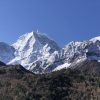
Cryosphere Crisis: Scientists Warn of Devastating Global Impacts Without Urgent Climate Action
Scientists warn of vastly higher impacts on billions of people’s livelihood and cost to the global economy by the accelerating losses in the world’s snow and ice regions, aka the cryosphere. Over 50 leading cryosphere scientists released an annual report on the status of the world’s ice stores on Tuesday (November 12) at the UN Climate Conference (COP29) in Baku. An updated report on the world's ice warns of “drastically higher costs without immediate emissions reductions.”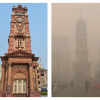
Lahore’s Dangerous Smog: Where Disease and Death Stalk
"It's been horrible; I've been sick on and off for the last 10 days," said 29-year-old asthmatic Natasha Sohail, who teaches A-Level students at three private schools in Lahore. Last week, her condition worsened with a vertigo attack and fever. “It’s criminal what is happening here,” said an incensed Sohail, referring to the “band-aid measures” taken by the Punjab government.
Without Supercharging Adaptation Funding Global Temperatures Could Surge
The Head of Impact Assessment and Adaptation, Henry Neufeldt, UN Environment Programme Copenhagen Climate Centre, has called for increased climate adaptation funding, particularly for developing nations facing significant climate risks.
Leather Cooperative Stops Unemployment in Northeast Brazil
The small community of Ribeira stands out in the Northeast, the poorest region of Brazil. There is no unemployment here. One in five inhabitants make a living directly or indirectly from the Arteza Cooperative of Tanners and Leather Artisans.
UN Climate Summit Needs Action – not a COP-Out
The Paris Agreement on climate change is a decade old this month. While there has been progress - with new net zero pledges and new technological solutions, we are still grappling with the reality that global temperatures continue to soar. 2023 was the hottest year ever on record.
UNEP: Nations Must Step Up Adaptation—Starting with Bold Finance Action at COP 29
The United Nations Environment Programme’s (UNEP) 2024 Adaptation Gap Report has warned that adaptation actions are not keeping pace with the surging demands of a warming planet. Released ahead of the COP29 climate conference in Baku, Azerbaijan, the report—titled Come Hell and High Water—projected a bleak future where vulnerable communities bear the brunt of climate-induced hardships.
Hustle Culture Emerges in Benin in Face of High Graduate Unemployment
At just 11 years old, with a heavy heart, Louis peered up at his parents and said goodbye. He was leaving his small village in northern Benin to live with his uncle in Parakou, where the schools were better. Ever since, Louis has continued to make sacrifices to pursue a strong education and a better life.
Arab Region Leaders, Experts Gather to Find Solutions to Water Scarcity, Sustainable Development
The Arab region is among the most water-scarce areas globally, as nearly 392 million people live in countries facing water scarcity or absolute water scarcity. So dire is the situation that, of the 22 Arab countries, 19 fall below the annual threshold for water scarcity in renewable resources, defined as 1,000 cubic meters per person.
Brazil Promotes a Freer Global Biofuels Market
Holding this year's presidency of the Group of 20 (G20) large industrial and emerging economies is allowing Brazil to push forward the dream of creating a global biofuels market without the current trade barriers.
Israel’s Moves to Ban UNRWA—Signals Uncertainty for Affected Palestinians
The decision of Israel’s parliament, the Knesset, to adopt two laws that would severely limit or outright ban UNRWA has the potential to set a dangerous precedent, where countries can simply implement their own justification to ban the activity of the United Nations, even if it violates their obligations under international humanitarian law. Even with the rest of the world condemning this course of action, for Israel, this has been a long time coming and they are unlikely to back down.
Mexican Cooperative Promotes Energy Transition on Indigenous Lands
What began as a search for fair prices for indigenous handicrafts in 1985 has evolved into a women's organisation in Mexico that promotes climate justice while advocating for land and environmental rights.
Is India Phasing Out Fossil Fuels Fast Enough To Achieve Its Emission Targets?
While India continues to rely heavily on coal, the south Asian economic giant is also aggressively pushing renewable energy production, especially after the costs of renewable energy production have fallen drastically in recent years around the world.
COP16 Delivers on Indigenous Peoples, Digital Sequencing, But Fails on Finance
The curtains fell on the 16th Conference of the Parties of UN Biodiversity (COP16) on Sunday without any formal closing. In a voice message, David Ainsworth, the Communications Director of the UNCBD, confirmed that the COP was suspended due to a lack of quorum in the plenary and would be resumed sometime later. However, before being suspended, the parties managed to adopt a historic decision to open the door for Indigenous Peoples (IPS) and local communities (LCs) to influence the global plan to halt the destruction of biodiversity.
Solar Energy Saves Dairy Cooperative in Brazil’s Semi-Arid Region
“Ixe! If it wasn't for solar energy, we would have closed down, you can be sure. We had to stop due to the pandemic on 15 March 2020, but the energy costs were fixed,” said Erika Cazuza, administrative and financial manager of the Brazilian Cooperative of Rural Producers of Monteiro (Capribom).
Lead for Learning: Decisive Leadership Urgently Needed To Improve Education Globally
Global education is facing a critical moment amid severe setbacks. Millions of children are out of school, learning levels are falling, and millions are leaving school without the skills they need. New out-of-school figures reveal that global progress in reducing the number of out-of-school children has been just 1 percent since 2015, leaving 251 million behind.
Defending Biodiversity in Armed Conflict: Can COP16 Meet the Expectations?
José Aruna, a forest defender from Sud Kivu province in the Democratic Republic of the Congo (DRC), remembers the night in September 2019 when a group of heavily armed men barged into his house in the middle of the night. Aruna and his wife—6 months pregnant at the time—were in bed when he heard sounds of boots on the front yard and quickly knew something was about to happen.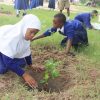
Tanzanian Students Drive Climate Action Through Tree Planting
At Gabimori primary school, located at Nyamagaro ward in Tanzania’s northern Rorya district, a 15-year-old Florence Sadiki kneels among polyethylene bags, carefully examining the seedlings she and her classmates have nurtured from tiny sprouts “We’ve planted many trees to make our school look better and to help fight climate change,” she says.
A Triple Planetary Crisis Scarring Africa’s Landscapes
Some of the creeping impacts of this triple crisis are possibly the most debilitating: Africa is the most severely impacted region by desertification and land degradation, with approximately 45% of its land area affected. In the Horn of Africa and the Sahel alone, it imposes food shortages on more than 23 million people. Just last month, more than 700,000 people were affected by floods in Central and West Africa, and tens of millions in southern Africa are facing drought.
Small Farmers Reap Growing Benefits From Solar Energy in Chile
The production of solar energy by means of panels installed on small farmers' properties or on the roofs of community organisations is starting to directly benefit more and more farmers in Chile.
Scientific Research Can Play a Key Role in Unlocking Climate Finance
Climate finance will be at the epicenter of the discussion at the UN Climate Change Conference 2024 (COP29). The focus will be on strengthening the fund and defining the conditions under which the countries of the Global South will be able to access this money. However, little is said about the scientific research that is required to gather the evidence and data to prove the loss and damage caused by the impact of climate change in developing countries.
Seeds of Resilience Despite Massive Destruction in Gaza
It was two weeks before October 7—when Hamas attacked Israel—that Prime Minister Benjamin Netanyahu stood behind the rostrum in the United Nations General Assembly hall clutching a crude map of what he called the "new Middle East," a visual that erased the land of Palestine.« Previous Page — Next Page »





The Week with IPS

NEXT STOP - SDGs
Tracking global progress towards a sustainable world
Tracking global progress towards a sustainable world
