Languages
Saturday, October 24, 2026



News and Views from the Global South
Biodiversity

Mexico Bans GM Corn Cultivation in Constitutional Reform: Action Follows Trade Ruling That Ignored Evidence of Genetic Contamination
On March 17, Mexican President Claudia Scheinbaum signed into law a constitutional reform banning the cultivation of genetically modified (GM) corn. The action followed a December ruling by a trade tribunal, under the U.S.-Mexico-Canada (USMCA) trade agreement, in favor of a U.S. complaint that Mexico's 2023 presidential decree, with broader restrictions on the consumption of GM corn, constituted an unfair trade practice by prohibiting the use of GM corn in tortillas.
Korea’s Troubled Waters: Traditional Women Divers Protecting an Ocean in Crisis
Ahead of the 10th Our Ocean Conference, with the theme "Our Ocean, Our Action," comes a global call to protect the world's oceans.
Chel Snakehead: A Fish That Time Forgot, Rediscovered
The Chel Snakehead fish, thought to be extinct, has made a dramatic comeback to the eastern Himalayan ecosystem after more than 85 years of absence near its source river in India.
Four Rare Snow Leopards Spotted Together on Pakistan’s Northern Peaks
In a remarkable conservation achievement, four rare and elusive snow leopards have been spotted together in the rugged peaks of northern Pakistan, highlighting the success of the ongoing global efforts aimed at protecting this critically endangered species and preserving its fragile habitat.
Hooves Vs. Habitats: Striking a Sustainable Balance Between Livestock and the Environment Is Crucial to Africa’s Future
In my country, Senegal, almost 70 percent of our land is used to graze livestock. Here and across Africa, pastoralists and livestock keepers sustain herding systems which are closely bound up with our landscapes and crucial to nationwide food security, economic growth, and ecological balance.
The ‘Plastic Man’: Turning Trash into Treasure
In a quiet corner of Medina Gounass, on the outskirts of Dakar, Senegal, one man has taken it upon himself to breathe new life into a place many had abandoned.
Reflections on CGIAR’s Week-Long Discussions on Food System Science
More than 13,600 participants from around the world registered for the inaugural CGIAR Science Week at the UN Complex, Nairobi, April 7-12, 2025. Dr. Ismahane Elouafi, the organization’s Executive Managing Director, said, “This is a testament that people are thirsty for science and for good news.”
How to Put the ‘Sexy’ Back into Agriculture – Thoughts From CGIAR Science Week
This week presented a beacon of hope for young people so that the “girl from the South and the boy, of course” could stay in the developing world, Dr Ismahane Elouafi, Executive Managing Director of CGIAR, said during a press conference on the final day of the CGIAR Science Week.
Insight to Impact: CGIAR Inaugural Flagship Report for Decision Makers Navigating Food System Science
"To have impact, it was crucial to understand what impact was wanted," CGIAR's Executive Managing Director Dr. Ismahane Elouafi said at the launch of the organization's flagship report, Insight to Impact: A decision-maker’s guide to navigating food system science.
Lessons from the Global South on Transforming AgriFood Systems
The state of food and nutrition security in the Global South masks the great strides and investments made to increase agricultural yields to feed a rapidly growing population. As discussions deepen at the ongoing CGIAR Science Week, plenary discussions on Wednesday (April 9) explored transformative strategies and innovations driving agricultural resilience across Africa, the Caribbean, and Latin America.
Science-Backed Solutions Buoying Water Security in East Africa
In East Africa, climate change has made water a lifeline and threat. In a region highly dependent on rainfall for growing crops, climate change is threatening water security but science-backed solutions are helping turn the tide.
Growing Legacy: Raising Ambition in Agriculture Scientific Research as CGIAR Unveil New Portfolio
Global food and nutrition insecurity levels are hurtling towards a catastrophe. To counter these problems, leading world experts say science is the 'silver bullet.' That science will build climate-resilient agri-food systems, improve livelihoods across the value chain, and ensure more affordable, nutritious food while safeguarding the environment.
Behind the Feeding of the 5,000 (or Should That Be 10,000) at CGIAR Science Week
Good Food for All is the motto of The Chef's Manifesto, a project that brings together more than 1,500 chefs from around the world to explore how to ensure the food they prepare is planet-friendly and sustainable.
Welcoming Science: CGIAR Week-Long Focus on Innovation for Food, Climate-Secure Future
The world’s leading scientists and decision-makers in agriculture, climate, and health are meeting in Nairobi this week to promote innovation and partnerships towards a food, nutrition, and climate-secure future. As current agrifood systems buckle under multiple challenges, nearly one in 11 people globally and one in five people in Africa go hungry every day.
CGIAR Science Week Seeks Solutions for a Food-Secure, Climate Resilient Future
CGIAR and the Kenyan Agricultural and Livestock Research Organization (KALRO) are bringing together the world’s leading scientists and decision-makers in agriculture, climate, and health for the first CGIAR Science Week. This gathering will be a key moment to advance research and innovation, inspire action, and establish critical partnerships that can secure investment in sustainable food systems for people and the planet.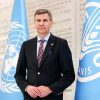
Water and Food Security in Europe and Central Asia: A Shared Challenge for a Sustainable and Just Future
Degrading soil, air pollution, vanishing biodiversity, emerging plant and animal health issues and more are coming together in the current situation of multiple crisis. Ensuring water security is just one, among the many challenges individuals, countries, and the world faces. Yet, we shouldn’t forget that water makes up the largest percentage of our bodies and the same applies to animals, plants and the planet’s surface. The threat of water insecurity is, as we all see, not a petty problem, but one of the greatest challenges of our century.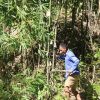
Bangladesh’s Ethnic People Safeguarding Forests and Wildlife
Kishore Kumar Chakma, a young man from an ethnic community in Rangamati district, voluntarily guards a village common forest (VCF) so that none can hunt wild animals and fell trees from it.
Strengthening Indigenous Peoples and Local Communities’ Knowledge and Access Opens up Opportunities for Climate, Biodiversity and Desertification Action
The central role Indigenous Peoples and local communities in addressing climate change, biodiversity loss and desertification has gained widespread recognition over the past decade. Indigenous Peoples’ close dependence on resources and ecosystems, exceptional tradition, and ancestral knowledge are invaluable assets for the sustainable management of our planet’s natural resources.
Seeds of Survival, Amid Conflict Sudan Is Saving Its Agricultural Future
Sudan’s diverse crops and agricultural heritage are at risk of being lost. The ongoing conflict in Sudan is claiming lives and threatening livelihoods and food security. In the chaos of conflict, scientists like Ali Babiker are fighting to protect Sudan’s future food security—not with weapons, but with seeds.
World Day for Glaciers
Glaciers Are in Threat, May Not Survive the 21st Century
Many glaciers in the world will not survive the 21st century, according to reports published by the United Nations. Five of the past six years have experienced the most rapid glacier retreat on record; 2022-24 was the largest three-year loss of glacier mass. 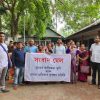
How Rare Rhino, Tiger Conservation Has Locked Out Indigenous Communities
While a local community prides itself on caring for a sensitive biodiverse region, and despite centuries-long stewardship of the Kaziranga, a UNESCO World Heritage Site, the authorities rebuff—sometimes aggressively—their attempts to remain involved.« Previous Page — Next Page »





The world's diverse flora and fauna are facing urgent threats due to pollution, climate change, commercialization of nature and other forms of harmful human intervention. The widespread loss of biodiversity is worrying not simply because of the disappearance of exotic species which deserve saving, but because tampering with nature's equilibrium means that the loss of one form of life is a threat to another. IPS taps into its own diverse network of correspondents around the world to report on continuing and emerging dangers to nature's riches - and the struggle to protect them.

The Week with IPS

NEXT STOP - SDGs
Tracking global progress towards a sustainable world
Tracking global progress towards a sustainable world
