Languages
Friday, November 6, 2026



News and Views from the Global South
Biodiversity

Flooding, Water Insecurity Looms as Indian Kashmir’s Titanic Water Bodies Shrink
Sadiq Dar, 68, is surprised how the heavy siltation of Wular Lake has turned many of its areas into land masses. “When we were growing up, we would only see water in this lake. Now, we see cattle grazing in it while a large portion is also being used by children for playing cricket,” he tells IPS.
POWER TO THE YOUTH: With Quality Education, Youth are Empowered with the Green Skills to Save Our Planet
To save our people and our planet from the life-threatening risks of the climate crisis, we must invest in the education of today’s youth. They will be the climate activists, climate scientists, climate innovators, game-changers and leaders of the 21st century green economy.
Grey Market Charcoal East Africa — Why Prohibitionist Interventions Are Failing
At Kampala’s Nakawa market, Lovisa Nabisubi scoops charcoal from a bag and packs it into tins ready for customers. Her bare hands, feet, and clothes are stained black from hours of dealing in this popular household fuel which some equate to “black gold” not just in Uganda but in most of East Africa.
Transformative Change of our Relationship with Nature: Key to Saving Global Biodiversity
To most people, ‘transformative change’ is an abstract academic catchphrase. But transformative change is far more than that. It is the foundational response necessary to address the global crisis of biodiversity loss that threatens the wellbeing of every person in every community – and every species in every region.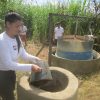
Biodigesters Boost Family Farming in Brazil
"The biodigester really gives a huge boost to those who have the courage to do things," said Maria das Dores Alves da Silva, based on her own experience as a 63-year-old small farmer.
If Governments Have the Tools to Stop Fishing-Related Deaths, Why Aren’t They Being Used?
Long before Hollywood highlighted the dangers of commercial fishing in The Perfect Storm, Deadliest Catch and other programming, governments around the world knew that this was one of the most hazardous jobs, killing thousands of fishers every year.
Uruguay: Green Bills Over Blue Gold
Drinking water is running out in Uruguay — this headline got the small South American country onto international news. Prolonged drought has brought the reservoir and river that supply the capital Montevideo down to 10 per cent of their normal water level. Unless the rain comes, there is sufficient water only until mid-June, at best.
Massive Fish Mortality Strikes Kashmir’s Lake, Threatens Livelihoods
Abdul Lateef Dar, a 45-year-old man living on the outskirts of Kashmir's renowned Dal Lake, relies on the lake's fish for food and income.
Citizen Science Is Key in Helping to Tackle the Threat of Invasive Alien Species
Nature is declining rapidly, and the rate of species extinction is accelerating. The Global Assessment Report of the Intergovernmental Science Policy Platform on Biodiversity and Ecosystem Services (IPBES) (2019) revealed that one million species are at risk of extinction. Invasive alien species, alongside climate change, changing use of sea and land, direct exploitation of organisms and pollution, are all major causes of the unprecedented and ongoing declines in biodiversity and ultimately the nature crisis that we are facing now.
The U.S. Assault on Mexico’s Food Sovereignty
On June 2, the U.S. government escalated its conflict with Mexico over that country’s restrictions on genetically modified corn, initiating the formal dispute-resolution process under the U.S.-Mexico-Canada Agreement (USMCA).
Governments Are Changing Fisheries Management for the Better, but More Action Is Still Needed
Global fisheries are worth more than US$140 billion each year, according to the Food and Agriculture Organization (FAO) of the United Nations. But this hefty sum does not capture the true value of fish to ocean health, and to the food security and cultures of communities around the world.
Nothing Beats Bushmeat, Not Even the Risk of Disease
Meat from wild animals is relished across Africa and widely traded, but scientists are warning that eating bush meat is a potential health risk, especially in the wake of pandemics like COVID-19.
Government Financing for Mayan Train Violates Socio-environmental Standards
Mexico’s development banks have violated their own socio-environmental standards while granting loans for the construction of the Mayan Train (TM), the flagship project of the presidency of Andrés Manuel López Obrador.
Biodiversity Rich-Palau Launches Ambitious Marine Spatial Planning Initiative
Growing up in Palau in the western Pacific Ocean, Surangel Whipps Jr. played on the reefs and spearfished on an island teeming with birds, giant clams, fish, and turtles.
UNDP Good Growth Partnership: Smallholders Key to Reducing Indonesian Deforestation (Part 2)
Smallholder farmers are critical to the success of Indonesia’s efforts to address deforestation and climate change. Creating an understanding and supporting this group, internally and abroad, is a crucial objective for those working towards reducing deforestation and promoting good farming practices, especially as smallholders often work hand-to-mouth and are vulnerable to perpetuating unsustainable farming practices.
UNDP Good Growth Partnership: Getting All on Board to Meet Deforestation Targets (Part 1)
Indonesia finds itself in a delicate balancing act of uplifting people from poverty, managing climate change and biodiversity, and satisfying an increasingly demanding international market for sustainable farming practices—and at the pivot of this complexity is the management of its palm oil sector.
UNDP Assistance Helps Farmers to Meet New EU Deforestation Rules
In 2015, just over 30 cocoa farmers from Padre Abad in Ucayali, a province in the lush and ecologically diverse Peruvian Amazon, formed an alliance to tackle long-standing concerns such as soil quality, access to markets, fair prices for their produce and a growing number of illegal plantations. The result was the Colpa de Loros Cooperative, and from the start, the goal was to produce the finest quality, export-ready cocoa.
Pacific Island Countries To Develop Advanced Warning System for Tuna Migration
Climate change and warming ocean waters are causing tuna fisheries to migrate to international waters, away from a country’s jurisdiction, thereby putting the food and economic security of many Pacific Island countries and territories at risk.
Andean Indigenous Women’s Knowledge Combats Food Insecurity in Peru
Paulina Locumbe, a 42-year-old peasant farmer who lives in the Andes highlands of southern Peru, learned as a child to harvest and dry crops, one of the ancestral practices with which she combats the food insecurity that affects millions in this Andean country.
Protecting and Managing the High Seas
On March 4 2023, the 193 members of the United Nations reached a major milestone. They agreed on a treaty to manage and protect the high seas– the marine areas that lie outside the 200 mile Exclusive Economic Zones (EEZ) of coastal states. The high seas are an essential part of the global ecosystem. They cover 50 percent of the Earth’s surface, produce half the oxygen we breathe, provide a home to 95 percent of the planet’s biosphere, are a critical sink for carbon dioxide, and help regulate the Earth’s temperature.
Interwoven Global Crises Can Best be Solved Together
When global crises are interlinked, they overlap and compound each other. In such cases, the most effective solutions are those that work at the nexus of all these challenges.« Previous Page — Next Page »





The world's diverse flora and fauna are facing urgent threats due to pollution, climate change, commercialization of nature and other forms of harmful human intervention. The widespread loss of biodiversity is worrying not simply because of the disappearance of exotic species which deserve saving, but because tampering with nature's equilibrium means that the loss of one form of life is a threat to another. IPS taps into its own diverse network of correspondents around the world to report on continuing and emerging dangers to nature's riches - and the struggle to protect them.

The Week with IPS

NEXT STOP - SDGs
Tracking global progress towards a sustainable world
Tracking global progress towards a sustainable world
