Languages
Monday, November 9, 2026



News and Views from the Global South
Biodiversity
BIODIVERSITY: Words Are Not Enough
Words are not enough to stop the rapidly unraveling web of life, agreed heads of state and international conservation organisations at a high-level meeting that ended here last Friday.
DEVELOPMENT: Yemen to Lead South in U.N. Negotiations
The republic of Yemen, categorised by the United Nations as one of the world's "least developed countries" (LDCs), will lead the largest single coalition of developing nations this year: the 130-member Group of 77 (G77).DEVELOPMENT: India Holds Public Meetings on GM Food Crop
As India's central government begins a series of public meetings across the country this month on the commercial release of genetically modified (GM) brinjal – or eggplant - in this country, activists and farmers’ groups are mobilising to oppose such a plan.BIODIVERSITY: A Tipping Point on Species Loss?
Humanity is destroying the network of living things that comprise our life support system. While this sawing-through-the-branch-we're-perched-on is largely unintentional, world leaders can't say they didn't know what's going on: 123 countries promised to take urgent action in 2003 but have done little to stem the rising tide of extinctions in what's known as the extinction or biodiversity crisis.ENVIRONMENT: Seeking a Consumer Culture Revolution
The last 50 years have seen an unprecedented and unsustainable spike in consumption, driven by a culture of consumerism that has emerged over that period, says a report released Tuesday by the Worldwatch Institute.BIODIVERSITY: ‘Pious Words Won’t Save Endangered Species’
Less than a month after the world's heads of governments failed to sign an international treaty to address climate change at Copenhagen, they are back at making pious speeches, this time in favour of protecting biodiversity, endangered by global warming and other causes.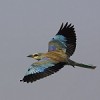
CLIMATE CHANGE: Watch the Birdies
Ornithologists say that climate change is having a profound effect on bird behaviour and suggest that this phenomenon can act as an early warning system to the dangers posed to Earth.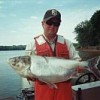
BIODIVERSITY: Invasive Species Multiply in U.S. Waterways
As 2010, the U.N.'s International Year of Biodiversity, gets underway, a fight against some of the most damaging invasive species in U.S. waterways is heating up.AFRICA: Drying, Drying, Disappearing…
Lake Chad was bigger than Israel less than 50 years ago. Today its surface area is less than a tenth of its earlier size, amid forecasts the lake could disappear altogether within 20 years.
CLIMATE CHANGE: Bringing the Rainforest to Copenhagen
As delegates deliberate over the extent carbon emissions will be curbed in the closing days of the U.N. summit here, the environmental ramifications of that agreement are likely to be felt in places far removed from the negotiating table, particularly among indigenous people on the front lines of climate change.
CLIMATE CHANGE: Small Farmers Can Cool the World
Industrial agriculture may emit nearly half of climate-heating greenhouse gases, but that reality has gone unrecognised by negotiators at the climate treaty talks here, say farmers with La Via Campesina, an international movement of hundreds of millions of small-scale peasant farmers.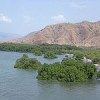
CLIMATE CHANGE: Coastal Carbon Sinks in Dire Need of Protection
What would it be like if the air we breathe was 30 percent more acidic? The oceans are already 30 percent more acidic, and on their way to becoming 120 percent more acidic in 50 years at the current rates of carbon dioxide emissions.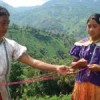
CLIMATE CHANGE: Latin American Women Want Modified Trade Rules
"We don't need to change the climate, we need to change trade," said Brazilian activist Marta Lago at Klimaforum, the civil society meeting held in parallel with the climate change summit in the Danish capital.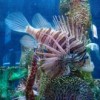
ENVIRONMENT: New Pirate of the Caribbean Invades from Pacific
The red lionfish (Pterois volitans), a venomous coral reef fish from the Indian and western Pacific Oceans, has invaded the waters of the Caribbean and the Gulf of Mexico, threatening to wreak havoc on ecosystems, native fish populations and popular underwater diving areas.
HONDURAS: Miracle in the Mangrove Forest
The beating sun in southern Honduras doesn't stop a group of women from throwing themselves into the task of protecting and recuperating a mangrove forest on the Pacific coast.ENVIRONMENT: Gov’t Silence Dooms Whales to Slaughter
Latin American governments are considering a bloc response to the Japanese whaling fleet's departure for Antarctica, in a new season of what it claims is "hunting for scientific purposes" and which threatens to kill 1,000 whales in the protected Southern Ocean sanctuary.
BIODIVERSITY: Plants Finally Get DNA Barcodes
Advances made in genetic profiling could be used to fight illegal timber trading, provide authentication of herbal medicines and map entire food chains, according to experts at a conference of the Mexican Academy of Sciences.
ENVIRONMENT: Save Half the Planet, or Lose It All
At least half the planet must be protected if humanity is to survive the next century, declared conservationists at the conclusion of 9th World Wilderness Congress on Friday, Nov. 13.
UGANDA: “Mount Elgon Eviction Has Reduced Us to Beggars”*
"We have been reduced to begging from relatives and to migrate to urban areas where life is not safe. We were living in the mountain for more than 200 years. Transferring us means burying us, completely. We want to stay in our area and develop."WEST AFRICA: Helping Pirates to Plunder the Oceans
West Africa is one of the world’s regions most affected by pirate fishers. Illegal, unreported or unregulated fishing has been devastating local livelihoods and ecosystems for decades. National fisheries management authorities are often helpless to protect their maritime resources.ECONOMY-AFRICA: Pros and Cons to Huge Chinese Investment in DRC
Concerns abound about a nine billion dollar Chinese investment in the Democratic Republic of the Congo, especially around environmental consequences and transparency. And, on the Chinese side, investors complain not only about the lack of security in the DRC but about their own government not providing enough support.« Previous Page — Next Page »





The world's diverse flora and fauna are facing urgent threats due to pollution, climate change, commercialization of nature and other forms of harmful human intervention. The widespread loss of biodiversity is worrying not simply because of the disappearance of exotic species which deserve saving, but because tampering with nature's equilibrium means that the loss of one form of life is a threat to another. IPS taps into its own diverse network of correspondents around the world to report on continuing and emerging dangers to nature's riches - and the struggle to protect them.

The Week with IPS

NEXT STOP - SDGs
Tracking global progress towards a sustainable world
Tracking global progress towards a sustainable world
