Languages
Monday, November 9, 2026



News and Views from the Global South
Biodiversity
TRADE: What Will China’s Legacy in Africa be by 2049?
With its recent history of tremendous economic growth, China has a few lessons to teach Africans. But African governments should be vigilant in ensuring that their countries also reap benefits from their relations with China.DEVELOPMENT: For-Profit Seeds Hurting Farmers, Biodiversity
Large biotechnology firms are not only depriving poor farmers of inputs essential for their livelihoods, but are also pushing up food prices, according to a new U.N. report.
ENVIRONMENT-US: Greatest of Lakes Hit by Climate Change
The weather was right for swimming this summer along the shores of Lake Michigan, but on many days, the only living things seen on the beach were gulls, picking away at zebra mussels ensnared in a thick, green slime that covered every rock, pebble and grain of sand for miles.BIODIVERSITY: Earth’s Life Support Systems Failing
The world has failed to slow the accelerating extinction crisis despite 17 years of national and international efforts since the great hopes raised at the 1992 Earth Summit in Rio de Janeiro.AFRICA: Climate Change Worsening Farming’s Trade-Related Woes
Numerous research institutes and international organisations agree that climate change will in the short and medium term worsen Africa's agriculture and food production capabilities, unless greenhouse gases emissions (GHE) are substantially reduced and adequate trade and investment policies put in place.BIODIVERSITY: Dwindling Fish Catch Could Leave a Billion Hungry
Fish catches are expected to decline dramatically in the world's tropical regions because of climate change, but may increase in the north, said a new study published Thursday.
Q&A: Desertification and Climate Change Go Hand in Hand
"The entire social fabric of an area is compromised when soils are depleted," says Italian expert Massimo Candelori, whose fight against desertification is increasingly linked to global efforts to combat climate change.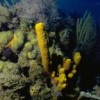
MEXICO: Underwater Museum to Protect Coral Reefs
Four sculptures in human forms, made of concrete, will be submerged in November in the Mexican Caribbean - the first of 400 figures that will comprise the world's largest underwater museum.
ENVIRONMENT: Cuba Encourages Ecotourism in Largest Wetland
The Zapata wren (Ferminia cerverai) is known in Cuba as the "soprano of the forest" for its lovely song. But this tiny bird is very timid and, at the slightest sound, will hide in the vegetation in the Cienaga de Zapata - Zapata Swamp - 160 km south of Havana on the island’s south-central coast.UGANDA: Carbon Trading Scheme Pushing People off Their Land
As the world's attention increasingly turns to the impact of climate change, at least one project intended to reduce global carbon emissions is accused of displacing indigenous persons from their home in Uganda.
AFRICA: Plant Trees To Boost Agricultural Output
The outlook for food security in East Africa is looking bleak this year following poor rains, underscoring the urgency of raising farm productivity while adapting to a changing climate in Africa. Agroforestry experts have put forward planting trees as a possible solution.
ENVIRONMENT: For Trees, Against Monoculture
Growing demand for products like timber and biofuels is putting pressure on shrinking rainforests.LATIN AMERICA: Desertification – an Invisible Cancer
"Desertification is the cancer of the earth," Argentine geographer Elena Abraham told IPS. "It is a process of degradation that does not manifest itself in spectacular ways but furtively advances, and by the time it is visible there is nothing to be done, and people have to move away, in search of an alternative."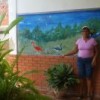
VENEZUELA: Women Recycle for Income and Environment
The women of this town in northern Venezuela no longer say "garbage" but rather "secondary raw material," and instead of referring to recycling, they talk about "separation at point of origin."ENVIRONMENT-CHINA: What Makes A Good Dam?
The Chinese government needs to engage local communities in harnessing its vast water and hydropower resources and pursuing sustainable development, says environmental advocate Yu Xiaogang, recipient of the 2009 Ramon Magsaysay Award for Participatory Social Impact Assessment for Watershed Management.CHILE: War Over Seeds
Environmental organisations, organic farmers and indigenous people in Chile are opposed to a draft law that would expands the rights of the developers of new varieties of plants, while the government and seed companies argue that there will be no negative impacts on small farmers and biodiversity.
BIODIVERSITY: Amateur Biologists Join Global Bid to Catalog Species
Save the living environment and the physical environment will automatically be saved, according to E.O. Wilson, the world's leading biologist and father of the online Encyclopedia of Life, which plans to create a web page for every known species - all 1.8-plus million.
ENVIRONMENT-SOUTH AMERICA: Mapping the Riches of the Tropical Andes
The Ecosystems Map of the Northern and Central Andes could serve as a guide for environmental conservation of this South American area covering 1.5 million square kilometres and holding the world's highest concentration of biodiversity.
Q&A: About Peas in a Pod
Slow Food, obviously, is the opposite of fast food. And it's a movement now with more than 100,000 members in 132 countries. But what does "slow food" mean in practical terms?BIODIVERSITY: Tight Controls Could Save Global Fisheries
The global race to catch the last fish left in the oceans has been successfully halted in a few regions and fish stocks have rebounded, a new landmark study has found.ENVIRONMENT: Monsanto, Dow Stacking the Deck, Critics Say
The most complex genetically engineered corn (maize) yet has been approved for use next year in Canada and the United States without its potential health and environmental risks being investigated, anti-biotech activists charged Wednesday.« Previous Page — Next Page »





The world's diverse flora and fauna are facing urgent threats due to pollution, climate change, commercialization of nature and other forms of harmful human intervention. The widespread loss of biodiversity is worrying not simply because of the disappearance of exotic species which deserve saving, but because tampering with nature's equilibrium means that the loss of one form of life is a threat to another. IPS taps into its own diverse network of correspondents around the world to report on continuing and emerging dangers to nature's riches - and the struggle to protect them.

The Week with IPS

NEXT STOP - SDGs
Tracking global progress towards a sustainable world
Tracking global progress towards a sustainable world
