Languages
Monday, November 9, 2026



News and Views from the Global South
Biodiversity

Q&A: The Threatened Have Some Friends
Declining amphibian populations, dwindling fish stocks, waning ocean biodiversity, loss of forests...All scientists acknowledge that the rate of species loss is greater now than at any time in human history.
GUATEMALA: Relentless Devastation of Mangroves
"This place used to be beautiful. It was truly a mangrove forest. When the shrimp farmers arrived, we lost 60 percent of it because of the logging," said Francisco Vásquez, manager of a hotel on the Pacific coast, in the southeastern Guatemalan department of Jutiapa.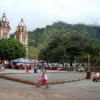
COLOMBIA: Gold vs Preservation in the Central Mountains
In a protected area of the Cordillera Central, Colombia's central mountain range, gold mining plans are clashing with the desire of farmers, activists and environmental officials to preserve forests and water resources.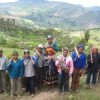
AGRICULTURE: A Stormy Time for Indigenous Wisdom
Indigenous peoples risk losing control over their traditional knowledge if the World Intellectual Property Organisation (WIPO) insists on strict standards for managing access to information.
ENVIRONMENT: Scientists Study the Riches of the Mexican Pacific
Mexico’s Pacific coast, one of the world's richest seaboards in terms of biodiversity, has been the focus of very few scientific studies. A new observatory aims to fill that void.ENVIRONMENT: No Breakthrough Seen in Whaling Stalemate
Environmental groups expressed little hope the participants at the 61st annual International Whaling Commission (IWC) meeting, beginning Monday in Madeira, Portugal, would reach a compromise that would reduce the number of whales killed each year.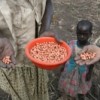
AGRICULTURE-AFRICA: Seeking Diversity, Resilience and Farmer Control
The Alliance for a Green Revolution in Africa (AGRA) claims that its "stress breeding", high-yield seed program and its emphasis on grassroots farmer input will boost agricultural production among poor, small scale farmers. But NGOs and environmentalists say AGRA’s Programme for Africa’s Seed System (PASS) is essentially a top-down, corporate driven approach that further threatens food security on the continent.
Q&A: ‘Biodiversity Is Essential Ingredient in Agriculture’
The promotion of biodiversity in agriculture needs political backing, Emile Frison, Bioversity International Director-General tells IPS in an interview. This kind of biodiversity can provide food security and promote health, he says.
Q&A: 'Variety Can Protect Against Famine'
How many varieties of date palm or melon exist? And why should we care? IPS spoke to three 'Guardians of Diversity' so named by Bioversity International for their contribution to conservation.ENVIRONMENT-ZIMBABWE: Farmers Go to War Against Lantana Camara
Armed with picks, axes and hoes, a group of enthusiastic villagers break into song: "Randana kamara wakaipa, Randana kamara wakashata.Watora ufuro hwezvipfuyo, wauraya mombe." ("Lantana camara, you are evil. You have taken over grazing land for our livestock, you have killed our cattle.")BIODIVERSITY: Scientists Build a Macroscope of Life on Earth
Imagine looking at a Google Maps-like satellite image of the Amazon forest and with a mouse click find out what lives in that bit of forest - what tree and plant species are there, what animals, birds and insects.BRAZIL: Public Health Embraces Herbal Medicines
Handed down from generation to generation, traditional knowledge about medicinal plants has reached state laboratories in Brazil through a programme that has already identified 71 native and exotic species for producing herbal medicines.
DOMINICAN REPUBLIC: Tourism Threatens Natural Treasure
Jaragua National Park, famous for housing the world's tiniest reptile, will itself be in danger if the green light is given to mega-hotel projects instead of ecotourism and sustainable development initiatives, say Dominican ecologists.BRAZIL: 100,000 Hectares of Atlantic Forest Lost in Three Years
Stretched out along the coastal zones of 17 of Brazil’s 26 states, an area marked by a high level of agricultural and industrial development, the Mata Atlântica or Atlantic Forest lost more than 100,000 hectares in the last three years, mainly due to urban expansion and economic growth.ENVIRONMENT: Damaged Ecosystems Not Lost Forever
Most polluted or damaged ecosystems worldwide could recover within a single lifetime if societies commit to their cleanup or restoration, according to researchers at the Yale School of Forestry & Environmental Studies.BIODIVERSITY-EUROPE: Not Just About a Frog Here or There
Politicians across the European Union are waking up to the fact that biodiversity is fast becoming a crucial environmental issue that needs to be tackled soon.BRAZIL: Murder, Death Threats Amid Environmental Protests
Environmentalists and human rights activists in Brazil are demanding clarification of the murder of Paulo Santos Souza, a fisherman and trade unionist who was fighting irregularities in the construction of a gas pipeline for Petrobras.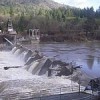
ENVIRONMENT-US: Free-Flowing Rivers Back in Vogue
It may come as no surprise that a dam impeding the flow of a major river would negatively impact fish populations, but it is only recently that benefits of free-flowing rivers in the U.S. Pacific Northwest are beginning to be valued more than those of dams.ENVIRONMENT: Extraordinary Abundance of Life in Oceans Past
Imagine large pods of mighty blue whales and orcas darkening the waters off Cornwall, England, while closer to shore blue sharks and thresher sharks chase herds of harbour porpoise and dolphins.ENVIRONMENT: Preserve Peru’s Biodiversity, Save the World
Peru, second in Latin America for total area of tropical forests, has adopted international laws, instruments and strategies to protect its wealth of flora and fauna. But those tools have not yet had much effect.ARGENTINA: Trout – Fishers’ Delight – Threaten Biodiversity
Thousands of visitors are drawn every year to Argentina’s southern Patagonia wilderness region to fish in glacial lakes and crystal clear streams and rivers. But the trout and salmon that they have come to find are not native species, and pose a threat to local biodiversity.« Previous Page — Next Page »





The world's diverse flora and fauna are facing urgent threats due to pollution, climate change, commercialization of nature and other forms of harmful human intervention. The widespread loss of biodiversity is worrying not simply because of the disappearance of exotic species which deserve saving, but because tampering with nature's equilibrium means that the loss of one form of life is a threat to another. IPS taps into its own diverse network of correspondents around the world to report on continuing and emerging dangers to nature's riches - and the struggle to protect them.

The Week with IPS

NEXT STOP - SDGs
Tracking global progress towards a sustainable world
Tracking global progress towards a sustainable world
