Languages
Monday, November 9, 2026



News and Views from the Global South
Biodiversity
CUBA: Exotic Fish Has Bad Reputation but High Yields
Known for eating everything in its path, and even for stinging people, the African catfish (Clarias gariepinus) is feeding debates in Cuba while at the same time it is filling family dinner plates.
BIODIVERSITY: Alien Species Eroding Ecosystems and Livelihoods
Continent-hopping alien species are worsening poverty and threaten the agriculture, forestry, fisheries and natural systems that underpin millions of livelihoods in developing countries, warn biodiversity experts.SOUTH AMERICA: Rich in Biodiversity, Lagging in Protection
South America is the only region that has not submitted a report of its actions in the last year to implement the Convention on Biological Diversity, although it accounts for 40 percent of the world’s plant and animal species and the deadline was Mar. 30.
ENVIRONMENT: When Conservation Bumps Up Against Conflict
Driving through Tijuana and long stretches of northern Baja, conservationist Zach Plopper loves his job but hates the commute.
ENVIRONMENT: Rare Bats Left Unprotected
A rare species of bats is in danger in western India because it has been denied Protected Area status.ENVIRONMENT: Deep CO2 Cuts May Be Last Hope for Acid Oceans
Ocean acidification offers the clearest evidence of dangers of climate change. And yet the indisputable fact that burning fossil fuels is slowly turning the oceans into an acid bath has been largely ignored by industrialised countries and their climate treaty negotiators, concluded delegates from 76 countries at the World Oceans Conference in Manado, Indonesia.
ENVIRONMENT: Scientists Shepherd Dwindling Right Whales
When a North Atlantic right whale swimming near Boston bellows at 3 a.m., a phone rings in a small town in upstate New York.ENVIRONMENT: Coral Reefs Lucky – This Time
Scientists have been surprised by the rapid recovery of coral reefs from mass bleaching on Australia's iconic Great Barrier Reef, but they warn that reefs remain particularly vulnerable to the effects of climate change.ENVIRONMENT: Israel Stripping West Bank Quarries
Israeli human rights organisation Yesh Din is taking the Israeli Defence Forces (IDF), the Israeli civil administration and a number of Israeli mining companies to court.
CLIMATE CHANGE: Burden Lies with Rich Polluters, Native People Say
Already suffering significant impacts from climate change, indigenous peoples at the close of an international summit here rejected the concept of carbon trading and offsets. Many also called for a moratorium on all new oil and gas exploration in their traditional territories and the eventual phase-out of fossil fuels.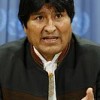
ENVIRONMENT: U.N. to Celebrate “Mother Earth Day”
"Mother Earth is not an object or merchandise. Mother Earth cannot be bought or sold," said Bolivian President Evo Morales, speaking at a heavily-attended news conference here at U.N. headquarters on Earth Day.ENVIRONMENT: Paper and Fuel Wood Biggest Stresses on Forests
Protecting the earth's nearly 4 billion hectares of remaining forests and replanting those already lost are both essential for restoring the earth's health, an important foundation for the new economy.
CLIMATE CHANGE: Seals in the Baltic Left without Ice
Ringed seals in the Baltic Sea are finding fewer and fewer ice caves in which to raise their young. Rising global temperatures are the problem, and in turn are depleting the main food source of the giant polar bear, say scientists.ARGENTINA-BRAZIL: Planned Dam Above Famous Falls Draws Fire
While a dispute between Argentina and Uruguay over a pulp mill simmers on, a new environmental conflict over a border river is taking shape, this time involving a hydroelectric dam between Argentina and Brazil.
MEXICO: Hints of Sustainability at Cancun Resorts
Antonio Moreno is the banquet manager of a four star hotel in the south-eastern Mexican resort city of Cancún, but for more than a year his duties have included digging through the trash.
ENVIRONMENT: Can Ecotourism Be More Than an Illusion?
More than ever before, global tourism must play its part in sustainable development and poverty alleviation, stated experts at an international symposium in this Canadian city.ICELAND: Whaling Puts Fish Sales at Risk
After promising that the decision made by the outgoing fisheries minister on commercial whaling would be reversed, the fisheries minister of Iceland's caretaker government, Steingrimur J. Sigfusson, discovered that the law would not allow him to revoke the decision, and so whaling of up to 100 minke whales and 150 fin whales can continue, at least for 2009.
MEXICO: Cradle of Maize Rocked by Transgenics
Mexico has lifted the ban on experimental cultivation of transgenic maize imposed in 1999 in this country where the crop was first domesticated and shaped human culture. Biotech giants have put forward two dozen projects for approval and have announced investments of 382 million dollars up to 2012.
ENVIRONMENT-PAKISTAN: Save the Indus Plead Delta Folk
"There was a time when we used to cast our nets into the river [Indus] and haul in no less than 400 to 500 ‘palla’ fish at one go," says 70-year-old Hamzo Jat.
ENVIRONMENT: Brazil's Concrete Jungle
For the residents of Recreio, an upscale district on the west side of Rio de Janeiro, it is hardly a surprise these days to find alligators holding up traffic along their streets or slipping in for a dip in their swimming pools.
ENVIRONMENT-INDIA: Kerala Has Elephantine Problems
Among attractions for visitors to southern Kerala state is the way elephants are seen closely integrated into the religious lives of the people.« Previous Page — Next Page »





The world's diverse flora and fauna are facing urgent threats due to pollution, climate change, commercialization of nature and other forms of harmful human intervention. The widespread loss of biodiversity is worrying not simply because of the disappearance of exotic species which deserve saving, but because tampering with nature's equilibrium means that the loss of one form of life is a threat to another. IPS taps into its own diverse network of correspondents around the world to report on continuing and emerging dangers to nature's riches - and the struggle to protect them.

The Week with IPS

NEXT STOP - SDGs
Tracking global progress towards a sustainable world
Tracking global progress towards a sustainable world
