Languages
Monday, November 9, 2026



News and Views from the Global South
Biodiversity
ENVIRONMENT: Experts Call for Action on Ocean Preserves
As much as 50 percent of the world's fish stocks are fully exploited and 17 percent are over-exploited, putting marine biodiversity at severe risk, according to a new report released Tuesday by the Worldwatch Institute.
ENVIRONMENT-INDIA: Snow Leopards Earn Their Keep in Tourist Dollars
Tsring Angmo a student from Rumbak village in Ladakh attended a workshop conducted by the Snow Leopard Conservancy (SLC) in India out of sheer curiosity. "I came away feeling responsible for the safety of the endangered animal,’’ she said.
SCIENCE: Geneticists Crack the Species Code
Scientists are enthusiastic about a new DNA barcoding technology that will help keep illegal fish and timber out of global markets, slow the spread of invasive pests, and improve food safety and disease prevention and offer better environmental monitoring.
ENVIRONMENT-FIJI: Turtle Slaughter Exposes Toothless Ban
Following reports of the slaughter of 84 turtles, as part of festivities for an annual church conference, conservationists have called on Pacific Island countries to enforce legislations that ban the killing or molestation of the endangered sea reptiles.
ENVIRONMENT-GERMANY: What a Lake Says About Climate Change
When the East German nuclear power plant Rheinsberg was shut down almost 20 years ago, environmentalists expected that fauna and flora in nearby Stechlin lake would survive without further damage.
ENVIRONMENT: Breakthrough on Mystery of Vanishing Bees
Over the past year, honey bees have been dying across North America in unprecedented numbers and, until this month, no one seemed to be able to prove beyond a reasonable doubt what the cause may have been.ENVIRONMENT-AFRICA: Game Parks Offering Protection in Name Only?
The sharp decline of Africa's abundant wildlife is now happening inside the continent's protected areas, a new analysis indicates. Africa's world renowned parks are destined to become isolated pockets of wilderness with few large animals left, as is the case in Europe, conclude the authors of an article in the current edition of the 'African Journal of Ecology'.ARGENTINA: Finally, a Marine Preserve
Argentina's first marine and coastal park, which is to protect rich biological diversity in the southern province of Chubut, is awaiting legislative approval.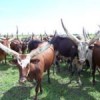
BIODIVERSITY: One-Fifth of Local Livestock Risks Extinction
Wild and exotic animals aren't the only creatures facing imminent extinction. Many breeds of indigenous livestock in Africa, Asia and Latin America are now at a risk of entirely disappearing.
ENVIRONMENT-AUSTRALIA: Pulp Mill Friction Turns Election Issue
A proposed pulp mill in the scenic Tamar Valley of the island state of Tasmania has become a contentious issue between environmentalists and pro-development groups as Australia goes to federal elections this year.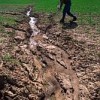
ENVIRONMENT: Dirt Isn't So Cheap After All
Soil erosion is the "silent global crisis" that is undermining food production and water availability, as well as being responsible for 30 percent of the greenhouse gases driving climate change.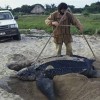
ENVIRONMENT- SOUTH PACIFIC: Sea Turtles – Iconic but Going Extinct
Reports of the extinction of China’s iconic Yangtze River dolphins have some conservationists in the South Pacific fearing that the same fate awaits certain migratory species of sea turtles, which are similarly imperilled.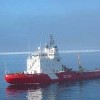
ENVIRONMENT: Carving Up the Melting North
As climate change hit a cultural tipping point in 2007, with more and more people expressing concern and awareness of the risks posed by rising greenhouse gases, warming in the Arctic is already altering the landscape in Canada's north.
ENVIRONMENT-INDIA: Leopards Thrive Where Tigers Once Roamed
Visitors who flock to India’s tiger reserves have only one question of each other: "Did you see a tiger?"NICARAGUA: A Green Crusade for Water
The Nicaraguan government launched a national campaign to reforest 60,000 hectares per year as part of an effort to recover 18 rivers lost as a result of uncontrolled logging.BIODIVERSITY: Atlantic Bluefin Going Way of Northern Cod
Fishing wiped out Atlantic Bluefin tuna stocks in Northern Europe 50 years ago, according to a new study, while ongoing pressure on the remaining stocks is pushing the entire species to the edge of extinction.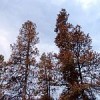
ENVIRONMENT: Climate-Driven Pest Devours Canada’s Forests
Environmentalists and researchers say that climate change is a significant factor in the pine beetle epidemic that has ravaged forests in the western Canadian provinces of British Columbia (BC) and Alberta.PAKISTAN: Uncontrolled Population Blamed for Climate Change
When it comes to climate change population matters, particularly for countries in South Asia, Africa and some Arab countries, says Prof. Khalid Rashid. A mathematician and physicist in Pakistan, he has long been studying the phenomenon of global warming and views the uncontrolled population explosion with much trepidation.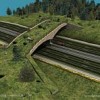
BIODIVERSITY: “Wildways” Would Bridge a Fractured Continent
Before deforestation and sprawl fragmented North America's wilderness into isolated islands of bio-homogeneity, the largest of carnivores and smallest of rodents roamed the expansive continent at will.
Q&A: Caribbean Alliance to Protect Humpback Whales
In December 2006, marine mammal sanctuaries in the Dominican Republic and the United States set up an alliance to protect some 900 humpback whales. Behind that initiative was the tenacity of Nathalie Ward, director of the Eastern Caribbean Cetacean Network (ECCN).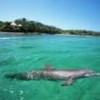
CARIBBEAN: Unknown State of Whales and Dolphins
The Wider Caribbean region is the habitat of a quarter of the planet's sea mammals, but little is known about the state of their conservation here, warn experts.« Previous Page — Next Page »





The world's diverse flora and fauna are facing urgent threats due to pollution, climate change, commercialization of nature and other forms of harmful human intervention. The widespread loss of biodiversity is worrying not simply because of the disappearance of exotic species which deserve saving, but because tampering with nature's equilibrium means that the loss of one form of life is a threat to another. IPS taps into its own diverse network of correspondents around the world to report on continuing and emerging dangers to nature's riches - and the struggle to protect them.

The Week with IPS

NEXT STOP - SDGs
Tracking global progress towards a sustainable world
Tracking global progress towards a sustainable world
