Languages
Monday, November 9, 2026



News and Views from the Global South
Biodiversity
ENVIRONMENT: For Troubled Fishing Industry, Less Is More
Catch less fish. Make more money. Could this be the solution to the global overfishing crisis?DEVELOPMENT: 'MNCs Gaining Total Control Over Farming'
Food security campaigners are now more concerned than ever that farmers are turning dependent on large multinational corporations (MNCs) for seeds, fertilisers, pesticides and other inputs while also becoming more vulnerable to pressures to produce genetically engineered crops.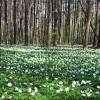
CLIMATE CHANGE: Forests, the Great Green Hope?
Expanding European forests absorbed 126 million tonnes of carbon dioxide from 1990 to 2005 - equivalent to 11 percent of European Union emissions from human activities - while a U.N. target to plant one billion trees mainly in Africa has been surpassed.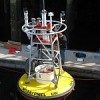
ENVIRONMENT: Planetary Check-Up Starts With the Oceans
If continents are the Earth's sturdy bones and the atmosphere its thin skin, then the oceans are its heart, circulatory system and blood. And despite the crucial role played by the oceans in the health of the planet, and to our own health and well-being, there is little monitoring of ocean health.HEALTH: Tropical Species Migrating North
New species of insects have begun to establish themselves all across Europe, raising concerns about the impact of global warming on biodiversity and public health.ENVIRONMENT: Emergency Brakes Needed to Stop Climate Crash
In the end, governments accepted evidence from the world's top scientists that climate change impacts could be abrupt and irreversible, and that they require urgent action.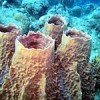
ENVIRONMENT: Between a Reef and a Hard Place
Coral reefs face certain extinction in a few decades unless there are unprecedented reductions in carbon emissions, leading Australian scientists warn.AGRICULTURE: Costly Prosperity
Many of the people who are now complaining that biofuels are driving up agricultural prices fought in the past against the "deterioration of the terms of exchange," or the devaluation of commodities with respect to manufactured goods, as a key factor in underdevelopment.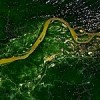
BIODIVERSITY: How Many Species Are "Enough"?
Plants are the only source of oxygen on Earth - the only source. And studies around the world show that as plant species become extinct, natural habitats can lose up to half of their living plant biomass.ENVIRONMENT-LATIN AMERICA: Same Old Problems
Urban poverty and chaotic urban growth, loss of biodiversity, degradation of marine ecosystems and water and air pollution are just a few of the serious environmental problems that continue to plague Latin America and the Caribbean, the U.N. Environment Programme said Thursday in a new global report.ENVIRONMENT: A Planet Living Beyond Its Means
Failure to take drastic action to avert further climate change and loss of biodiversity poses serious risks to the future of humanity, a major U.N. report warned Thursday.
ENVIRONMENT-INDIA: Tigers Lose in Park vs People Conflict
Three years after 22 tigers were brazenly hunted down by poachers in the Sariska Tiger Reserve, a protected park in the Aravalli hills of northwestern India, the blame game has not ended.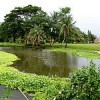
ENVIRONMENT-INDIA: Turning Poachers Into Conservators
"I grew up in these jungles. Like many others, my father came over from (what is now) Bangladesh to farm here. Clearing the forests and killing animals was a common activity and we saw nothing wrong. Today, we help prevent others from doing that," says Anil Krishna Mistry, 40.ENVIRONMENT-ASIA: Deforestation Symptomatic of Corrupt Regimes
When a global anti-graft watchdog surveys the Asian landscape for corruption indicators, the continent’s forests depleted by illegal logging invariably enter the picture.ENVIRONMENT: Biofuels – Great Green Hope or Swindle
A raft of new studies reveal European and American multibillion dollar support for biofuels is unsustainable, environmentally destructive and much more about subsidising agri-business corporations than combating global warming.
ENVIRONMENT: Ambitious Inventory of Marine Life
The inclusion of coral on the Red List of Threatened Species 2007 - of the World Conservation Union (IUCN) - is the first result of an ambitious marine life observation project, one that has goals of global conservation.ENVIRONMENT: Indigenous People Make Best Forest Custodians
The millions of indigenous people living across Asia and the Pacific are finally gaining recognition for the key role the play in forest conservation.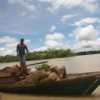
ENVIRONMENT-COLOMBIA: The Unusual Wealth of the Choco
"Let's go to the sea, let's go to the sea," one hears a nervous voice say every so often in the fishing village of Bahía Solano, on the Colombian Pacific coast. A package has been seen floating and boats are going after a not-so-traditional catch: cocaine thrown out by fleeing drug traffickers.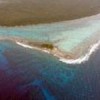
ENVIRONMENT: Latin America Has Turned Its Back on the Sea
Latin America and the Caribbean have as much land territory as marine area. But while more than 10 percent of the land is protected, not even one percent of the sea is.
CANADA: Native Way of Life Vanishing into the Clear-Cut
As the Ontario election draws to a close on Wednesday, a long-running land rights battle continues in the east-central Canadian province between First Nations groups and mining and logging interests that have been granted concessions to exploit the resources in a vast boreal forest known as Grassy Narrows.
ENVIRONMENT-SOUTH ASIA: Superstition May Yet Save Marine Reserve
India’s plans to dredge a navigable canal between the Gulf of Mannar (which separates India from Sri Lanka) in the face of strong economic and ecological objections have now run, of all things, into a religious obstacle.« Previous Page — Next Page »





The world's diverse flora and fauna are facing urgent threats due to pollution, climate change, commercialization of nature and other forms of harmful human intervention. The widespread loss of biodiversity is worrying not simply because of the disappearance of exotic species which deserve saving, but because tampering with nature's equilibrium means that the loss of one form of life is a threat to another. IPS taps into its own diverse network of correspondents around the world to report on continuing and emerging dangers to nature's riches - and the struggle to protect them.

The Week with IPS

NEXT STOP - SDGs
Tracking global progress towards a sustainable world
Tracking global progress towards a sustainable world
