
Wednesday, November 18, 2026



News and Views from the Global South
Climate Change

“Microfinance Can Help Rural Communities Adapt to Climate Change”
Projects to fight climate change are being designed all around the world. But only five percent of them can be financed with the current international funds available, which means resources have to be used more wisely. Microfinance could be one solution.
Gender Indicators for Global Climate Funds Still an Afterthought
Of the millions of dollars spent on climate change projects in developing countries, little has been allocated in a way that will benefit women. Yet, in Africa, it is women who will be most affected by climate change.Poor Countries Host Vastly More Displaced People Than Wealthier Nations
The hardest part of Jan Egeland’s job is coming home at the end of the day. He is the Director of the Norwegian Institute for International Affairs and the former U.N. Emergency Relief Coordinator, and has travelled to the farthest reaches of the world to help protect refugees and displaced people.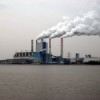
Carbon Markets Are Not Cooling the Planet
Carbon markets have been widely promoted as the only way to generate enough money to enable industries and countries to reduce their carbon dioxide emissions, which are largely responsible for global warming. The only problem is that nearly 20 years after their conception, they have failed to work, and have also been subject to fraud and other financial crimes.OP-ED: Growing Goat Herds Signal Global Grassland Decline
After the earth was created, soil formed slowly over geological time from the weathering of rocks. It began to support early plant life, which protected and enriched it until it became the topsoil that sustains the diversity of plants and animals we know today. Now the world's ever-growing herds of cattle, sheep, and goats are converting vast stretches of grassland to desert.Postponing Emissions Cuts Carries Steep Price-tag
If we're lucky, by the time a tough but fair international treaty to meet the climate change challenge is finalised, it will be largely unnecessary. The snail's pace of negotiations certainly gives countries plenty of time to understand the financial, social and environmental advantages of kicking their dangerous addiction to fossil fuels.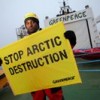
OP-ED: Drilling Deep Mistakes in the Arctic
Nuuk is a long way from my hometown of Durban, and the Arctic is a long way for an African to come to campaign about climate change. Yet, here I sit, in a jail cell, with my colleague Ulvar Arnkvaern, in the ‘Institution’, a prison in Greenland’s capital. I sit here for breaching an exclusion zone and climbing aboard a dangerous deep water drilling rig some 120 km off Greenland’s coast.
CLIMATE CHANGE: African Agriculture and Food Supply at Risk
Climate change and global warming are likely to have dramatically negative effects on African agriculture and food supply by reducing river runoffs and water recharge, especially in semi-arid zones such as Southern Africa, two new reports say.U.N. Political Body Digresses into “Non-Security” Issues
When the U.N. Security Council, the only political body empowered to declare war and peace, decided to include climate change on its agenda back in 2007, the 131-member Group of 77 (G77) launched a vociferous protest.Developing Countries Pledging More Emissions Cuts Than Industrial North
Negotiations over a new international climate agreement are on the brink as new analyses show that carbon emission reduction promises by industrialised nations are actually lower than those made by China, India, Brazil and other developing nations. Even with all the promises or pledges added together they are still far short of cuts needed to prevent global temperatures from rising two degrees Celsius, experts reported here.
CLIMATE CHANGE: Putting Children in Harm’s Way
It is late afternoon and the lone figure of nine-year-old Nancy Chepkemboi trudges home. To keep her head dry from the heavy rains, Chepkemboi has placed her books inside her shirt and used the polythene bag that is her school bag to cover her head.ENVIRONMENT: Congo Basin Slow to Adopt REDD
Only two of the eleven countries that share the Congo Basin have validated their plans to participate in the forest conservation process known as REDD+.Q&A: Universal Energy Access is Possible With the Right Support
Providing electricity and modern cooking technology to billions of ‘energy poor’ people worldwide is one of the priorities of the U.N.’s Millennium Development Goals (MDGs) - one that experts say is achievable over the next few decades.ICC Urged to Accept ‘Ecocide’ as an International Crime
Images of the immense, dark stain of oil covering the waters of the Gulf of Mexico made their way across the globe last year as one of the largest oil spills in history unfolded. Other images - of the ‘Great Pacific Garbage Patch’, a gigantic pile of litter floating in the North Pacific Ocean; of countless felled trees in the Amazon; of tar sands in Canada - have gained much fewer headlines, but are likely to remain as monuments to the price tag of wanton human appetites.MALDIVES: Mining ‘Smoking Mountain’ of Rubbish for Energy
Most visitors to the Maldives – a string of islands southwest of Sri Lanka – won’t miss the so-called "smoking mountain" made from local residents’ trash as well as the garbage tourists leave behind in resorts nearby.Climate Regulatory Gap Could Result After 2012 Kyoto Expiration
The growing awareness that the ongoing U.N. climate change talks here won't deliver a treaty to extend the international governance regime on reducing greenhouse gas emissions after 2012, is driving environmental experts to foster alternative solutions to global warming.Reducing Soot and Smog Would Help Stabilise Climate
Clean the air, cool the planet and prevent millions of deaths with fast action on soot and smog, a new report urges.
Biodiverse Venezuela Flunking Basic Conservation
Threats to biodiversity, spreading pollution, degraded river basins and disappearing forests are problems in oil-rich, megadiverse Venezuela, where climate change is knocking on the door.Canada Spurns Kyoto in Favour of Tar Sands
Canada was roundly criticised by other nations at a major U.N. climate meeting last week after being caught underreporting carbon emissions from its tar sands oil production facilities, one of the country's biggest and fastest growing sources of global warming gases.OP-ED: Global CO2 Emissions Reach a New Record High
The alarm bells this time are not being rung by climate scientists or by environmental activists. They are being rung by none other than the International Energy Agency (IEA) - the institution established in the 1970s to defend the interests of Western oil consuming nations.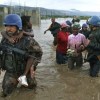
Millions May Soon Be Fleeing the Floodwaters
Mass migration will inevitably be part of human adaptation to climate change, experts agree, since parts of the world will become uninhabitable in the coming decades.« Previous Page — Next Page »


As unsustainable human consumption and production systems are driving changes in average temperatures and weather patterns, "abnormal" is increasingly becoming the norm. So far, a lack of financing has been standing in the way of a comprehensive global plan for climate adaptation, and a global financial crisis has contributed to an increasing reliance on public-private partnerships. Our Climate Change page provides you with the latest news about international and local efforts to address what's frequently been called "the challenge of our time", the forces behind the climate change and the impact it has on the world's most vulnerable populations. Along the way, we bring you stories on growing citizen awareness, new scientific data, and emerging climate policies towards sustainable development.

The Week with IPS

Tracking global progress towards a sustainable world

