
Wednesday, November 18, 2026



News and Views from the Global South
Climate Change
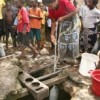
SOUTHERN AFRICA: Majority Still Lack Access to Safe Water
Only two in every five people in the Southern African Development Community has access to safe water for drinking and household use. Three quarters of those lacking access, live in rural areas and the majority of these are women and children.INDONESIA: Network Turns Teachers Into Environment Advocates
Educators in Indonesia are turning green with environmental advocacies they plan to integrate into the curriculum of state-run elementary and high schools through the "Green Teacher Network".Rising Temperatures Melting Away Global Food Security
Heat waves clearly can destroy crop harvests. The world saw high heat decimate Russian wheat in 2010. Crop ecologists have found that each one-degree Celsius rise in temperature above the optimum can reduce grain harvests by 10 percent. But the indirect effects of higher temperatures on our food supply are no less serious.EUROPE: Business Blocks Climate Targets
A crucial proposal to move to higher climate targets in the EU was resolutely voted down Tuesday after amendments by Conservatives heavily watered down the proposal. Several members of parliament blame business lobbying for the loss, even though dozens of corporations called out for higher climate goals.Selling Nature to Save Nature, and Ourselves
Avoiding the coming catastrophic nexus of climate change, food, water and energy shortages, along with worsening poverty, requires a global technological overhaul involving investments of 1.9 trillion dollars each year for the next 40 years, said experts from the U.N. Department of Economic and Social Affairs (UN-DESA) in Geneva Tuesday.CLIMATE CHANGE: Dream of a Camel, Get a Goat, and Be Happy With It
Sometimes you have to dream of a camel to get only a goat, South African Foreign Minister Maite Nkoana-Mashabane said last weekend to delegates from 35 countries gathered in Berlin to discuss ways to avoid the collapse of international climate change negotiations.
Women Keen to Ease Greenhouse Effect on Their Ability to Provide
A successful entrepreneurial programme in the north of Namibia that infuses farming practices with gender-responsive environmentalism may serve as a model for other countries on the African continent.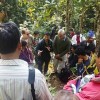
NEPAL: Women Grow Carbon Money on Trees
When Bina Tamang was told that she could earn money by not felling trees in the tiny forest that serves as the source of fuel and fodder for 65 families in her area, the 27-year-old was incredulous.U.S.: Climate Change May Pose Biggest Security Threat
As a budget battle rages on in the U.S. Congress and President Barack Obama's military budget comes under increasingly harsh scrutiny, a report released here Thursday by the Institute for Policy Studies suggests that reallocating defence spending towards tackling climate change might be the only solution to the administration's woes.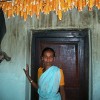
INDIA: ‘Seed-Mothers’ Confront Climate Insecurity
In eastern Orissa state’s tribal hinterlands about 200 ‘seed-mothers’ are on mission mode - identifying, collecting and conserving traditional seed varieties and motivating farming families to use them.U.S.: Floods and Wildfires Trigger New Fears over Nuke Safety
Just 100 days after a deadly earthquake and tsunami devastated the Fukushima Daiichi nuclear power plant in Japan, concerns are being raised about several U.S. nuclear stations that are facing natural disasters of their own.
SOUTHERN AFRICA: Trying to Access Funding for Climate Change
Leaving out non-governmental organisations in climate finance strategies will result in little impact on the ground in the southern Africa region.
ZAMBIA: “Every Year Flooding Makes This Place a Little Hell”
During the rainy season, and many weeks afterwards, home is never the best place to be for Miriam Banda. Until the end of 2008, she enjoyed living at her house in Kanyama, a high-density settlement bordering the central business district in Lusaka, Zambia's capital.
CLIMATE CHANGE: Water Sources Need to be Protected
Seventy-five-year-old Verdiana Protas is worried that the 20 cattle she bought with her pension money will soon die because the 10-kilometre-long river in her village in northwest Tanzania has been dry for two years now and finding alternative sources of water is getting more and more difficult.The Oxymoron of Political Leadership
Political will is all that's needed to bring electricity to the 2.5 billion people with no or unreliable access to power, or to feed the one billion who go hungry every day, or to finally begin to slash carbon emissions to avoid dangerous climate change, or just about any other global problem.
BRAZIL: Politicians Out of Sync with Public Sentiment on the Environment
The environmental movement continues to gain credibility and support as scientific findings confirm its warnings and natural disasters become increasingly frequent. Yet this growing awareness has yet to reach political decision makers in countries like Brazil, much to the frustration of environmentalists.OP-ED: The Good News About Coal
During the years when governments and the media were focused on preparations for the 2009 Copenhagen climate negotiations, a powerful climate movement was emerging in the United States: the movement opposing the construction of new coal-fired power plants.Tourism, Climate Change – Threats to Antarctic Wilderness
Too many tourists and too much climate change are the main concerns of environmental organisations and the governments of signatory countries of the Antarctic Treaty, which came into effect 50 years ago.
Mauritania Could Lose Its Capital City to the Sea
For the past five years, water has been seeping out of the ground beneath parts of Nouakchott, undermining foundations and transforming some areas of the Mauritanian capital into uninhabitable marshes.Nuclear for the Poor, Renewables for the Rich?
In a debate about the future of energy, the global south wants to spend tens of billions of dollars on nuclear plants while the global north looks to spend hundreds of millions on decentralised, renewable energy.On the Road to Green Energy for All
Like our cave-dwelling ancestors of 200,000 years ago, nearly three billion people still use fire for cooking and heating. Of those, some 1.5 billion people have no access to electricity. For a billion more, their only access is to sporadic and unreliable electricity networks.« Previous Page — Next Page »


As unsustainable human consumption and production systems are driving changes in average temperatures and weather patterns, "abnormal" is increasingly becoming the norm. So far, a lack of financing has been standing in the way of a comprehensive global plan for climate adaptation, and a global financial crisis has contributed to an increasing reliance on public-private partnerships. Our Climate Change page provides you with the latest news about international and local efforts to address what's frequently been called "the challenge of our time", the forces behind the climate change and the impact it has on the world's most vulnerable populations. Along the way, we bring you stories on growing citizen awareness, new scientific data, and emerging climate policies towards sustainable development.

The Week with IPS

Tracking global progress towards a sustainable world

