
Tuesday, October 20, 2026



News and Views from the Global South
Climate Change

Back to Nature to Avoid Water Collapse in the Capital of Chile
A return to nature is the main solution being promoted by communities and municipalities to avoid the water shortage that threatens to leave Santiago, the capital of Chile, home to more than 40 percent of the 19.5 million inhabitants of this South American country, without water.
Human Action Pushing the World Closer to Environmental Tipping Points, UN University Warns
Melting mountain glaciers. Unbearable heat. An uninsurable future. Space debris. Groundwater depletion. Accelerating extinctions. The United Nations University Institute for Environment and Human Security said this week that these six environmental "tipping points" can have "irreversible, catastrophic impacts for people and the planet."
Uganda: When Climate Justice Becomes Climate Justice Denied
On December 4, 2019, landslides in the Bududa region of Uganda killed 20. The landslides occurred after heavy rains, and a Red Cross report estimated that 96 households were affected, with 49 houses destroyed. It displaced many, while others continued to live in high-risk areas that could "slide at any moment."
Action Delayed, Justice Denied by Voluntary ESG Approach
Policy approaches relying solely on voluntary actions to address urgent needs are unlikely to succeed. Depending on optional compliance to address global warming will not fix things in time.
Climate Change Turns African Rivers into Epicentres of Conflict
Almost all major river basins in Africa have become the epicentres for conflicts over the last 20 years, and agricultural yields on the continent could drop by up to 50 percent in the coming years owing to the drying up of 'traditional' water sources, thanks in part to effects climate change and degradation of the environment, the inaugural edition of the State of Africa's Environment Report 2023 released in Nairobi finds.
Brazil: A Step Forward for Indigenous Peoples’ Rights
Brazil’s Supreme Court has delivered a long-awaited ruling upholding Brazilian Indigenous peoples’ claims to their traditional land. It did so by rejecting the ‘Temporal Framework’ principle, which only allowed for the demarcation and titling of lands physically occupied by the Indigenous groups who claimed them by 5 October 1988, when the current constitution was adopted. This excluded the numerous Indigenous communities who’d been violently expelled from their ancestral lands before then, including under military dictatorship between 1964 and 1985.
New Zealand: Political Volatility under Cost-of-Living Crisis
It’s a rapid reversal for New Zealand’s Labour Party, in power for six years. At the last election in 2020 it won an outright majority, the first party to do so under the current voting system. But three years on, it’s finished a distant second in the election held on 14 October. The result speaks to a broader pattern seen amid economic strife in many countries – of intense political volatility and the rejection of incumbents.
Women hold the Key to Success of Pastoralism in Africa
Women in pastoralist areas of East Africa are critical to the health of livestock in their communities, holding the key to effective animal vaccination campaigns meant to protect herds against deadly diseases. They are, therefore, an important part of any vaccination strategies designed to guard the animals against killer outbreaks and need to be involved in such efforts for them to be successful.
WORLD FOOD DAY 2023

Water is essential for life on Earth. It makes up 50% of our human bodies. It covers about 70% of the planet’s surface.

Electric Transport Expands Slowly in Mexico
Maribel Ochoa takes less time and spends less money commuting from her home to her work in eastern Mexico City thanks to the use of the electric Cablebus, a cable car that has improved her quality of life since the service began operating two years ago.
It’s Time to Close the Sustainable Energy Gaps in Asia & the Pacific
This year we pass the halfway mark both on our journey towards implementing the 2030 Agenda for Sustainable Development and the 17 Sustainable Development Goals, and the signing of the Paris Agreement on climate change.
Beware Climate Finance Charade
Finance has increased, not reduced, greenhouse gas (GHG) emissions. Meanwhile, funding for mitigation, and especially adaptation, is grossly inadequate, with little for climate losses and damages.
El Niño’s Impact on Central America’s Small Farmers Is Becoming More Intense
The effects of El Niño on agriculture in Central America are once again putting pressure on thousands of small farmer families who are feeling more vulnerable economically and in terms of food, as they lose their crops, due to climate change.
Effective International Aid Depends on the Application of Girl-Centered Design
In a year that is rapidly becoming the costliest on record for climate-related disasters, the International Day of the Girl Child appeals to the global community for greater investments for and with adolescent girls.
Our Teachers, Our Heroes
We are in a race to deliver on our global promise of education for all by 2030 – especially for the 224 million girls and boys impacted by armed conflict, climate change, forced displacement and other protracted crises who so urgently need our support. At the frontlines of this movement are the inspiring, caring, brilliant teachers who work tirelessly to educate future generations.
In Brazil, Indigenous Leaders and Youth Activists Fight To Protect Amazon
Raffaello Nava, a youth and student activist, has fled his home at the peak of the global Coronavirus pandemic after receiving death threats from multinational companies that invaded his ancestral lands in the Amazon rainforest.
Wanted: Teachers For Change!
Once a year, on October 5, we celebrate World Teachers’ Day. Why is it so important to have a closer look on the teaching profession? What is so special about being a teacher nowadays?
Small Islands with Big Aspirations
Everyone knows that small island states are on the frontline of global warming. Rising sea levels, acidification destroying fisheries and coral reefs, and changing patterns of rainfall are just some of the challenges. Some low-lying islands have already been lost to the ocean.
The Human Cost of a Green Energy Transition Without Safeguards
The world is moving away from fossil fuels towards so-called “green” energies as a solution to the climate crisis, which has increased the demand for strategic minerals such as cobalt, copper and lithium.
Innovative Business Models, Critical for African Governments to Unlock Carbon Markets
With current efforts to boost Africa's carbon credit production by 2030, experts believe the commitments will require Governments to switch from a voluntary to a compliance market by generating renewable energy for a portion of national and regional electricity supplies.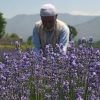
Wrecked by Climate Change, Farmers in Kashmir Shift to Lavender Cultivation
Mohammad Subhan Dar diligently tends to some bright purple plants on a four-acre farm in Bijbehara, a hamlet south of Kashmir’s capital, Srinagar. As you draw nearer, you’ll be mesmerized by the sight of sprawling lavender fields, where about 10 to 15 farmers, including Dar, prepare for a promising harvest.« Previous Page — Next Page »





As unsustainable human consumption and production systems are driving changes in average temperatures and weather patterns, "abnormal" is increasingly becoming the norm. So far, a lack of financing has been standing in the way of a comprehensive global plan for climate adaptation, and a global financial crisis has contributed to an increasing reliance on public-private partnerships. Our Climate Change page provides you with the latest news about international and local efforts to address what's frequently been called "the challenge of our time", the forces behind the climate change and the impact it has on the world's most vulnerable populations. Along the way, we bring you stories on growing citizen awareness, new scientific data, and emerging climate policies towards sustainable development.

The Week with IPS

Tracking global progress towards a sustainable world

