
Sunday, October 25, 2026



News and Views from the Global South
Climate Change

Education Cannot Wait Interviews The Rt. Hon. Andrew Mitchell, United Kingdom Minister of State (Development and Africa)
The Rt. Hon. Andrew Mitchell was appointed as a Minister of State in the Foreign, Commonwealth & Development Office (FCDO) on 25 October 2022. He was previously Secretary of State for International Development from May 2010 to September 2012. He was elected Conservative MP for Sutton Coldfield on 7 June 2001.

The Era of Global Boiling Has Arrived – UN Secretary-General
“Humanity is in the hot seat today,” United Nations Secretary-General António Guterres told journalists as the world confronted official data confirming that July 2023 is the hottest month ever recorded in human history.
Biodigesters Light Up Clean Energy Stoves in Rural El Salvador
A new technology that has arrived in rural villages in El Salvador makes it possible for small farming families to generate biogas with their feces and use it for cooking - something that at first sounded to them like science fiction and also a bit smelly.
Brazil Back on the Green Track
At a meeting with European and Latin American leaders in Brussels this July, Brazil’s President Lula da Silva reiterated the bold commitment he had made in his first international speech as president-elect, when he attended the COP27 climate summit in November 2022: bringing Amazon deforestation down to zero by 2030.
Latin America Must Regulate the Entire Plastic Chain
Countries in Latin America and the Caribbean have made progress towards partial regulations to reduce plastic pollution, but the problem is serious and environmental activists are calling for regulations in the entire chain of production, consumption and disposal of plastic waste.
New Machine Learning-Based Model Boosting Africa’s Preparedness and Response to Climate Change
Scientists have recently unveiled a first-ever weather forecasting model using artificial intelligence (AI) and machine learning solutions to help vulnerable African countries build resilience to climate impacts.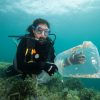
New Research Seeks Breakthrough in Understanding Global Warming and the Ocean
The Canada-based Ocean Frontier Institute is very clear about the significance of a new collaborative ground-breaking ocean research program. Global warming cannot be effectively tackled, and human life cannot survive on Earth without the ocean.
Climate Justice – Is Litigation a Good Way Forward?
For years, the concept of climate justice has been built on the understanding that countries and communities contributing the least to global warming are disproportionately bearing the impacts of climate change.
Seizing the Moment for a More Resilient Asia & the Pacific
The world faces a disaster emergency, yet nowhere is the threat more immediate than in Asia and the Pacific. Ours is a region where climate change-induced disasters are becoming more frequent and intense. Since 1970, two million people have lost their lives to disasters.
Impatience as a Virtue
We all know and agree that patience is a virtue. It is indeed. With one exception. In the face of a child’s suffering, impatience is the highest virtue. Or as we say in the spirit of Education Cannot Wait: “We must be unapologetically impatient” in our collective goal to reach 224 million crisis-affected children and adolescents with quality education.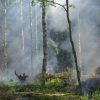
What a World 1.5 degrees Hotter Would Look Like
The dangerous state of global climate has reached a new low as a World Metrological Organisation (WMO) analysis reveals. It confirms a known obvious: human activities continue to worsen conditions that have changed our planet’s climate.
Can Carbon Trading Stop Global Heating?
As our planet continues to heat up at an alarming rate, carbon credits, markets and trading have been promoted as effective measures to combat global warming. While there is an urgent need to curb planetary heating, growing reliance on this innovation is problematic, to say the least.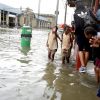
Shielding the Vulnerable: The Potential Role of Insurance in Protecting the Most Vulnerable
Small Island Developing States (or SIDS) have been talking about loss and damage in an insurance context since the creation of the UNFCCC. The original 1990s outline of the UNFCCC included the proposal for an international insurance fund that would compensate low-lying countries for losses from rising sea levels in the future, however, this fund was never adopted in the final text.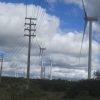
The Dark Side of Wind and Solar Farms as Sustainable Energy in Brazil
"Anxiety, insomnia and depression have become widespread. We don't sleep well, I wake up three, four times a night," complained Brazilian farmer Roselma de Melo Oliveira, 35, who has lived 160 meters from a wind turbine for eight years.
UN Weather Agency calls for Robust Early Warning Systems as Latin America and the Caribbean Brace for More Extreme Weather Events
The World Meteorological Organization says adaptation efforts and the switch to renewable energy must increase for regions like Latin America and the Caribbean to face the challenges of a changing climate.
Wood Smoke Continues to Make Women Sick in El Salvador
Using a few dry sticks as fuel, Margarita Ramos of El Salvador lit the fire in her wood stove and set about frying two fish, occasionally fanning the flame, aware that the smoke she inhaled could affect her health.
Transformative Change of our Relationship with Nature: Key to Saving Global Biodiversity
To most people, ‘transformative change’ is an abstract academic catchphrase. But transformative change is far more than that. It is the foundational response necessary to address the global crisis of biodiversity loss that threatens the wellbeing of every person in every community – and every species in every region.
Climate Change and Development
There is little doubt that human activity is accelerating climate change. Our activities are causing global warming and potentially disastrous climate change.
The Need for More Funding, Especially to Women, Towards Climate Adaptation Goals
There is a significant funding gap for climate adaptation – especially for women. Public financing will not be sufficient to close this gap, but it will be crucial for supporting the most vulnerable and facilitating private sector investments where funding and support is needed most.
Rohingya Camps Become Dengue Hotspots in Bangladesh
With the monsoon in Bangladesh, Rohingya refugee camps in Cox's Bazar have emerged as a dengue hotspot, with the mosquito-borne disease continuing to spread among the stateless refugees. "A total of 1,066 dengue cases were reported in highly cramped refugee camps in Cox's Bazar up to May 23 this year, while the case tally was only 426 among the local community there," Dr Nazmul Islam, Director of Disease Control and Line of the Directorate General of Health Services (DGHS), said.
South Sudan President, Education Cannot Wait Jointly Announce Extended Multi-Year Education Response for Crises-Impacted Sudanese Children
South Sudan is experiencing one of the most severe crises in the world today, causing fragility, instability, and economic stagnation. While a peace agreement was reached in 2018, sporadic intercommunal violence and climate-induced disasters continue to spur displacement. More than 2.2 million people are internally displaced. Another 2.3 million have fled to neighboring countries as refugees.« Previous Page — Next Page »





As unsustainable human consumption and production systems are driving changes in average temperatures and weather patterns, "abnormal" is increasingly becoming the norm. So far, a lack of financing has been standing in the way of a comprehensive global plan for climate adaptation, and a global financial crisis has contributed to an increasing reliance on public-private partnerships. Our Climate Change page provides you with the latest news about international and local efforts to address what's frequently been called "the challenge of our time", the forces behind the climate change and the impact it has on the world's most vulnerable populations. Along the way, we bring you stories on growing citizen awareness, new scientific data, and emerging climate policies towards sustainable development.

The Week with IPS

Tracking global progress towards a sustainable world

