
Sunday, November 8, 2026



News and Views from the Global South
Environment

At the intersection of conflict, climate change and energy access
With the advent of the 21st century, there has been a steady rise in energy access all around the globe. For the first time ever, the total number of people without access to electricity fell below 1 billion in 2017 according to the International Energy Agency. Despite the increase in the pace of electrification, 13 percent of the global population, mostly concentrated in sub-Saharan Africa and South Asia, still lack critical access to electricity—a factor linked closely with productivity, health and safety, gender equality and education. Without much greater ambition and more intensified efforts, the Sustainable Development Goal (SDG) 7 that has an objective of “ensuring access to affordable, reliable, sustainable and modern energy for all” will be impossible to attain by 2030.
U. S. Backing for Heated Tobacco Products Triggers Misrepresentation
The U.S. Food and Drug Administration’s (FDA) decision authorizing the sale of Philip Morris International (PMI)’s heated tobacco system, IQOS, in the United States inadvertently puts a foot in the door to increase sales of new tobacco products in the developing world.
Uganda’s Rare Tree Climbing Lions and Endangered Primates Threatened By Climate Change
As climate change leads to increased temperatures in East Africa, a thicket of invasive thorny trees with the ability to withstand harsh climatic conditions have begun threatening Uganda’s second-largest park, home to a rare breed of tree climbing lions and one of the highest concentrations of primates in the world.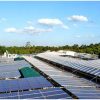
Developing Technologies for Zero-Carbon Economies
Never before has half a degree (0.5C) meant so much for humanity. We are behaving as if we have time to deal with climate change. We don’t. The main problem is that we believe we must sacrifice growth and prosperity for the sake of decarbonisation. We don’t.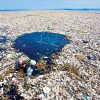
Our oceans: The ultimate sump
(The Daily Star) - Today is “World Oceans Day,” a day observed worldwide to raise awareness about the crucial role the oceans play in sustaining life on Earth. It is also a day to appreciate the beauty of the oceans that “brings eternal joy to the soul.” The oceans are among our biggest resource and also our biggest dumping grounds. Because they are so vast and deep, many of us believe that no matter how much garbage we dump into them, the effects would be negligible. Proponents of dumping even have a mantra: “The solution to pollution is dilution.” Really! In case they don’t know, garbage dumped into the oceans is continuously mixed by wind and waves and widely dispersed over huge surface areas. There is a zone in the Pacific Ocean, called The Great Pacific Garbage Patch, which is a gyre of marine garbage twice the size of Texas. The garbage, mainly microplastics, were carried there by strong currents from other parts of the ocean. This is not the only floating garbage in our oceans. The Atlantic and Indian Oceans have their own garbage patches. Worse yet, the sheer size of the patches is making clean-up efforts an extremely difficult task. Surely, human activities are impacting the oceans in drastic ways. Some of the anthropogenic environmental issues that are affecting the oceans are plastic pollution, oil spills, climate change and noise. One of the most dangerous threats the oceans may face in this century is radioactive pollution.[pullquote]3[/pullquote] Each year, we dump nearly eight million tonnes of plastic—mostly grocery bags, water bottles, yogurt cups, drinking straws and plastic utensils—into the oceans. Recently, plastic has been discovered in the deepest part (11 kilometres) of the world’s oceans, Mariana Trench in the Pacific Ocean. Extremely elevated concentration of PCBs, an environment-damaging chemical banned in the 1970s, have also been found within the sediment of the trench. While it takes hundreds of years for plastics to decompose fully, some of them break down much quicker into tiny, easy-to-swallow particles that can easily be ingested by marine species causing choking, starvation and other impairments. Pollution of the oceans by oil spills has been one of the major concerns for a long time. The primary source of spill is offshore drilling. The process is inherently dangerous and thus, is prone to accidents. When accidents happen, and they do happen without warning, they cause massive damage to the environment—aquatic and shore—that persists for decades to come. Some oil spills happen when tankers transporting petroleum products have accidents. If the layer of the oil is thick enough, it smothers creatures unable to move out from under it. Besides, swimming and diving birds become covered with oil, which mats their feathers, reducing their buoyancy and preventing flight. The insulative value of feathers is also lost and the birds quickly die of exposure in cold water. The world’s largest oil spill was not an accident; it was the result of the Persian Gulf War in 1991. The second worst disaster was the spill by BP’s Deepwater Horizon offshore rig in the Gulf of Mexico in April 2010. Both incidents killed tens of thousands of birds, marine mammals, sea turtles and fish, among others. Land and oceans together absorb slightly more than half of all the carbon dioxide emissions, with the oceans taking a greater share. When carbon dioxide dissolves in water, it forms carbonic acid. Various studies estimate that if we keep on pumping carbon dioxide into the atmosphere at the current rate, then by the year 2100, the water of the oceans could be nearly 150 percent more acidic than they are now. Such a large increase in acidity would upset the productivity and composition of many coastal ecosystems by affecting the key species at the base of the oceanic food webs. It would also reduce calcium carbonate, which is essential for building the shells and skeletons of creatures like mussels, clams, corals and oysters. Because oceans absorb more than 90 percent of the heat that is added to the climate system, sea level is changing, albeit unevenly. It is changing unevenly as oceans do not warm uniformly across the planet, with the southern oceans warming at a faster rate. In addition, global reef systems are slowly migrating poleward as oceans around the world continue to warm. The single most significant contribution to rising sea level is from the thermal expansion of water. Melting ice makes the second most important contribution, but only melting of land-based ice—glaciers, ice caps and ice sheets—is significant. Ice that is already floating in the water—iceberg—makes essentially no change in sea level when it melts, because the greater density of water offsets the volume of ice that is not submerged. Other factors that contribute to the rise in sea level include wind and ocean circulations, depth of the oceans, deposition of sediments by river flows and alteration of the hydrologic cycle by humans. According to some studies, global sea level rose by about 18 cms during the last century. In the worst-case scenario, sea level could rise by two metres by the end of the year 2100. Arguably, rising sea level is among the potentially most catastrophic effects of human-caused climate change. The oceans are no longer “The Silent World” of the famous oceanic explorer Jacques Cousteau. Today, they are being acoustically bleached by noise from seismic blasts used for offshore oil and gas exploration, marine traffic and military sonar. Unlike plastic pollution, noise pollution does not have the visual impact that is needed to spark an outcry and force action. It is an invisible menace that is drowning out the sounds of many marine animals, including fish, use for navigation, communicating with each other, finding food, choosing mates and warning others of potential dangers. Whales and dolphins are particularly vulnerable to noise pollution. The deafening seismic blasts and the ping of sonar are responsible for the loss of their hearing and habitat, and disruption in their mating and other vital behaviours. The disappearance of beaked whales in the Bahamas in recent years have been attributed to testing of US Navy sonar systems in the region. From 1946 through 1993, nuclear countries used the oceans to dispose of radioactive wastes. The United States alone dumped more than 110,000 containers of nuclear material off its coasts. Russia dumped some 17,000 containers of radioactive wastes and several nuclear reactors, including some containing spent nuclear fuel. It is highly likely that radioactive wastes would eventually leak out of the containers because of poor insulation, volcanic activity, tectonic plate movement and several other geological factors. Indeed, last month, UN Secretary General Antonio Guterres confirmed that a Cold War era concrete “coffin” filled with nuclear waste is leaking radioactive material into the Pacific Ocean. Since radiation from nuclear wastes remains active for hundreds of thousands of years, their dangerous effects will linger for a long time and will have lethal impact on marine life. Furthermore, six nuclear submarines—4 Russian and 2 American—lost as a result of accidents are lying at the bottom of the oceans. They represent serious threat of radioactive contamination of the oceans, too. One of the biggest contaminations due to radiation was caused by a series of nuclear tests conducted by the USA on the sea, in the air and underwater at Bikini Atoll in the North Pacific between 1946 and 1958. The French nuclear tests carried out during 1966-1996 in French Polynesia are responsible for other cases of intense radioactive pollution of marine ecosystems. Clearly, we are using the oceans as the ultimate sump, partly because their very immensity seems to preclude any long-term effect, and partly because they belong to no one. This cannot continue indefinitely because in order for us to survive, we have to protect the oceans. Lest we forget, life emerged from the oceans and the source of most of the oxygen we breathe are the oceans. They have been an endless source of inspiration to humankind. Quamrul Haider is a Professor of Physics at Fordham University, New York. This story was originally published by The Daily Star, Bangladesh
Restoring Our Degraded Planet
On the 1st of March 2019, we saw one of the rare moments in history when the entire world comes together and agrees on a joint way forward. The United Nations General Assembly recognized the urgent need to tackle the compounded crisis of climate change and biodiversity loss, and passed a resolution to proclaim 2021-2030 as the UN Decade on Ecosystem Restoration. With the aim to restore at least 350 million hectares of degraded landscapes by 2030 – an area the size of India – the UN Decade is a loud and clear call to action for all of us. And it is a great opportunity for the UN-REDD Programme and its partner countries to build on 10 years worth of relevant experience with safeguards, impactful policies and measures, and attracting private and public investments.
Empower Ocean Women
Our oceans play a major role in everyday life, but they are in grave danger. To protect the ocean, we must look to a crucial, largely overlooked component: gender.Bamboo Playspace for kids in Dhaka
At a time of extreme scarcity of open space for children to play, Washpur Garden City in Bosila of Dhaka has opened up an aesthetic place completely made of bamboo for kids to have fun.
Ecuador in Frontline to Address Climate Change
As the UN commemorates World Environment Day, UNDP would like to take this opportunity to commend Ecuador’s efforts to address climate change and its commitment to raising its climate ambition.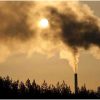
We Must do More to Speed up Ending Fossil Fuel Subsidies
Fossil fuels—oil, gas, coal and their derivatives—pollute the atmosphere and emit the greenhouse gases that are ramping up global heating to dangerous levels. But did you know that governments around the world are subsidizing this pollution?
Standing up for the clean air we deserve!
(GGGI) - Air pollution has become the number one environmental problem affecting people’s health, impacting 300 million children worldwide and contributing to the premature death of 600 thousand children every year.
Mobilisation Needed for Climate-Related Disasters
Climate-related displacement and food insecurity is not a future possibility, but it is already happening and it’s only projected to worsen without urgent action in coming years.
We Won’t Achieve Gender Equality Until We Address the Lack of Water, Sanitation & Hygiene
Giving birth is a life changing moment for women. It can be - when women have a safe and caring environment, positive and empowering - a moment to find a previously untapped inner strength.
Watch Out: Your Money Is Being Used to Destroy the World!
Perhaps the most direct way to introduce this tough issue is what the United Nations Secretary-General, António Guterres, stated just one week ahead of the 5 June World Environment Day, which focuses this year on air pollution, caused chiefly by the use of fossil fuels both in transport, industry and even household cooking, heating, etc.
We Can’t Halt Extinctions Unless We Protect Water
Global biodiversity loss has reached critical levels. One million species of plants and animals are now estimated to be at risk of extinction. The window for action is closing, and the world needs to urgently take note.
Water Research & Education Needs to Flow Towards Developing World
Post-secondary education relevant to the global water crisis is concentrated in wealthy countries rather than the poorer, developing places where it is needed most.
These Aliens Are Here to Stay (And They Are Dangerous)
No, no, no. Nothing to do with what US and Europe’s far-right fanatics now use to vociferate, saying once and again that “migrants come here to destroy our democracy, our civilisation, and our life-style”.
Asia-Pacific Region Viewed as Engine of the World Economy
Since this Commission first met in 1947, our countries have travelled a long journey. Our economies are expected to become larger than the rest of the world combined, measured by purchasing power parity. It is often said the Asia-Pacific region is the engine of the world economy.
Cyclones and Struggling Economy Could Impact Mozambique’s Elections
Mozambique, which was affected by an unprecedented two tropical cyclones over a matter of weeks, is still reeling from the impact a month after the latest disaster. But resultant devastation caused by the cyclones could impact the country’s elections as concerns are raised over whether the southern African nation can properly hold the ballot scheduled for later this year.
Putting Water at the Heart of Sustainable Fashion
The Copenhagen Fashion Summit celebrated its tenth anniversary last week. The summit, which is often referred to as the Davos of fashion, is a key date in the fashion diary for those businesses with a pioneering vision to highlight issues and create solutions for a more sustainable industry.
Long Life to Their Majesties, the Bees!
Amazingly organised social communities, bees ensure food chain. ‘Bee’ grateful to them… at least on their World Day!« Previous Page — Next Page »





Through our global network of local writers, we are continuing our award-winning coverage of global and local environmental challenges, with a focus on the people for whom the ecosphere matters in a direct way: rural dwellers who have little means to protect themselves against adverse conditions; communities that need to switch to sustainable development in order to survive; poor women and children, who are the most vulnerable in natural disasters. Sponsored by the United Nations Environment Program (UNEP), the United Nations Development Program (UNDP) and The World Bank (WB), IPS also maintains the award-winning Tierramérica, a specialised information service on environment and development.

The Week with IPS

Tracking global progress towards a sustainable world


