
Friday, November 13, 2026



News and Views from the Global South
Environment
Ecobreves – CUBA: Nuclear Technology for More Resistant Crops
Agricultural researchers in Cuba are using radiation in an attempt to develop banana, rice, avocado and tomato strains that are more resistant to drought and salinity, as part of a Latin American cooperation project.Ecobreves – CHILE: Cracks in Ralco Hydro Dam Raise Concern
The Aukin Wallmapu indigenous community in Alto Bíobío, 500 kilometers south of Santiago, has denounced the presence of cracks and leaks in the Ralco hydroelectric dam.Ecobreves – VENEZUELA: Scientists Call for Preservation of Forest Remnant
Researchers at Venezuela’s University of the Andes are urging the government to adopt a management plan for the 7,000 hectares of the Caparo Experimental Station, the remnant of what was a forest covering millions of hectares in the country’s western lowlands less than a century ago.Ecobreves – BRAZIL: São Paulo Solar Plant Will Supply Electricity to Public Grid
The University of São Paulo will construct a photovoltaic power plant, in association with a local electric company, which will be the third solar power plant and the second to supply electricity to the public grid in Brazil.Ecobreves – HONDURAS: Women Farmers Producing Better Grains
Women farmers in seven departments of Honduras are working towards higher-quality, environmentally friendly agricultural production to gain better access to markets and fairer prices.
Coastal Erosion Reaches Alarming Levels in Vietnam
For the last decade, many families in this southwestern Vietnamese province have been uprooted at least once every two years – but this is not due to economic or political upheaval.
Opposition to U.S. Bases Reaches Turning Point
Okinawa, the largest of a group of 60 sub-tropical islands forming Japan’s southernmost prefecture, has an equable climate and preferential treatment for United States servicemen under the Mutual Cooperation Security Treaty between the U.S. and Japan.
Mental Health, Another Victim of Climate Change
"The city looked as if it had been bombed. On the way to my office, I passed people who had the same shocked look on their faces as I did. We would look at each other, and even though we were strangers, we’d ask ‘How did things go for you? Did anything happen to your house?’ It was a kind of warm solidarity that did me a lot of good.”
Shrinking Ozone Hole, Growing Hopes
Argentine scientists agree that there are signs of recovery of the ozone layer that protects life on earth by filtering out the sun's harmful ultraviolet radiation, but they are cautious about saying that the problem is on its way to a solution.
Nepal Unprepared for Imminent Earthquakes
Nepal now ranks 11th on a list of the world’s most earthquake-prone countries, yet it remains one of the least disaster-prepared nations globally.
Making Waste Management a Sport in India
In a country notorious for the inability to deal with the waste it generates, municipal officials in the southern Indian state of Andhra Pradesh are now resorting to making waste management a competitive sport, in their bid to cajole the entire nation to clean up.
Sustainable Fashion Born in Brazil’s Favelas
A Brazilian designer has taken fashion from the exclusivity of the catwalk to the reality of the favela, to demonstrate that styles, trends and fads are also born in these poor neighborhoods of cities like Rio de Janeiro.
Tomorrow Is Too Late for Adaptation to Climate Change
You can still see broken plates, toys, books and some photographs among the rubble that was once the homes of Rey Antonio Acosta’s family and other families in Mar Verde, the beach community where Hurricane Sandy made landfall in this eastern Cuban city.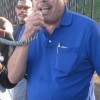
Q&A: “Solidarity and Mutual Aid” Key to Operation Sandy
Dee Knight experienced Hurricane Sandy in several different capacities. As a reporter and an organiser, not only did he report on the aftermath of the hurricane, but he was also a part of "Occupy Sandy", a response to the hurricane based on solidarity and charity.Planet on Path to Four C Warming, World Bank Warns
Coal, oil and gas companies and their backers in the financial and investment industry must stop putting billions of dollars into finding and extracting new sources of fossil fuels. If they don't shift their investments, temperatures will soar four to 10 degrees C higher, devastating many parts of the world, the World Bank said Monday.Ecobreves – HONDURAS: Waste Management Training for Market Vendors
Young volunteers from the Vida Foundation of Honduras have launched a six-month campaign to raise awareness among street market vendors in Tegucigalpa of the importance of proper waste management and recycling.Ecobreves – ARGENTINA : E-Waste Bill In Danger, Say Activists
The Argentine government is blocking final approval of a bill on electronic waste that was passed four years ago by the country’s senate, according to the Argentine branch of Greenpeace.Ecobreves – BRAZIL: Energy and Waste Generate the Bulk of CO2 Emissions in São Paulo
The energy and waste sectors were responsible for the emission of 16.43 billion tons of carbon dioxide (CO2) equivalents in São Paulo last year, according to a study commissioned by the city’s department of the environment.
Fixing the ‘Silent’ Sanitation Crisis
Organisers of this year’s World Toilet Day, which falls on Nov. 19, are using the slogan ‘I give a shit – do you?’ to break the silence around the crucial issue of sanitation and remind the international community that 2.5 billion people around the world don’t have access to clean and private toilets.World Bank Launches Review of Social, Environmental Safeguards
The World Bank has begun a highly anticipated reappraisal of its social and environmental “safeguards” policies, a process that is slated to take place over the next two years.
Thinking Outside the Stall on World Toilet Day
When the United Nations commemorates World Toilet Day next week, there will be a lingering question in the minds of activists: how best can water and sanitation be given high priority in the proposed Sustainable Development Goals (SDGs) in the U.N.'s post-2015 economic agenda?« Previous Page — Next Page »


Through our global network of local writers, we are continuing our award-winning coverage of global and local environmental challenges, with a focus on the people for whom the ecosphere matters in a direct way: rural dwellers who have little means to protect themselves against adverse conditions; communities that need to switch to sustainable development in order to survive; poor women and children, who are the most vulnerable in natural disasters. Sponsored by the United Nations Environment Program (UNEP), the United Nations Development Program (UNDP) and The World Bank (WB), IPS also maintains the award-winning Tierramérica, a specialised information service on environment and development.

The Week with IPS

Tracking global progress towards a sustainable world


