
Wednesday, November 18, 2026



News and Views from the Global South
Environment

Q&A: “The Verdict Against Chevron Is Enforceable, Because It Is Just”
On Feb. 14, a provincial Ecuadorean court issued the harshest environmental verdict in history against a major oil company, the U.S.-based Chevron. But is there any chance it will be carried out?Two Percent Price-Tag for a Green Economy
Growth-obsessed markets and governments are pillaging the planet and it must stop, a new U.N. report warns.
ENERGY-MALAWI: Rise in Paraffin Prices Leaves Traders in the Dark
Increasing energy prices have caused anxiety for many small-scale Malawian traders, especially those in rural areas and peri-urban areas who rely on paraffin for lighting their business premises.
Q&A: Responsible Practices Can Have Tremendous Ripple Effects
As concerns mount about environmental degradation and rising inequalities, many development experts and corporate executives alike are asking whether a business as usual attitude is sustainable in a world of increasingly scarce natural resources.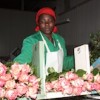
KENYA: Flower Industry Still Not Back in Full Bloom
Kenya’s flower exporters are cautiously optimistic that the prospects for their industry will improve during 2011 after disaster struck in the form of volcanic ash and adverse winter weather conditions in 2010. But prices will be lower as the global economic recession still weighs heavily on their primary market, the European Union.
“The Verdict Against Chevron Is Enforceable, Because It Is Just”
"Many people said that an Ecuadorean court would never rule against a big transnational corporation," Juan Pablo Sáenz told Tierramérica. He is the youngest on the Ecuadorean prosecuting team against Chevron in the environmental case of the century.Ecobreves – BRAZIL: From Coffee Dregs to Biofuel
Coffee dregs can be used to produce biodiesel. That is the result of an experiment of the Polytechnic School's chemical engineering department at the University of São Paulo.Ecobreves – MEXICO: The Monarch Returns
The population of the monarch butterfly (Danaus plexippus) and the forest area it occupies in Mexico grew last year in comparison to 2009, according to reports from various organizations.Ecobreves – HONDURAS: Greater Local Autonomy for Environmental Management
Honduras will promote the autonomy of local governments in environmental management, putting administrative tasks in their hands, like authorizing minor construction permits and charging specific taxes.ARGENTINA: Sustained Effort Needed to Eradicate Chagas’ Disease
One of the potential impacts of climate change that arouses most concern is an increase in diseases transmitted by tropical insects, like Chagas' disease, Argentina's main endemic illness.
AFRICA: Billions Lost to State Coffers Due to Tax Leniency
Bad governance and the persistence of the tax avoidance industry allow billions of dollars of profit to be siphoned out of Africa, untaxed, every year.BAHRAIN: U.S. Faces New Test Over State Violence
U.S. Secretary of State Hillary Clinton Thursday expressed "deep concerns" about the deadly attack on hundreds of sleeping anti-government protestors carried out by Bahrain's security forces at a central square in the capital, Manama, Wednesday night.Permafrost Melt Soon Irreversible Without Major Fossil Fuel Cuts
Thawing permafrost is threatening to overwhelm attempts to keep the planet from getting too hot for human survival.
CLIMATE CHANGE: In Europe, Pollution Is a Masculine Noun
Many aspects of gender inequality are well known and well documented. But there seems to be little awareness that male behaviour leads to greater emissions of climate-changing gases.
ECUADOR: Still a Ways to Go, After Historic Ruling Against Chevron
The plaintiffs in the case against Chevron tried in Ecuador, who won a historic 9.5 billion dollar verdict after a nearly 18-year struggle over environmental and health damages caused in a quarter-century of oil operations in the Amazon jungle, are not disheartened by the road still ahead.Link Confirmed Between Warming and Heavy Storms
Human-induced heating of the planet has already made rainfall more intense, leading to more severe floods, researchers announced Wednesday.Central America Has Highest Rate of Forest Loss in Region
Central America has suffered the highest rate of forest loss in Latin America over the last 10 years, despite a growing number of plans aimed at curbing the decline, the Food and Agriculture Organisation (FAO) reports.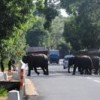
Elephants Find a Place in Cricket Cup
Sri Lanka goes into a frenzy this month as it plays co-host to the 2011 Cricket World Cup. Conservationists hope the national pasttime will share national and international media attention with an endangered Sri Lankan resident: the elephant.Wild Seismic Predictions Disputed
Without in-depth scientific documentation of marine mammal strandings, natural history and animal behaviour, the prediction of seismic events based on behaviour of marine mammals is not widely accepted. Sceptics often dismiss such predictions as conjecture.
Kenyan Pastoralists Look Back to Secure Their Future
David Lenamira, watching as usual from a seat outside his compound, has no trouble picking out his sheep as the herd boys drive them home every evening. The red-brown animals are smaller than those in his neighbours' herds, but he's proud of them just the same.
Pollution Is a Masculine Noun
Poor eating habits and inefficient use of transportation mean men are responsible for more emissions of climate-changing carbon dioxide than women are.« Previous Page — Next Page »


Through our global network of local writers, we are continuing our award-winning coverage of global and local environmental challenges, with a focus on the people for whom the ecosphere matters in a direct way: rural dwellers who have little means to protect themselves against adverse conditions; communities that need to switch to sustainable development in order to survive; poor women and children, who are the most vulnerable in natural disasters. Sponsored by the United Nations Environment Program (UNEP), the United Nations Development Program (UNDP) and The World Bank (WB), IPS also maintains the award-winning Tierramérica, a specialised information service on environment and development.

The Week with IPS

Tracking global progress towards a sustainable world


