
Friday, November 20, 2026



News and Views from the Global South
Environment
U.S.: Obama Losing Control of Iran Policy
In a surprisingly swift move on Thursday night that could have wide-ranging implications, the U.S. Senate passed a bill containing broad unilateral sanctions to punish foreign companies that export gasoline to Iran or help expand its domestic refinery capabilities.INDIA: Mobilised by Old Clothes, Poor Folk Stand Up, Take Action
Salidhana village, a mere blip on the vast and arid landscape of India’s central state of Madhya Pradesh, was devoid of life’s most basic necessity – water. Until last year, there was no well in this hamlet of about a hundred families. Women would trudge hours daily to fetch water from distant areas, often losing their balance on the hilly village’s treacherous slopes.BIODIVERSITY: EU Farmers Face Genetic Contamination of Seeds
Biodiversity, already decaying fast as a result of climate change and intensive farming, is under further threat by genetic modification (GM) of seeds, says a leading German ecological activist.MIDEAST: Clean Energy Faces Tough Financial Climate
Renewable energy projects in the Middle East could be scaled back or scuttled unless fresh sources of financing are found.
Q&A: Rage and the Economics of the Environment
"Rage is sometimes the appropriate response" to the failure of the world's leaders to craft a new climate treaty at the Copenhagen summit, says British economist Tim Jackson.EUROPE: Privatised Services Back in Public Hands
After the wave of de-privatisation of water services facilities that started across the world two years ago, municipalities in Europe are now buying back the electricity utilities they sold to private investors in the late 1980s and early 1990s.POLITICS: U.N. Faulted for Toothless Sanctions in Civil Wars
The United Nations estimates that at least 40 percent of civil wars during the last 60 years have been fought either over natural resources - including diamonds, gold, timber, oil, gas, and cocoa - or sustained by revenues from rich minerals and commodities.EL SALVADOR: Activists Link Mining Co. to Murders
Environmental activists in El Salvador allege that managers of a gold mine owned by a Canadian corporation are implicated in the murders of three anti-mining activists.CLIMATE CHANGE: ‘Copenhagen Accord Not Legal, Kyoto Protocol Is’
While the BASIC bloc countries - Brazil, South Africa, India and China - will submit their plans for voluntary mitigation actions by the Jan. 31 deadline stipulated by the Copenhagen Accord, they have taken care to emphasise that the agreement, reached at the end of the December climate change summit in the Danish capital, has no legal basis.ENVIRONMENT: Indian Glaciologist Fires Back at Climate Sceptics
"It is a fact that global warming is happening. If the Arctic Sea ice is melting, how can the Himalayan glaciers not be melting?" glaciologist Syed Iqbal Hasnain asked indignantly.BIODIVERSITY: Words Are Not Enough
Words are not enough to stop the rapidly unraveling web of life, agreed heads of state and international conservation organisations at a high-level meeting that ended here last Friday.
DEVELOPMENT: Yemen to Lead South in U.N. Negotiations
The republic of Yemen, categorised by the United Nations as one of the world's "least developed countries" (LDCs), will lead the largest single coalition of developing nations this year: the 130-member Group of 77 (G77).Q&A: ‘Saving Tigers is Good for Ecosystems, Biodiversity’
The first Asian ministerial meeting to protect the tiger, one of the world’s most storied animals, is poised to test a new commitment between government leaders, the World Bank and the global conservationist movement.Ecobreves – HONDURAS: Coral in Danger
Increasing acidity in the waters off the Caribbean coast - an effect of global warming - is hurting the coral reefs of the Islas de la Bahía, report officials from the Honduran Secretariat of Environment.
Rage and the Economics of the Environment
"The continued pursuit of growth endangers the ecosystems on which we depend for long-term survival," says the British economist, ferocious critic of the Copenhagen Accord on climate change.
Zeolite, Mineral of a Thousand Uses
The versatility, abundance and low cost of zeolite make it a valuable tool for agriculture and other economic sectors in Cuba.Ecobreves – BRAZIL: Biodiesel Beats Goal by Three Years
Diesel fuel used in Brazil is a five-percent mix of biofuel as of January 1 this year, reaching the goal set by the National Biofuel Program, begun in 2005, three years ahead of time. Until now, the mix was three percent.Ecobreves – MEXICO: A Biodegradable Future
As they become more widely produced, biodegradable plastics will replace synthetic polymers, Angel Romo, researcher at the Autonomous National University of Mexico (UNAM), told Tierramérica.CLIMATE CHANGE: After Copenhagen, Back to Basics for BASIC Bloc
As environment ministers from Brazil, South Africa, India and China (BASIC) prepared to meet in the Indian capital on Sunday to draw up a post-Copenhagen strategy, there were great expectations on the role they could play in pushing a consensus on how the world should go about dealing with climate change.
MAURITIUS: These Women Chose the Sea
She cannot swim, but Marie-Claite Hector is not afraid of the ocean. The 53-year-old pushes her small boat with all her strength towards the blue lagoon, starts the engine, and sets out to sea.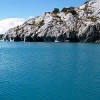
CHILE: Water a Matter of National Security
In its proposed constitutional reform, the Chilean government recognises that the availability of freshwater is a matter of national security. Environmentalists applaud the initiative, but some business groups are worried it will hurt their bottom line.« Previous Page — Next Page »


Through our global network of local writers, we are continuing our award-winning coverage of global and local environmental challenges, with a focus on the people for whom the ecosphere matters in a direct way: rural dwellers who have little means to protect themselves against adverse conditions; communities that need to switch to sustainable development in order to survive; poor women and children, who are the most vulnerable in natural disasters. Sponsored by the United Nations Environment Program (UNEP), the United Nations Development Program (UNDP) and The World Bank (WB), IPS also maintains the award-winning Tierramérica, a specialised information service on environment and development.

The Week with IPS

Tracking global progress towards a sustainable world


