
Friday, November 20, 2026



News and Views from the Global South
Environment
ASIA: World Bank Aims to Earn Stripes Through Tiger Summit
An international campaign to save the tiger, one of Asia’s iconic wild animals, is proving to be fertile ground for the World Bank to earn its stripes as an institution keen on joining the ranks of conservationists.
ZIMBABWE: Water Scarcity No Obstacle To Bulawayo Farmers
A project in Zimbabwe's second city, Bulawayo, is creatively using "marginal water" to ease water scarcity while helping residents provide food and earn a living.
ENVIRONMENT-NEPAL: Slowly, Vulture Numbers Picking Up
Dhan Bahadur Chaudhary, an ornithologist, grew up with vultures in his native Nawalparasi in western Nepal. He and his neighbours were used to seeing vultures flying overhead, feeding on the carcasses, and sunbathing near the rivers.
KENYA: Plastic Bags: Convenience Costing the Earth
When Nairobi was founded in 1899, it took its name from what the Maasai called the place: Ewassi Nyirobi, "cool waters." A century later, the river has something stuck in its throat: millions of plastic bags threaten to choke it.
PERU: Rural Wisdom Against Climate Change
"The toads have disappeared from the countryside because of climate change, and now there is nothing to control the insects. Now we have to use chemicals to fight pests, and that is killing the soil," says worried Peruvian farmer Julián Pilco.
HAITI: Desperate Residents Flee Capital, But with Hopes of Return
Marjorie Louis and her two small children are sleeping in the street. Their home is in complete ruins. And Louis has no way to let her mother in Les Cayes know that she survived the deadliest natural disaster to hit this country.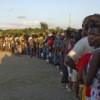
HAITI: With Aid Slow to Arrive, Food Prices Skyrocket
Last week, the price of a small can of rice was two dollars. On Tuesday, it cost Haitians 3.50 dollars. A gallon of cooking oil that cost 10 dollars only days ago now fetches 20 dollars.INDIA: Stalled Korean Mining Operations Face Fresh Protests
The Indian government’s grant of the final environmental clearance to a Korean giant firm, allowing it to acquire 3,000 acres of ‘forest lands’ in the eastern state of Orissa, has prompted a fresh spate of protests from more than 4,000 families that will be affected by a proposed mining project.CLIMATE CHANGE: Polluters Dragging EU Back
Barely a month after world leaders gathering in Copenhagen reached a weak accord on climate change, the European Union's top polluters are fighting a fresh battle to dissuade policy-makers from taking more robust action.CLIMATE CHANGE: Small Islands Await Haitian-Type Disaster
The devastation caused by the earthquake in Haiti last week has brought into sharp focus the threat of another natural disaster waiting to happen: a sea-level rise that could obliterate the world's small island states, triggering fears of mass migration.
HAITI: U.S. Opens Airport to More Humanitarian Flights
Amid criticism that the U.S. Defence Department was prioritising military and rescue air traffic to earthquake-stricken Haiti, U.S. officials controlling the country's main airport have agreed to guarantee landing slots for planes carrying humanitarian aid, U.N. officials say.
CANADA: Hunt for Oil Patch Bomber Takes New Twist
Looking increasingly desperate after a 15-month-long hunt for a saboteur who has blown up six natural gas installations in northern Canada, police arrested an outspoken oil industry critic and then set him free a day later without pressing charges.
SOUTH SUDAN: Tension Builds as Peace Agreement Marks Anniversary
Sudan is at a crossroads. Its future looks grim. "Only a miracle can save it from disintegrating. The signs are already on the wall," says Khamis Lako, a petty trader in Juba, the capital of South Sudan.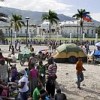
HAITI: No One Expected the “Big One”
Marjorie Louis was sitting in her kitchen eating dinner when she felt the house shaking, but she didn't get up.
HAITI: On Sunday, Mass Was About the Dead
Rosemarie Tintin's black hat and veil barely concealed the sorrow on her face. She recently lost her entire family in Haiti's devastating earthquake and the only place she could find solace was at her church.EUROPE: Shadow Falls Over New Leaders
Allegations of racism and financial impropriety have spiced up an otherwise lacklustre two-week ritual in which nominees to the European Union's executive arm are quizzed by the EU's only directly elected institution.INDIA/PAKISTAN: Reduced Himalayan Snowfall Could Spark Water War
The declining snow cover and receding glaciers in the Himalayan state of Jammu and Kashmir could trigger renewed hostilities between India and Pakistan, neighbouring states in the South Asian region that are at odds on a host of issues, experts warn.Ecobreves – HONDURAS: Food Distributed to Drought Victims
The most vulnerable regions of seven of the 18 departments of Honduras, hit by drought resulting from the El Niño climate phenomenon, this month are receiving the first round of food aid coordinated by national and international emergency agencies.Ecobreves – CHILE: Swan Death Investigation Extended
The investigation into the 2004 deaths of hundreds of black-necked swans in the Carlos Anwandter Nature Sanctuary, 800 km south of the Chilean capital, will wrap up in June.
Rural Wisdom Against Climate Change in Peru
The proposal to take into account the ancestral knowledge of rural communities in Peru has become key in designing strategies for confronting climate change.
Water a Matter of National Security in Chile
The constitutional declaration of water as a public good could put Chile on the same level as Uruguay and Ecuador as Latin American leaders in defending this essential resource.« Previous Page — Next Page »


Through our global network of local writers, we are continuing our award-winning coverage of global and local environmental challenges, with a focus on the people for whom the ecosphere matters in a direct way: rural dwellers who have little means to protect themselves against adverse conditions; communities that need to switch to sustainable development in order to survive; poor women and children, who are the most vulnerable in natural disasters. Sponsored by the United Nations Environment Program (UNEP), the United Nations Development Program (UNDP) and The World Bank (WB), IPS also maintains the award-winning Tierramérica, a specialised information service on environment and development.

The Week with IPS

Tracking global progress towards a sustainable world


