
Saturday, November 21, 2026



News and Views from the Global South
Environment
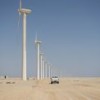
ENVIRONMENT: Desert Winds Stir New Hope
With oil and gas reserves running dry, the most populous country in the Arab world is eyeing wind power as a solution to its looming energy crunch.CLIMATE CHANGE: Survival Means Anticipating and Adapting
Imagine being able to know months in advance when and where floods or droughts may occur. That is what over 150 countries participating in the third World Climate Conference, which concluded last Friday in Geneva, pledged to achieve through the creation of a Global Framework for Climate Services.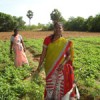
INDIA: HIV-Positive Women Get User Rights to Till Land
Till four months back, 33-year-old Mugil hardly ventured out of her parent’s home, preferring to stay indoors and tend to the household chores.ENVIRONMENT-CHINA: What Makes A Good Dam?
The Chinese government needs to engage local communities in harnessing its vast water and hydropower resources and pursuing sustainable development, says environmental advocate Yu Xiaogang, recipient of the 2009 Ramon Magsaysay Award for Participatory Social Impact Assessment for Watershed Management.
Women Recycle for Income and Environment
The recovery of recyclable waste now sustains a group of women who live along the salty Laguna de Tacarigua, a slice of biodiversity along Venezuela's Caribbean coast.Ecobreves – CUBA: Cell Therapy for Periodontal Problems
Cuba has begun T-cell therapy to treat periodontal diseases that involve bone loss, and has seen positive results, Amparo Pérez, head of a research team in Havana, told Tierramérica.Ecobreves – BRAZIL: Study Calls for More Biomass and Wind Energy
Energy from biomass and from wind, still underutilized, should be a priority to complement Brazil's hydroelectric base, according to a study by the Federal University of Brazil.Ecobreves – CHILE: Guide Published on Indigenous Peoples
The World Wildlife Fund presented in Chile the document "WWF Principles on Indigenous Peoples and Conservation in Project and Program Management," translated to Spanish and with case studies from Chile and the rest of Latin America.Ecobreves – VENEZUELA: Adopt a Tree
The Botanical Garden of Venezuela's Central University, a 70-hectare green oasis in the middle of Caracas, this month launched a membership program with the slogan "Adopt a Tree," for an annual payment of 180 dollars and the donor's name on a plaque at the foot of the tree.CLIMATE CHANGE: Rising Seas Demand Better Family Planning
A rising population and climate change need to be considered together in an integrated policy, experts demanded at a forum on sexual and reproductive health and development held in Berlin Sep. 2-4.SOUTH AMERICA: Glaciers – Going, Going…Gone?
South America is perhaps most often associated with the Amazon jungle, the world's largest tropical rainforest. But along its western edge, from Ecuador to southern Chile and Argentina, it also harbours huge glaciers which are rapidly melting due to global warming.
DEVELOPMENT: Getting REDDy for Copenhagen
"African farmers will play a major part in the solution of climate change mitigation," predicts Dennis Garrity, head of the World Agroforestry Centre (ICRAF).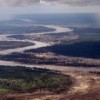
WATER-SOUTHERN AFRICA: Managing An Unpredictable Environment
The water available in the Limpopo River basin, which stretches across Botswana, South Africa and Zimbabwe and Mozambique, is both in great demand and highly variable. Managing it effectively and to the satisfaction of all users is a challenge.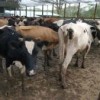
ARGENTINA: Clean Energy from Manure
With its enormous potential for biogas production, Argentina is gearing up for this clean energy alternative - which has already seen good results on ranches that transform manure into energy.POLITICS: Developing Nations Sceptical of Climate Summit
The 130-member Group of 77, the largest single coalition of developing nations, is at loggerheads with Secretary-General Ban Ki-moon over an upcoming one-day global summit on climate change in New York on Sep. 22.BRAZIL: More Growth, Less Carbon
Achieving sustainable growth is one of the major challenges facing Brazil, an emerging power and the fourth largest emitter of greenhouse gases in the world. To do this it will have to curb emissions, 30 percent of which are caused by industry and power generation.
WATER-SOUTHERN AFRICA: Research Not Trickling Down To Farmers
Farmers could be losing tonnes of crops every harvest just because no one has bothered to tell them that scientists have found more effective methods of using water to farm.CHILE: War Over Seeds
Environmental organisations, organic farmers and indigenous people in Chile are opposed to a draft law that would expands the rights of the developers of new varieties of plants, while the government and seed companies argue that there will be no negative impacts on small farmers and biodiversity.
MEXICO: Houses Put to Flood and Hurricane Test
Federico Martínez was born in a land of hurricanes. As a young boy in Mexico he saw the wind uproot trees and roll wooden houses "as if they were shoe boxes." As an adult, he developed a house that can withstand winds up to 300 kilometres per hour and floods three metres deep.
URUGUAY: Development from the Ground Up
Putting people, not the economy, at the centre of development by coordinating and designing initiatives based on the interests of the target populations themselves is the goal of the Support to Territorial Networks (ART) programme, which is growing year after year in Uruguay.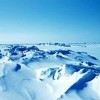
CLIMATE CHANGE: Earth’s Fridge Defrosting, With Dire Results
The rapidly warming Arctic region is destabilising Earth's climate in ways science is just beginning to comprehend.« Previous Page — Next Page »


Through our global network of local writers, we are continuing our award-winning coverage of global and local environmental challenges, with a focus on the people for whom the ecosphere matters in a direct way: rural dwellers who have little means to protect themselves against adverse conditions; communities that need to switch to sustainable development in order to survive; poor women and children, who are the most vulnerable in natural disasters. Sponsored by the United Nations Environment Program (UNEP), the United Nations Development Program (UNDP) and The World Bank (WB), IPS also maintains the award-winning Tierramérica, a specialised information service on environment and development.

The Week with IPS

Tracking global progress towards a sustainable world


