
Saturday, November 21, 2026



News and Views from the Global South
Environment
ENVIRONMENT: Climate Change a Decisive Threat to Development
When the world's policy-makers of a bygone era were painfully slow in reacting to the economic crisis in the early 1920s, the British economist John Maynard Keynes famously warned: "In the long run, we're all dead."BRAZIL: New Law Would Put Oil Revenue into Development
On what he referred to as "a new independence day for Brazil," President Luiz Inacio Lula da Silva announced Monday proposed new legislation that would increase state control over the management of the country's enormous offshore oil finds, with the aim of channeling much of the state's oil revenue into a national social fund.CLIMATE CHANGE: Early Warning Systems for the Coming Storm
Climate change is here. The challenge in Geneva this week is to find ways to help the world cope with a climate that will have more and worse extremes in terms of temperatures, floods, and storms.VENEZUELA: Alarm over First Contraction of GDP in Five Years
The Venezuelan economy, which has grown steadily for more than five years, contracted by 2.4 percent in the second quarter of this year, heightening fears of stagflation, an unwelcome combination of recession and high inflation.
Houses Put to Flood and Hurricane Test
Over a span of eight years, a Mexican engineer visited areas thrashed by hurricanes. His goal was to design a home capable of withstanding nature's worst.
Releasing Clean Energy from Manure
Manure, Argentina's leading source of climate-changing emissions is beginning to be used as raw material for clean energy.Ecobreves – ARGENTINA: Sounding the Alarm for Shrinking Glaciers
The Argentine chapter of the environmental group Greenpeace called on governments to fight global warming, which is melting South America's glaciers.Ecobreves – CHILE: Government Lists High Andes Wetlands
The Chilean Agriculture Ministry's center for natural resources information is putting together the first information system on High Andes wetlands in the three regions of the country's north.Ecobreves – MEXICO: War Against Plastic Bags Expands to All Trash
The ban on shops providing non-biodegradable plastic bags for their clients' purchases is in force in the Mexican capital, but is not enough to get solid waste management under control, say environmentalists.
ENERGY-CANADA: “It’s Like the Wild West Out Here”
The once serene road to Tim and Linda Ewert's organic farm near Tomslake in northeastern British Columbia has become a mess of dust clouds, drilling rigs and hordes of pick-up trucks as the area transforms into the newest frontier of Canada's natural gas boom.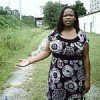
DEVELOPMENT-US: Gentrification Fears Dog Sustainable Transport
As U.S. cities consider the urgent need for sustainable public transportation options, advocates are looking for ways to achieve the environmental benefits of such projects without displacing residents through gentrification of surrounding areas.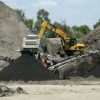
MEXICO: Biological Remedy for Sickened Soil
Mexico is beginning to take on the environmental debts left by the oil industry, applying biological techniques to break down alcohols, solvents, glycerines, gasoline, benzene and acetone, turning them into carbon dioxide and water.AFRICA: Climate Change ‘is a Security Issue’
Africa is the canary in the mine of global security, as climate change threatens to redraw the maps of the continent and the world.
Q&A: “Sanitation Is Inextricably Linked to Human Rights”
Some 1.6 million people die each year due to water and sanitation related diseases, millions of girls do not go to school because of lack of toilets, and prison detainees are denied access to adequate sanitation in some countries as a form of punishment, clear violations of the rights to health, education, and many other human rights.
RIGHTS-CAMBODIA: Newest Evacuation ‘Biggest in Decades’
Dozens of families this week started dismantling their homes and moving away from lakeside land in the centre of the capital after giving up on their lengthy struggle to remain. By the end of the eviction process at this site, around 30,000 people will have been moved off now-valuable land.
WATER-NAMIBIA: For What Does It Profit a Man…
"Our profit so far is 5,000 Namibian dollars, divided by twenty people," reports Anna Nauses. Silence descends on the office of the Prosopis Project in Okombahe as all do the math. Sixteen months of hard labour felling water-thirsty trees along the Omaruru River has yielded just 30 U.S. dollars per person.
ENERGY: Pipeline Sabotage Blows Image of Stable Canada
North America's largest natural gas corporation hopes a one-million-dollar bounty will take down the saboteur who is blowing up their pipelines in northern Canada.
CUBA: El Niño Taming the Hurricanes
The cyclical climate phenomenon known as El Niño/Southern Oscillation (ENSO) in the equatorial Pacific Ocean this year is helping weaken cyclone activity in the Northern Atlantic and the Caribbean. But Cuban meteorologists are warning against complacency.EUROPE: Wind Becomes More Energising
The 12 giant wind turbines tower more than 100 metres above the sea, some 50 kilometres north of Borkum island in the North Sea close to the border with the Netherlands.DISARMAMENT: Africa Joins the Nuclear-Free Club
Africa, the second-largest continent after Asia, has now become the world's largest nuclear-free zone comprising 53 countries with about a billion people. This means denuclearisation of one of the richest uranium producing regions.ENVIRONMENT: ‘Water Recklessness Worsening Drought’
India’s current dry spell, brought on by an errant annual monsoon, is rapidly turning into a full-fledged drought as a result of reckless exploitation of groundwater resources for farming, experts say.« Previous Page — Next Page »


Through our global network of local writers, we are continuing our award-winning coverage of global and local environmental challenges, with a focus on the people for whom the ecosphere matters in a direct way: rural dwellers who have little means to protect themselves against adverse conditions; communities that need to switch to sustainable development in order to survive; poor women and children, who are the most vulnerable in natural disasters. Sponsored by the United Nations Environment Program (UNEP), the United Nations Development Program (UNDP) and The World Bank (WB), IPS also maintains the award-winning Tierramérica, a specialised information service on environment and development.

The Week with IPS

Tracking global progress towards a sustainable world


