
Saturday, November 21, 2026



News and Views from the Global South
Environment
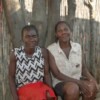
NAMIBIA: Garden Project Grants Modest Independence
Life in Omaruru? Put it this way: even the river that gives the town its name doesn’t always make it down. In this semi-desert part of Namibia, existence is a daily battle against poverty. A women’s gardening project is trying to change this.ENVIRONMENT: Ozone Treaty May Hold Key to Halting Climate Change
Will the world take the easy step to phase out "super" greenhouse gases – hydrofluorocarbons (HFCs) - using the existing Montreal Protocol ozone treaty? Doing so would be equivalent to preventing the release of 118 to 224 billion metric tonnes of carbon dioxide by 2050, according to a report by the Environmental Investigation Agency.
BIODIVERSITY: Amateur Biologists Join Global Bid to Catalog Species
Save the living environment and the physical environment will automatically be saved, according to E.O. Wilson, the world's leading biologist and father of the online Encyclopedia of Life, which plans to create a web page for every known species - all 1.8-plus million.ENVIRONMENT: Africa Builds United Position for Copenhagen
An African Union proposal demanding billions of dollars in compensation for the impacts of climate change is taking shape.EUROPE: Easterly Wind Picks Up
The natural conditions in Romania and Bulgaria make these countries some of the best placed in Europe for producing wind energy. Interest in investing in wind power is high in both countries, but legislative ambiguity and the limited capacity of national electricity grids are delaying the building of new wind parks.Ecobreves – BRAZIL: Biodiesel from Soy Dregs
Soybean oil dregs can be turned into a useful biofuel, according to research going on at Brazil's University of São Paulo.Ecobreves – CHILE: Ecologists Celebrate Center for Renewable Energies
The Chilean government of Michelle Bachelet last week inaugurated the Center for Renewable Energies (CER), specializing in research, development and promotion of unconventional sources, like solar, wind, geothermal and wave motion.Ecobreves – VENEZUELA: Crops Grow in Former Garbage Dump
Community groups and Venezuela's Ministry of Environment planted 4,000 vetiver grass shoots (Vetiveria zizanioides) on the slopes of the Ojo de Agua terraces, a former sanitary landfill west of the capital.Ecobreves – CUBA: Art Emerges from Garbage
The Ecological Processing Center for Urban Waste (CEPRU), in the far eastern Cuban city of Guantánamo, will open the doors before year's end on its open-air art gallery. The premise? Garbage also holds cultural riches.Ecobreves – HONDURAS: Incentives for Organic Farming
The Honduran Secretariat (ministry) of Agriculture and Livestock is using a new regulation to promote organic crops among some 60 non-governmental organizations that group 1,800 small and medium farmers.
Biological Remedy for Sickened Soil
Biological remediation costs 80 to 150 dollars per cubic meter of soil in Mexico, where such methods are increasingly studied and applied to clean up contaminated land.
El Niño Taming the Hurricanes
The arrival of El Niño is good news -- for now -- in the countries of the Americas located in the hurricane zone, including Cuba.
WATER-NAMIBIA: Running A Dry River
The Omaruru River basin is one of the first in Namibia to establish a basin management committee. Its members have a difficult balancing act to perform with a water resource that’s already being utilised to its maximum.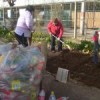
CHILE: The Environmental Fight Starts in Your Neighbourhood
A working-class neighbourhood on the outskirts of the capital, which stood united against the dictatorship of General Augusto Pinochet in the 1970s and 1980s and today is doing so against climate change, is launching the country's first "ecobarrio" project.
MALAWI: Activists Look Askance at New Mine
"We are serious about the integrity of the environment," says Neville Huxham, the country director for Paladin Energy Africa. "We're taking the uranium out of the ground, we're exporting it to be used for productive purposes, so we should be getting a medal for cleaning up the environment."
ENVIRONMENT: New Maritime Rules Target Oil Spills in Antarctica
The ships that bring thousands of tourists to Antarctica to take in some of the most pristine landscapes in the world will have to adapt to new marine environmental standards, which could be stricter than those requested by the members of the Antarctic Treaty.
DEVELOPMENT: New Threats Aggravate Africa's Water Crisis
The widespread water scarcity in the African continent, impacting on the lives of nearly 300 million people, may be aggravated further by several new threats, including climate change, transboundary disputes and the negative fallout from military conflicts.BRAZIL: Former Environment Minister Shakes Up Political Scene
A likely presidential bid by former Brazilian environment minister Marina Silva, who quit the ruling Workers Party (PT) this week, has shaken up the political scene ahead of the 2010 elections.DEVELOPMENT: Political Power Dictates Transboundary Waters
A longstanding quote attributed, rightly or wrongly, to the legendary author and humourist Mark Twain has been reverberating in the conference rooms of the Swedish capital: "Whisky is for drinking, water is for fighting over."
INDIA: When Toilets Were as Scarce as Hen’s Teeth
Dr. Bindeshwar Patak, the 2009 Stockholm Water Prize Laureate and founder of a grassroots sanitation movement in India, recounts the days before his country's independence in 1947 when toilets were a rare sight in remote villages and towns under British rule.POLITICS: U.N. Summit on Climate Change Under Fire
A much-ballyhooed U.N. summit on climate change, scheduled to take place on Sep. 22 in New York, is mired in controversy even before it gets off the ground.« Previous Page — Next Page »


Through our global network of local writers, we are continuing our award-winning coverage of global and local environmental challenges, with a focus on the people for whom the ecosphere matters in a direct way: rural dwellers who have little means to protect themselves against adverse conditions; communities that need to switch to sustainable development in order to survive; poor women and children, who are the most vulnerable in natural disasters. Sponsored by the United Nations Environment Program (UNEP), the United Nations Development Program (UNDP) and The World Bank (WB), IPS also maintains the award-winning Tierramérica, a specialised information service on environment and development.

The Week with IPS

Tracking global progress towards a sustainable world


