
Saturday, November 21, 2026



News and Views from the Global South
Environment
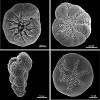
CLIMATE CHANGE: Acid Oceans Altering Marine Life
Some of the first species impacted by increasingly acidic oceans have been identified just as scientists meet in Copenhagen this week to present new data showing that climate change is far more urgent and serious than current economic problems.
EL SALVADOR: Guerrilla Ecotourism
La Montañona, a forested mountain in northern El Salvador that reaches 1,800 metres above sea level, was a stronghold of the FMLN guerrillas during the country's armed conflict. Today, its forests and stories of bombings and rebel hideouts have begun to draw ecotourism.
ENVIRONMENT: Pine Beetle Kill No Longer Just Dead Wood
The sheer magnitude of the devastation left by this tiny beetle is shocking on its own.DEVELOPMENT: Aid Fragmentation Worse Despite Paris Declaration
Civil society representatives agree with the recent finding of the Organisation for Economic Cooperation and Development (OECD) that fragmentation of international cooperation has increased instead of diminished, in direct contradiction to the so-called Paris Declaration where over 100 countries called for effective dispensing of aid.
CHILE: Controversial Fuel Taxes and Subsidies
In 2008, Chile’s state coffers took in just over one billion dollars from the specific tax on fuels. But at the same time, the government injected 700 million dollars into a fund that year to shore up fuel prices and made another 500 million available in case the price of oil continued to rise.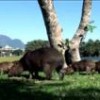
Brazil's Concrete Jungle
Rio de Janeiro is being populated with yacaré caimans, capybaras, boa constrictors, monkeys, and other wild animals. Could the jungle be sprouting back up again through the concrete?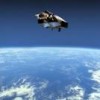
Ambitious Polar Satellite Still in Planning Stage
If everything goes according to plan, in November the European Space Agency will launch CryoSat-2, in what will be the second attempt to put a polar satellite in orbit to explore the state of the earth’s cryosphere.Ecobreves – CUBA: Transgenic Crop Production Begins
Cuba has started planting transgenic corn as part of a field trial to obtain seeds to be used in food production.Ecobreves – BRAZIL: Environmental Services to Prevent Amazon Logging
Investing in environmental services would stave off deforestation in 13 million hectares of Brazil’s Amazonia at least until 2016, according to a book presented by the Ministry of Environmental Affairs, which sets criteria for calculating compensations.Ecobreves – VENEZUELA: The 10 Commandments of Energy Efficiency
The environmental organization Vitalis called on Venezuelans to adopt an “Energy Efficiency Decalogue” to help mitigate global warming.Ecobreves – HONDURAS: Risk Management Act to Be Debated
The Honduran Congress is set to discuss a risk management bill that will replace the current three-decade-old regulations on the subject.Ecobreves – CHILE: Energy-Saving Light Bulbs for Low-Income Households
The Chilean government will distribute 1.4 million energy-saving light bulbs to some 250,000 families this year in an effort to bring down electric power consumption.
ENVIRONMENT: Quest for the Amazon Turtles
Looking back, Mario Maranhão concludes that being a conservationist was always in his nature. When he had to hunt for a living, he "only killed enough to eat, and never went after the female animals," he says. Five years ago, he took on the mission of rescuing turtles that hatch near Alter do Chão, a natural paradise located in eastern Amazonia.
CLIMATE CHANGE: A Little Equality Could Save a Lot of Lives
When ministers and government officials meet at the end of this year for a critical U.N. climate change conference in Copenhagen, they should bear in mind that the mortality rate for women during climate-related natural disasters is an average of 14 times higher than for men.
ENVIRONMENT-ISRAEL: Bury the Bridge
If all goes to plan, passengers will not get to see the beautiful Yitla Stream, or what is left of it, on the train from Jerusalem to Tel Aviv.GHANA: Report Warns of ‘Resource Curse’ Ahead of Oil Boom
The recent discovery of oil in Ghana could undermine its democratic development, warns the international aid agency Oxfam America and the Integrated Social Development Centre (ISODEC) in Ghana.
ENERGY: Costa Rica Invests in Geothermal Power
The government of Costa Rica hopes to increase its power generation by tapping into volcanic hot spots, and to that end it has introduced a controversial bill in Congress that would allow drilling into volcanoes in national parks.RUSSIA: In a New Gas War with Ukraine
The Ukraine-Russia gas dispute has boosted plans for construction of the South Stream and North Stream gas pipelines that would eventually divert Russian gas supplies through the Black Sea and the Baltic seabed respectively to European consumers.ARGENTINA: Countryside No Longer Synonymous with Healthy Living
Once a serene refuge from urban pollution and chaos, the Argentine countryside has now become a place fraught with risks for many local residents. The massive use of pesticides on fields of soy, the country’s top export, is creating a "health catastrophe" in the rural sector, environmentalists warn.IRAQ: Stumbling From One Conflict to Another?
When U.S. President Barack Obama announced his plan last week to pull out all U.S. combat troops from Iraq by September 2010, the news did not generate much enthusiasm among Iraqi Kurds.DEVELOPMENT: High-Protein Pea Ideal for Drought-Hit Farmers
Agricultural researchers are reporting a major breakthrough in the development of a new, high-yielding variety of pigeonpea, a protein-rich legume that can be grown in marginal lands and is highly resistant to drought.« Previous Page — Next Page »


Through our global network of local writers, we are continuing our award-winning coverage of global and local environmental challenges, with a focus on the people for whom the ecosphere matters in a direct way: rural dwellers who have little means to protect themselves against adverse conditions; communities that need to switch to sustainable development in order to survive; poor women and children, who are the most vulnerable in natural disasters. Sponsored by the United Nations Environment Program (UNEP), the United Nations Development Program (UNDP) and The World Bank (WB), IPS also maintains the award-winning Tierramérica, a specialised information service on environment and development.

The Week with IPS

Tracking global progress towards a sustainable world


