
Saturday, November 21, 2026



News and Views from the Global South
Environment
U.S.: Gen Y Reads – But Only for Nine Minutes a Day
Are twentysomethings changing the culture of literature?
Q&A: “Environmental Key Lies with Young People”
The road to sustainable development begins with the participation of children and young people, says Argentine environmental expert and activist Cecilia Iglesias.POLITICS: Shadow Meet to Challenge Elites at Americas Summit
The organisers do not expect newly elected U.S. President Barack Obama to attend their parallel three-day meeting, even though he is likely to be in Trinidad and Tobago at the official Fifth Summit of the Americas in April.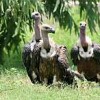
ENVIRONMENT-PAKISTAN: Warnings From Vanishing Vultures
"The thought of my carcass being pecked at by vultures isn’t at all pleasant," said Bapsi Sidhwa, a leading Pakistani diasporic writer now living in the United States. She was referring to the ancient Parsi funerary rite of 'sky burial'.UKRAINE: Between the Kremlin and a Hard Place
Ukraine's internal political problems and tensions with Russia threaten its path to stability and its candidacy for NATO and the EU, warns a new Council on Foreign Relations (CFR) report.ENVIRONMENT-JAPAN: Jail For Nailing Scientific Whaling Lies?
Two Greenpeace activists who exposed a black market in whale meat run by the crew of Japanese whalers face up to 10 years in jail while the government shows no discomfiture over the nailing of its ‘scientific whaling’ claims.
Q&A: Sanitation Crisis Runs Deep in Africa, Asia
As part of the International Year of Sanitation (IYS), the United Nations launched an aggressive campaign last year to fend off what it called a "silent global crisis": the woeful lack of adequate sanitation in the world's poorest countries.ENVIRONMENT-INDIA: Goa Agitated by Shady Real Estate Deals
Simmering resentment against major, concrete development in rural Goa - famous for its exotic beaches and idyllic rural countryside - has now exploded in violent agitations against corrupt local administrations.Ecobreves – HONDURAS: Military Engages in Operation Forest
The Honduran government announced that at month's end it will deploy a military contingent to protect 23,000 hectares of forest in the protected areas that are most in danger of fire in the dry season.Ecobreves – VENEZUELA: Schoolchildren Protect Fish
Gustavo, age 10, is happy to join his classmates in moving a hundred young cachama fish (Colossoma macropomum) to a pond in the Francisco de Mirando Park in the Venezuelan capital.Ecobreves – CHILE: Mapuches Question Validity of Gov't “Consultation”
Leaders of the Mapuche people are challenging the legitimacy and usefulness of the First National Consultation of Indigenous Peoples that the national government has extended to Mar. 2.Ecobreves – CUBA: Danger: Fire
The three hurricanes that thrashed Cuba in 2008 have increased the threat of forest fires during the current dry season, which lasts until early May, experts told Tierramérica.
Wake of Controversy Sails with the Polarstern
Stimulating the growth of phytoplankton by adding iron to the sea could be another way to absorb excess carbon that causes climate change, say the scientists involved in a controversial study in the Atlantic Ocean.
Amazon Teetering on the Edge
Four scenarios laid out in the GEO report, ranging from the horrific to the barely optimistic, provide a view of what the Amazon could look like in just 17 years.
“Environmental Key Lies with Young People”
Civil society members gathered in Nairobi, hosted by UNEP, called for involving young people in the official delegations that negotiate environmental agreements, like the climate change treaty, says Argentine activist Cecilia Iglesias in this Tierramérica interview.Ecobreves – BRAZIL: Zoo Saves Water
The São Paulo Zoo is saving 1.3 million liters of water per month since it started following the Rational Water Use Program (PURA, for its Portuguese acronym).
ENVIRONMENT: Fighting for the Right to Fish
"When my belly is crying I must fill it. I can sit on the side of the road and beg for bread, but there is the bread right there," says Hahn Goliath, a fisherman in the small village of Doring Bay on South Africa's West Coast, as he points furiously at the Atlantic Ocean.ENVIRONMENT: Ministers Say Yes to Mercury Treaty
Six thousand tonnes of mercury enter the environment every year, posing a threat to human and animal health. Environment ministers meeting in Kenya have agreed to negotiate a treaty to reduce the supply and use of mercury worldwide.
BIODIVERSITY: So Long, Salamanders
Mesoamerica's salamanders appear to be joining the global decline in amphibian species, like frogs, adding to the evidence of ecological change around the planet.BIODIVERSITY: Frigid Polar Regions Teeming With Life
Earth's two ice-covered polar oceans may be the most inhospitable places on the planet, but more than 12,000 species of animals have been found there, according to new research released at the annual meeting of the American Association for the Advancement of Science here.
POLITICS: Rhetoric and Reality Clash on Obama’s First Foreign Visit
On his first foreign visit as U.S. president, Barack Obama's rhetoric of "hope" and "change" came face to face with the hard, divisive policy realities of climate change from Canada's tar sands, a growing insurgency in Afghanistan and the sputtering world economy.« Previous Page — Next Page »


Through our global network of local writers, we are continuing our award-winning coverage of global and local environmental challenges, with a focus on the people for whom the ecosphere matters in a direct way: rural dwellers who have little means to protect themselves against adverse conditions; communities that need to switch to sustainable development in order to survive; poor women and children, who are the most vulnerable in natural disasters. Sponsored by the United Nations Environment Program (UNEP), the United Nations Development Program (UNDP) and The World Bank (WB), IPS also maintains the award-winning Tierramérica, a specialised information service on environment and development.

The Week with IPS

Tracking global progress towards a sustainable world


