
Saturday, November 21, 2026



News and Views from the Global South
Environment
ENVIRONMENT: Climate Change Threatens Livelihoods Along Africa's Coast
Environmental experts warn that climate change will lead to oceanic acidification and increase surface water temperatures, especially around the African continent.HEALTH: Warmer Climate Gives Malaria New Hunting Grounds
Climate change is bringing malaria to regions of Africa where the disease was previously unknown, researchers report from the conference of the American Association for the Advancement of Science in Chicago this week.
ENVIRONMENT: Food Crisis Under the Spotlight
Worldwide demand for food is expected to grow steadily over the next 40 years, but 25 percent of the world's food production may be lost to 'environmental breakdowns' by 2050 unless urgent action is taken.CORRUPTION-PERU: Parliament Investigates PetroTech Sale
At the government's request, the Peruvian parliament has set up a commission to investigate alleged irregularities in the sale of Petro Tech Peruana (PTP) to Ecopetrol, the Colombian state oil company, and the South Korean National Oil Corporation (KNOC). But opposition politicians are sceptical of the outcome and have refused to participate.
DEVELOPMENT: U.N. Seeks a Green Revolution in Food
The food crisis that spilled over from last year could take a turn for the worse in the next decade if there are no explicit answers to a rash of growing new problems, including declining agricultural production, a faltering distribution network and a deteriorating environment worldwide.ENVIRONMENT-AUSTRALIA: Bushfires Highlight Global Warming Danger
While the bushfires which ravaged parts of the state of Victoria earlier this month - the most devastating in the nation’s history - are not being blamed directly on the effects of climate change, it is clear that global warming was indeed a factor.
VENEZUELA: Ten More Years, If He Can Woo a Divided Country
Venezuelan President Hugo Chávez won Sunday's referendum with 54 percent of the vote, which will allow him to stand for reelection indefinitely. But he will have to exercise leadership over a country that is stubbornly split in two.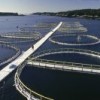
DEVELOPMENT: Aquaculture Awaits Its Heyday
With wild fish catches in sharp decline, aquaculture, which now accounts for nearly half of all seafood consumed, is expected to double production over the next two decades.
Recession Challenges Fair Trade
The uncertainty caused by the global economic recession has cast a shadow over the immediate future of fair trade efforts in Latin America.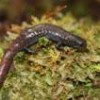
So Long, Salamanders
These days it's hard to find any salamanders in some parts of Mexico and Guatemala, where just a few decades ago they were abundant, says a new study.Ecobreves – BRAZIL: Acceleration in Refrigerator Replacement
The Brazilian government decided to speed up the subsidized replacement of 10 million old refrigerators over the next 10 years.Ecobreves – MEXICO: Drafting Eco-Laws for Automobiles
The Mexican government is drawing up new standards that will require automobile manufacturers to offer vehicles with low carbon dioxide emissions.Ecobreves – HONDURAS: World Bank Finances Protected Areas
The World Bank granted Honduras a three-million-dollar loan to protect its main areas of ecological and forestry preserves.Ecobreves – ARGENTINA: Anti-Soybean Video for Kids
With a 13-minute video starring puppets and aimed at children, the environmental group Bios Argentina sets out its views on the monoculture of soybeans and the crop's environmental impact.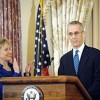
U.S.: Clinton’s Maiden Voyage Aims to Reassure Asian Allies
Hillary Clinton's maiden voyage overseas as secretary of state is designed above all to reassure Washington's key East Asian allies and China of the U.S.'s enduring interests in the region and commitment to its stability, according to regional experts here.DEVELOPMENT: Now for a Water Bankruptcy
Rarely a week goes by without a problem of water scarcity hitting the headlines. The acute droughts in Kenya, Argentina and the U.S. state of California are among the latest phenomena to illustrate that the global environment has been dangerously degraded. And participants in the recent World Economic Forum in Davos, Switzerland, heard that the planet could be destined towards "water bankruptcy".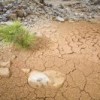
SOUTH AMERICA: Tenacious Drought Puzzles Climate Experts
For months now, yellowed pastures, cracked soil and dead livestock have been the landscape of what otherwise are the most productive farming areas of Argentina, Brazil, Paraguay and Uruguay. Scientists say it is so far impossible to determine if the drought is a manifestation of climate change processes.
IRAQ: The River Too Tells the Story
There is less water now in the Tigris, and it is less clean. The river has fewer fish, and rising fuel and other costs mean they are more costly to catch. It's not, as Hamza Majit finds, a good time to be a fisher.ENERGY: Clean and Green Gets a New Champion
The launch of a new international agency devoted solely to the promotion of renewable energy last month was applauded by many environmental groups, but left others wondering whether it is too little, too late.AGRICULTURE-INDIA: Looking Beyond Wheat and Rice
Food security experts say India must wean itself away from dependence on wheat and rice and look to the sub-continent’s rich agro-diversity in order to address the kind of food crisis that hit the country last year - as well as longer-standing nutrition deficiency issues.ICELAND: Whaling Move Rocks Government
Two weeks ago, a day after the government of Iceland fell, outgoing fisheries and agriculture minister Einar K. Gudfinnsson announced a quota for commercial whaling for up to 150 fin whales and 100 minke whales for the next five years.« Previous Page — Next Page »


Through our global network of local writers, we are continuing our award-winning coverage of global and local environmental challenges, with a focus on the people for whom the ecosphere matters in a direct way: rural dwellers who have little means to protect themselves against adverse conditions; communities that need to switch to sustainable development in order to survive; poor women and children, who are the most vulnerable in natural disasters. Sponsored by the United Nations Environment Program (UNEP), the United Nations Development Program (UNDP) and The World Bank (WB), IPS also maintains the award-winning Tierramérica, a specialised information service on environment and development.

The Week with IPS

Tracking global progress towards a sustainable world


